

Schedule Now & Get $25 Off
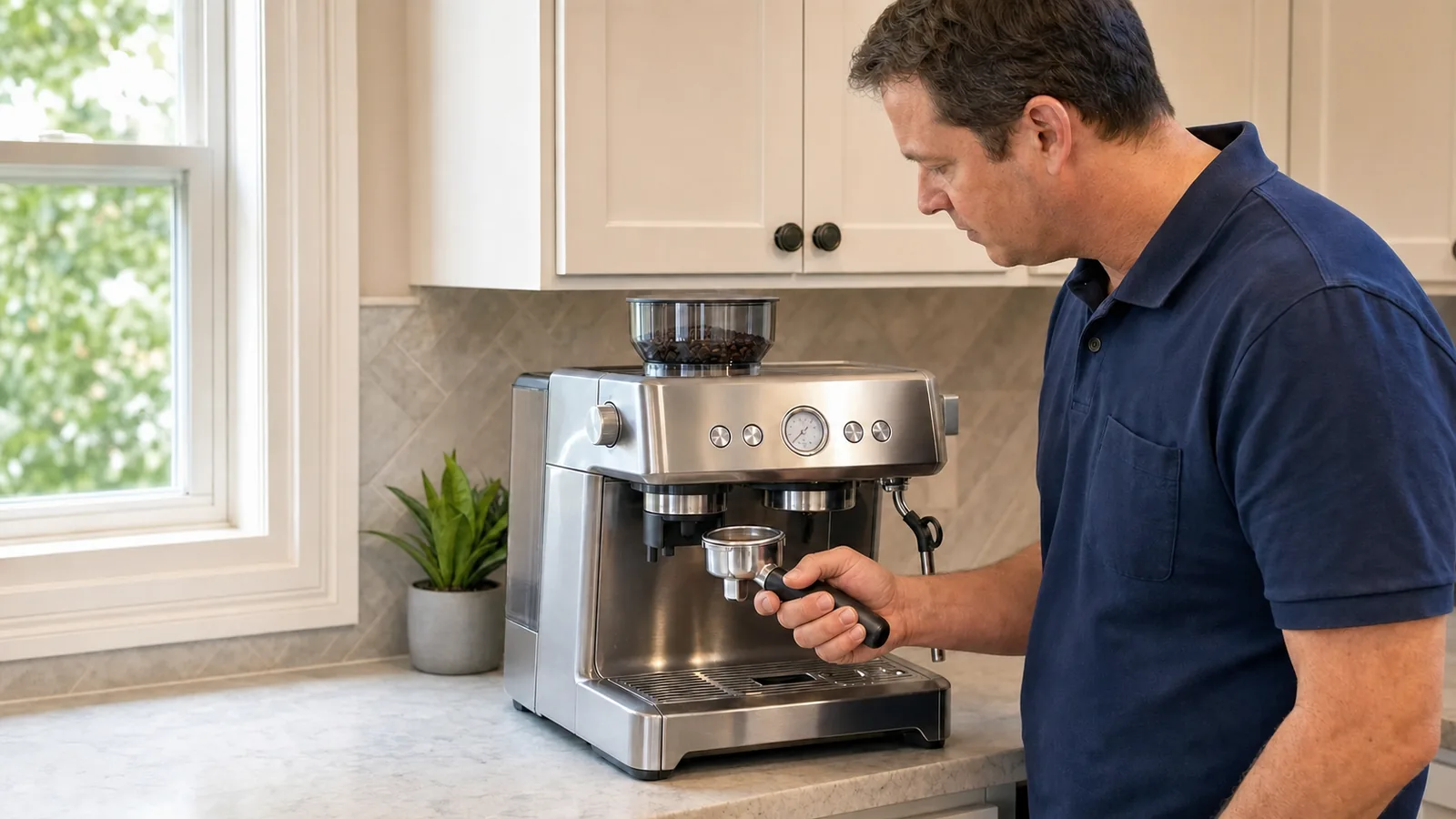
Independent residential coffee-machine service
Breville Coffee Machine Repair in Tampa, FL
Max Appliance Repair Tampa evaluates many Breville espresso machines, integrated-grinder Barista and Oracle systems, Dual Boiler and compact models, drip brewers, and select Nespresso by Breville machines.
Tell us whether the problem involves grinding, dosing, water flow, pressure, temperature, extraction, steam, milk texture, leaking, controls, cleaning alerts, or drip brewing. A photo of the model, batch code, and/or serial helps us screen the exact configuration before the visit.
Seven-day scheduling. Same-day options depend on request time, route, exact machine, symptom, access, and parts availability.
Coffee System, Not Generic Appliance
Grinder, brew path, heat, steam, controls, and cleaning history are separated.
Model-Aware Intake
A Barista, Oracle, Dual Boiler, Bambino, drip brewer, and Nespresso unit need different questions.
Estimate Before Approved Work
The finding and proposed repair are explained before you decide.
Identify the machine architecture first
Which Breville Coffee Machine Is on Your Counter?
Breville’s U.S. coffee lineup spans hands-on espresso, assisted automation, integrated grinders, dual heating systems, drip brewing, and capsule formats. The same symptom means different things on each architecture.
Barista Integrated-Grinder Espresso
Barista Express, Barista Pro, Barista Touch, Impress, and related systems combine burr grinding, dosing, group head, pump, heating, steam, controls, and water tank.
Useful detail: say whether the grinder, hot water, espresso, and steam fail together or separately.
Oracle Automated Espresso
Oracle and Oracle Touch generations can automate grinding, dosing/tamping, drink selection, and milk texturing. Newest models add features not present on older machines.
Useful detail: send the exact BES model and display/error behavior.
Dual Boiler and Manual Espresso
Dual Boiler uses separate brew and steam heating paths; Bambino, Bambino Plus, Infuser, and related machines use different compact/manual configurations.
Useful detail: identify brew versus steam temperature/flow symptoms.
Drip and Precision Brewers
Precision/Luxe Brewer types focus on water delivery, brew temperature, basket/valve, carafe, controls, and programmed modes rather than espresso pressure.
Useful detail: note whether the problem is heating, flow, brew completion, valve, carafe, or display.
Grind Control Drip Machines
Grind Control combines hopper, burr grinder, calibration/interlocks, chute, dosing, drip brew path, LCD, basket, and carafe functions in one machine.
Useful detail: report grinder sound and any hopper/interlock message exactly.
Nespresso by Breville
OriginalLine, Vertuo, and Creatista examples use different capsule, brew, milk, and manufacturer-support paths. Exact model and service economics must be screened.
Useful detail: identify capsule system and any separate milk/steam symptom.
Observe timing and location
What Common Breville Coffee Machine Symptoms Can Mean
These are starting points, not remote diagnoses. A useful service note describes when the issue occurs, which functions still work, what maintenance was last completed, and where any sound or leak appears.
No Water or Espresso Flow
Tank seating, water filter, airlock, pump, flow meter, valves, scale, blocked basket/screen, controls, or heating readiness may be involved.
Fast, Weak, or Low-Pressure Shot
Beans, grind, dose, tamp, basket, channeling, grinder calibration, pump/valves, or water path can create similar extraction results.
Grinder Jams or Doses Poorly
Oily beans, foreign material, chute blockage, hopper/interlock, burr wear or calibration, drive, motor, sensors, or automated dosing may matter.
Weak or No Steam
Steam-tip blockage, milk residue, scale, wand seal, valve, thermocoil/boiler, sensor, solenoid, pump, or automated milk control may need checking.
Water Leaks
Tank seal, hose, valve, group gasket, fitting, pump, thermocoil/boiler, steam wand, drip-tray routing, scale, or a cracked part can leak differently.
Cold, Error, or Control Problem
Warm-up/setup, sensors, heater, control board, display/touch interface, recipe settings, scale, or a machine-specific fault code can affect operation.
Unplug and stop using the machine for smoke, burning odor, sparking, repeated breaker trips, water under electrical areas, hot water or steam escaping from the housing, runaway heating, a swollen cord/plug, or a grinder making hard mechanical contact. Let hot and pressurized components cool before owner cleaning.
A bad shot is real evidence, but not always a broken machine
Is the Problem Coffee Setup—or the Breville Machine?
Espresso is unusually sensitive to beans, grind, dose, distribution, tamp, basket, water, temperature, and cleaning. Separating beverage setup from repeatable equipment behavior prevents unnecessary parts and gives the technician better evidence.
Clues to check in the recipe and setup
Shot Changes With Coffee Preparation
- The shot changes substantially with a coarser or finer grind.
- A different basket, dose, tamp, or fresher/drier beans changes pressure and time.
- Water flows normally with the portafilter removed.
- Steam and hot-water functions are otherwise normal.
- No leak, error, abnormal sound, or temperature instability appears.
Use Breville’s model-specific extraction guidance before assuming a failed pump or gauge. An integrated grinder can still require cleaning/calibration even when its motor runs.
Clues supporting equipment evaluation
Behavior Persists Without Coffee Variables
- Water flow is weak, intermittent, or absent during a safe no-coffee check.
- Pump sound changes sharply, stalls, or continues abnormally.
- Temperature, steam, hot water, and extraction fail together or in a repeatable pattern.
- The machine leaks, trips power, displays an error, or will not complete a cycle.
- Cleaning/descaling was performed correctly but the documented symptom remains.
The water path, heating, sensors, valves, pump, seals, controls, or model-specific subsystem may need testing. Do not open the chassis or bypass interlocks.
Map the function that fails
Four Breville Coffee-Machine Paths to Describe
On integrated systems, one housing contains several machines: grinder, hydraulic brew circuit, heat/steam system, and electronic controls. Reporting each path separately narrows the first tests.
Grind and Dose
Hopper/interlock, burrs, grind size, calibration, motor sound, chute, dose amount, tamp/automation, and foreign material.
Water and Extraction
Tank/filter, prime, pump, flow meter, valves, group head, shower screen, basket, seals, gauge, and drainage.
Heat, Steam, and Milk
Thermocoil or boilers, PID/sensors, steam wand/tip, valve, solenoid, automatic milk sensing, and recipe settings.
Controls and Programs
Buttons, dials, touchscreen, display, cleaning alerts, drink programs, automated sequences, error codes, and current connected features.
One observation can separate several look-alike faults. Note whether the machine can dispense plain hot water, whether water reaches the group head with an empty basket, whether steam strength changes after warm-up, and whether the grinder runs without delivering a normal dose. For a pressure concern, record what the gauge does during a repeatable recipe instead of relying on one shot alone. For an integrated grinder, report burr sound, selected grind setting, dose consistency, bean condition, and whether the chute was safely cleaned according to the manual. For an intermittent error, photograph the exact message before restarting. These details do not replace electrical, pressure, temperature, or flow testing, but they help distinguish a preparation variable from a failure shared across the machine’s water, heat, grind, or control paths.
Maintenance terms are not interchangeable
Cleaning Cycle, Descaling, Water Filter, or Steam-Wand Care?
Breville’s official care materials separate coffee oils and residue from mineral scale, water filtration, and milk-system cleaning. Use the exact machine’s manual and approved procedure.
Coffee oils
Cleaning Cycle
Applicable espresso machines use model-specific cleaning tablets/cycles for group-head oil and residue. It does not descale the whole water path.
Mineral buildup
Descaling
Descaler addresses scale in the water/heating system. The sequence differs across thermosystem, Dual Boiler, Oracle, and drip models.
Incoming water
Water Filter
Compatible in-tank filters help condition water but do not eliminate all maintenance. Installation and replacement intervals are model-specific.
Milk residue
Steam-Wand Care
Purge and clean the tip/wand after it cools according to the manual. Never probe a hot, pressurized wand or use an unapproved chemical.
If a cleaning/descale process was interrupted, used the wrong sequence, or left the machine unable to complete a cycle, stop repeating chemicals and include the exact model and on-screen/button behavior in the booking.
The exact BES, BDC, or capsule model matters
Find the Breville Model, Batch Code, and Serial
Breville says these identifiers are typically on a sticker or molded into the housing underneath or on the back. Unplug the machine, let it cool, remove loose water/beans/accessories, and ask for help before moving a heavy machine.
Photograph the complete label without cropping suffixes. A product name such as Barista Express or Oracle is useful, but generation and regional model code determine the manual, parts, and features.
Label: model, 3- or 4-digit batch code, serial/date information, and electrical rating.
Machine front: hopper, display/buttons, group head, steam wand, drip tray, carafe, or capsule system in one photo.
Symptom video: grinder sound, water flow, pressure gauge, steam behavior, error, or leak timing for 10–15 seconds.
Maintenance history: last clean cycle, descaling, water-filter change, steam-tip cleaning, and chemical used.
Leak location: dry the counter, then photograph the first safe point where water appears without repeating a hazardous cycle.
Do not identify by appearance alone. Similar stainless machines can use different grinders, heating systems, baskets, controls, automated features, and parts.
Screen the request before promising a repair
What Breville Coffee-Machine Service Can Evaluate
Service focuses on residential coffee and espresso equipment, not every Breville countertop appliance. Exact access, parts support, condition, warranty status, and repair economics determine fit.
Espresso and Integrated Systems
Grinder/dose, group head, pump/flow, heating, valves, steam/milk, tank, leaks, controls, displays, cleaning alerts, and automated sequences can be evaluated by model.
Drip and Capsule Screening
Precision/Luxe Brewer, Grind Control, and select Nespresso by Breville requests require model screening because access, responsible support path, parts, and replacement economics vary.
Not a Blanket Breville Service
This coffee page does not add automatic service for Breville ovens, microwaves, blenders, juicers, food processors, toasters, kettles, or other small appliances.
Use the model and failure, not a generic countertop-appliance rule
Repair or Replace an Older Breville Coffee Machine?
A high-value Dual Boiler, Oracle, or integrated Barista machine and a basic drip/capsule brewer have different repair economics. Compare the diagnosed subsystem, condition, correct parts support, maintenance history, and realistic replacement cost.
Factor 1
Machine Architecture
Integrated grinder, dual boiler, automation, touchscreen, steam sensing, or drip/capsule simplicity changes value and labor.
Factor 2
Failure Scope
A seal, valve, grinder path, or isolated control differs from multiple leaks, damaged boiler/heater, corroded wiring, or failed automation.
Factor 3
Condition and Care
Scale, coffee-oil or milk residue, corrosion, previous chemical damage, cracked housing, worn burrs, and neglected seals affect the decision.
Factor 4
Parts and Replacement
Correct model/batch support, parts lead time, current replacement price, expected use, and desired workflow should be compared.
What to expect
How Breville Coffee-Machine Service Works
A useful intake records the exact machine, affected path, maintenance history, error/leak evidence, and warranty status before the appointment.
Step 1
Send the Label
Share the model, batch/serial, machine front, symptom, address, and ZIP code.
Step 2
Describe the Path
Separate grinder, water/extraction, heat/steam, milk, controls, drip brewing, error, and leak behavior.
Step 3
Inspect and Test
The technician evaluates the reported subsystem, maintenance condition, relevant functions, and accessible components.
Step 4
Review the Finding
The diagnosis and proposed repair are explained before approved work begins.
Eligible repair parts installed by Max Appliance Repair Tampa include a limited 90-day parts warranty; coverage depends on the component and repair.
Request Breville Coffee-Machine ServiceCheck coverage before independent repair
Newer Breville Machine or Possible Warranty Claim?
Breville requests the model, batch/serial information, proof of purchase, and contact with Consumer Support for warranty instructions. Unauthorized work can affect coverage. Contact Breville first when a machine may still qualify.
Local route confirmation
Breville Coffee Machine Repair Across the Tampa Bay Area
Breville coffee-machine requests are reviewed across Tampa and many nearby Hillsborough, Pinellas, and Pasco County communities. Availability varies by date, exact machine, symptom, address, and parts situation.
All Service AreasTampaClearwaterDunedinSt. Petersburg
Common routes also include Brandon, Riverview, Lutz, Temple Terrace, Carrollwood, Westchase, and nearby communities. Share the full address, ZIP code, parking/gate instructions, and whether the machine is safely accessible on site.
Direct answers before you book
Breville Coffee Machine Repair FAQs
Answers about supported Breville coffee-machine types, identifiers, pressure/flow, temperature, grinders, steam, leaks, cleaning versus descaling, drip/Nespresso screening, scheduling, and independent service.
Which Breville coffee machines do you repair in Tampa?
We review residential requests for many Breville manual and assisted espresso machines, integrated-grinder Barista and Oracle systems, Dual Boiler and Bambino/Infuser-style machines, drip coffee makers such as Precision/Luxe Brewer or Grind Control types, and select Breville Nespresso machines. Service fit depends on the exact model/batch/serial, symptom, age, condition, prior maintenance, and parts support.
Where is the Breville model, batch code, or serial number?
Breville says the model number, 3- or 4-digit batch code, and/or serial can usually be found on a sticker or molded into the product housing underneath or on the back. Unplug and cool the machine before safely tilting or moving it. Photograph the complete label and the machine front so the identifier and configuration can be matched.
Why does my Breville espresso machine have little or no pressure?
Low gauge pressure or fast flow can come from grind, dose, tamp, beans, basket choice, channeling, or a pressurized-versus-single-wall basket—not only a pump failure. If the machine also has weak water flow without coffee, unusual pump sound, errors, leaks, or inconsistent temperature, the water tank, filter, pump, valves, flow path, scale, controls, or heating system may need evaluation.
Why is espresso flowing slowly or only dripping?
An overly fine grind, excessive dose, blocked filter basket, coffee oils at the shower screen, overdue cleaning, scale, a water-filter or tank issue, valve restriction, weak pump, or sensor/control condition can reduce flow. Test only the safe no-coffee or cleaning checks in the exact manual; do not open the chassis or force pressurized components.
Why is the coffee from my Breville machine not hot enough?
Cup temperature, warm-up, recipe settings, milk temperature, flow, scale, temperature sensing, thermocoil or boiler behavior, and control calibration can affect the final drink. A Bambino-style thermosystem, Dual Boiler, Barista machine, Oracle, drip brewer, and Nespresso unit do not share one temperature test. Send the model and describe whether water, espresso, steam, or the finished milk drink is cool.
Can you repair a Breville grinder that is jammed or dosing incorrectly?
Integrated-grinder and Grind Control requests can be evaluated by model. Oily beans, foreign material, a blocked chute, hopper/interlock condition, burr wear or calibration, a drive component, grinder motor, sensor, control, or auto-dose system may be involved. Do not place fingers or tools near burrs and do not run a grinder that makes hard mechanical contact.
Why is the steam wand weak, wet, or not working?
A blocked steam tip, milk residue, scale, wand seal, valve, thermocoil or steam boiler, temperature sensor, solenoid, pump, or automated milk-control issue can affect steaming. Follow the model’s safe purge and cleaning directions after the wand cools. Stop using the machine if hot water or steam leaks from the housing or a control will not stop steam delivery.
Can a Breville machine that leaks water be repaired?
Many leaks can be assessed, but timing and location matter. Photograph whether water appears below the tank, around the portafilter during extraction, inside the drip tray, from the steam wand, during heating, or under the chassis. Tank seals, hoses, valves, group-head seals, pumps, boilers/thermocoils, fittings, scale, or cracks can create different leak patterns.
Is a cleaning cycle the same as descaling?
No. Breville distinguishes cleaning coffee oils and residue from descaling mineral buildup in the water and heating path. Group-head cleaning tablets, steam-wand care, shower-screen cleaning, water filters, and descaler serve different jobs. Follow the exact model’s sequence and approved product; an Oracle/Dual Boiler procedure should not be copied to a Bambino or drip brewer.
Do you repair Breville drip and Nespresso coffee machines?
Select Breville drip machines, including Precision/Luxe Brewer and Grind Control types, can be reviewed by model. Select Breville Nespresso requests can also be screened, but model ownership, capsule system, support route, repair access, and parts economics vary. Send the full label and symptom before scheduling so service fit can be confirmed.
Is same-day Breville coffee machine repair available?
Same-day appointment options are often available, but they depend on request time, technician route, exact machine, symptom, safe transport or countertop access, and parts availability. Call (813) 906-1062 with the model/batch/serial photo, symptom, address, and Tampa-area ZIP code to confirm the earliest suitable opening.
Is Max Appliance Repair Tampa authorized by Breville?
No. Max Appliance Repair Tampa is an independent appliance repair company and is not authorized by, affiliated with, or endorsed by Breville. For an active limited warranty, recall, Breville-directed support, or a machine that may qualify for Breville’s repair/replacement process, contact Breville before arranging independent work.
Official sources used for product scope and owner guidance: Breville U.S. espresso machines, drip coffee machines, Nespresso by Breville, cleaning and descaling instructions, and Barista Express model support example. Symptoms are diagnostic starting points, not remote diagnoses.
Independent service disclosure: Max Appliance Repair Tampa is an independent appliance repair company and is not authorized by, affiliated with, or endorsed by Breville. Brand and product names identify coffee equipment discussed or serviced. For manufacturer warranty, recall, or Breville-directed support, use the Breville Product Hub.
Brand-scope and owner-support information reviewed August 2, 2026. View all appliance brands we repair or visit our coffee machine repair service page.
Need Help With a Breville Coffee Machine?
Call with the model, batch/serial, affected system, error or leak evidence, maintenance history, and Tampa-area ZIP code.