

Schedule Now & Get $25 Off
TAMPA BAY DRYER SERVICE • 7 DAYS A WEEK
Dryer Repair Across Tampa Bay
Dryer not heating, turning or finishing loads? Max Appliance Repair Tampa diagnoses heat, airflow, drum, ignition and control problems on gas and electric dryers across Tampa Bay. We explain the confirmed fault and repair price before work begins.
- Same-day appointment options when available
- Gas, electric, stacked and selected ventless dryers
- Limited parts and labor warranty explained before work begins
Serving Tampa, Clearwater, St. Petersburg, Brandon, Riverview and nearby communities. Send the complete address so we can confirm the available Tampa Bay route.
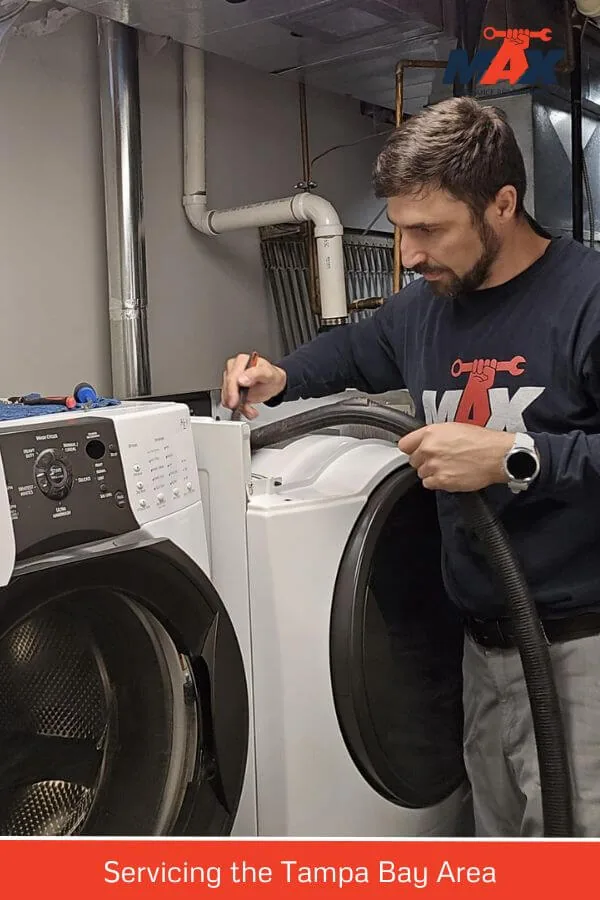
Fast Scheduling
Same-day dryer repair appointments are often available when you call early.
Heat and Airflow Testing
We check temperature, airflow, drum movement and electrical or gas-heating operation.
Clear Repair Decision
You receive the diagnosis and price before deciding whether to proceed.
Dryer repair near you
Choose Your Tampa Bay Service Area
Select the community closest to the appliance address for local route, access and scheduling information. If your community is not shown, use the complete service-area guide or call with the full address.
Swipe to explore more locations →
Common Dryer Problems We Fix
Dryer performance depends on heat, airflow, drum movement and controls working together. These are common dryer service calls we handle across Tampa Bay.
Dryer Will Not Heat
Elements, igniters, gas valves, fuses, thermostats and power supply can stop heat production.
Clothes Take Too Long to Dry
Restricted venting, weak airflow, sensor problems or low heat can extend each load.
Drum Will Not Turn
A belt, idler, roller, motor, switch or control can prevent drum movement.
Dryer Stops Mid-Cycle
Overheating, motor wear, door switches, sensors or controls can shut the machine down.
Dryer Is Loud
Worn rollers, bearings, idlers, blower wheels or trapped items can create scraping or thumping.
Dryer Will Not Start
Power, door switches, thermal fuses, start switches, motors or controls may interrupt operation.
Dryer safety: Clean the lint filter every cycle and keep the exhaust path clear. The U.S. Fire Administration advises having dryers installed and serviced professionally and checking for damaged, crushed or restricted venting. See the USFA dryer fire-safety guidance.
Need Dryer Repair Today?
Call with the fuel type, brand, model number and symptoms. We will confirm the earliest available Tampa Bay appointment window.
Real Dryer Repair Work in Tampa Bay
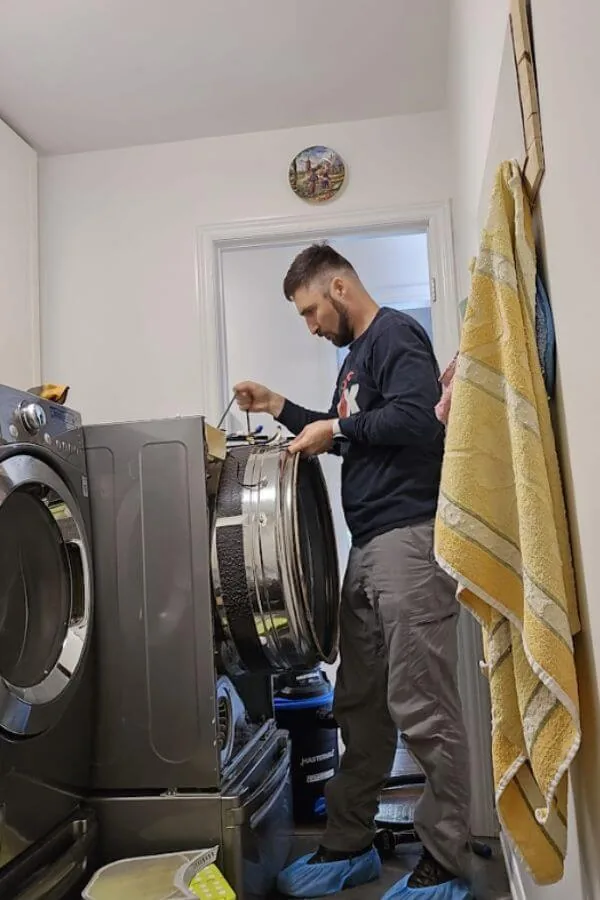
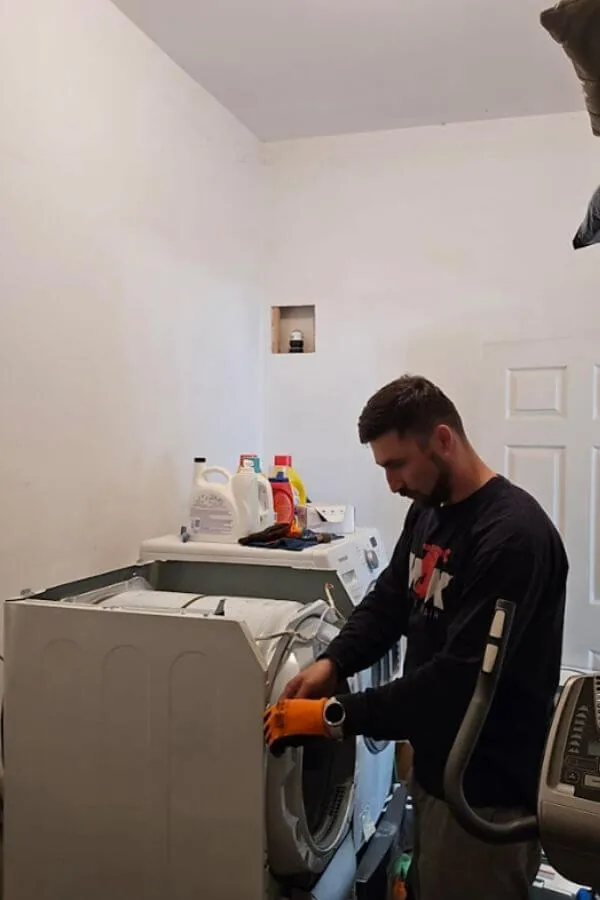
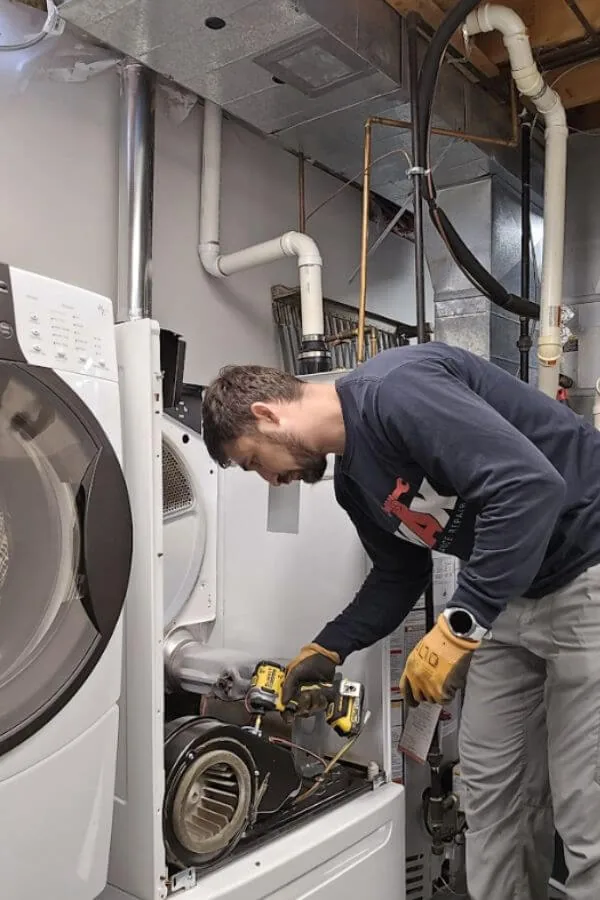
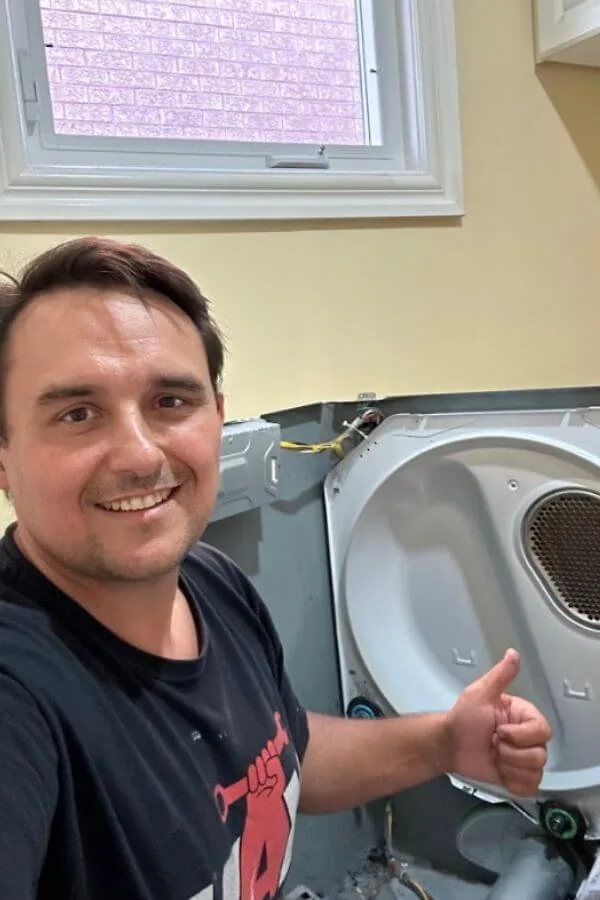
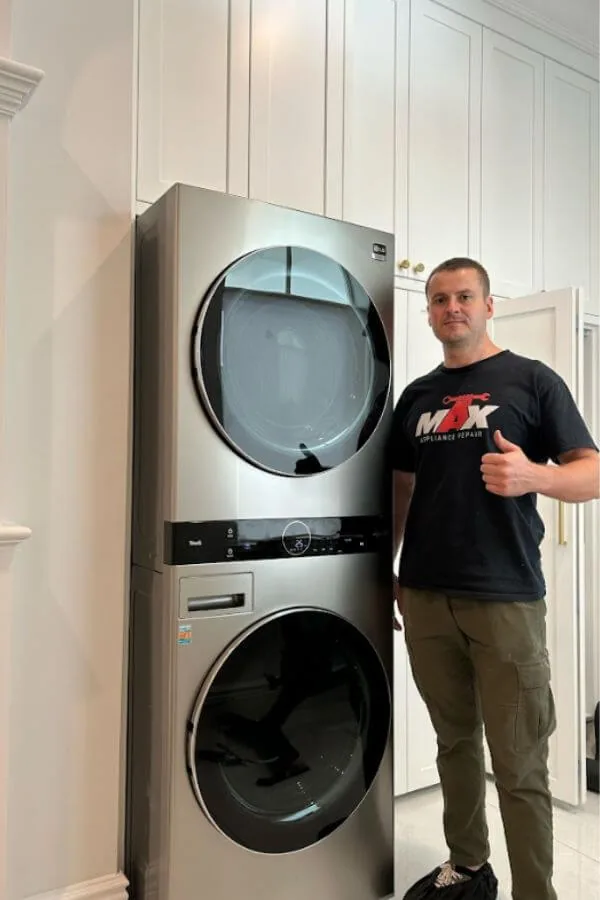
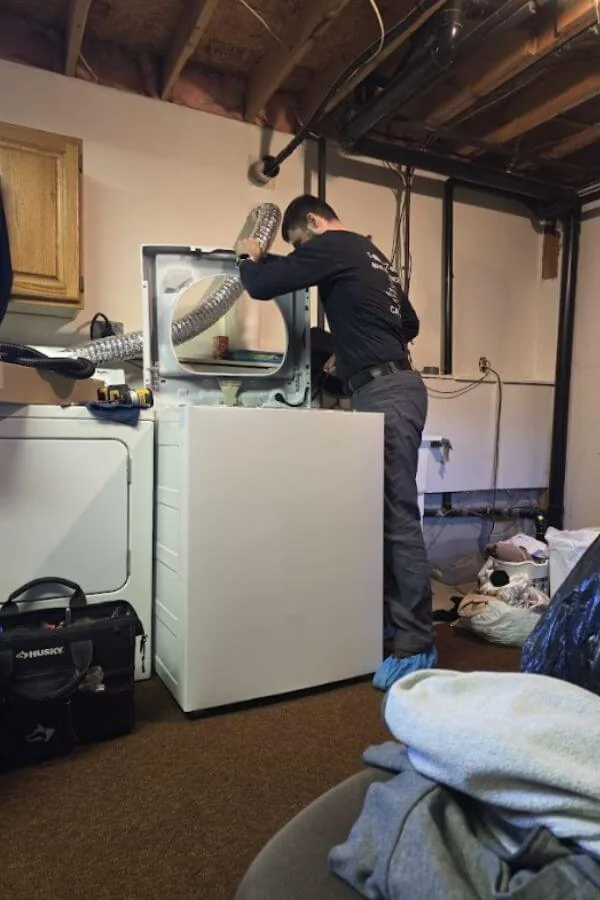
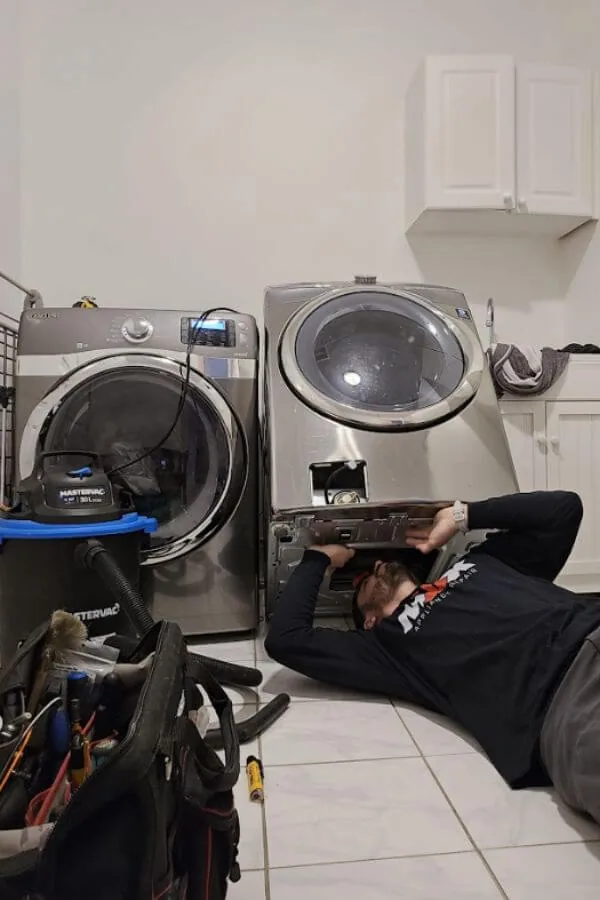
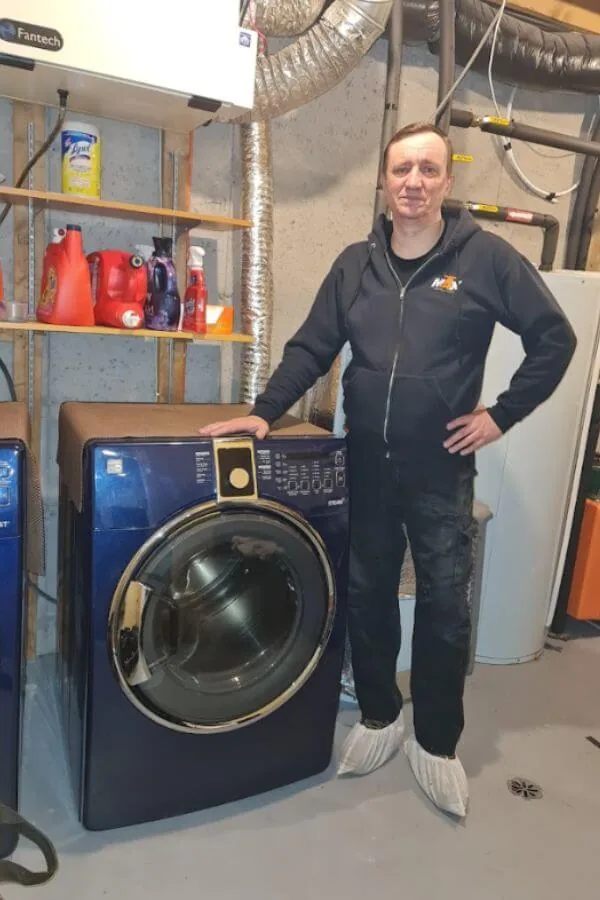
These photos show Max Appliance Repair technicians inspecting dryer drums, motors, electrical components and vent connections in local homes.
What to Expect From Your Service Visit
A simple process keeps the appointment focused and helps you make an informed repair decision.
1
Describe the Drying Problem
Tell us whether the dryer heats, turns, shuts off or displays an error, plus the fuel type.
2
We Test the Dryer
The technician checks airflow, temperature, drum movement, safety components and the heating system tied to the symptom.
3
You Choose the Next Step
We explain the diagnosis and repair price. Work begins only after you approve the option.

Dryer Types We Service
Dryer designs use different heating and airflow systems. We service many configurations, including:
- Electric dryers
- Gas dryers
- Front-load dryers
- Stacked dryers
- Compact dryers
- Smart dryers
- Steam dryers
- Vented dryers
- Selected ventless dryers
- Selected commercial dryers
Dryer Brands We Repair
We provide independent service for many major brands, including Whirlpool, LG, Samsung, GE, Maytag, Frigidaire, Bosch and Miele.
See All Brands We ServiceOur Tampa Bay routes include addresses across Hillsborough and Pinellas counties, with selected Pasco availability. Coverage depends on the complete address and current route. View all service areas.
For a single stacked cabinet that contains both machines, see laundry center repair. For a separate washer problem, visit washer repair.
What Common Dryer Symptoms Can Mean
A dryer that runs poorly may have a heating, airflow, drum or control fault. A technician measures temperature and airflow and tests the affected components before recommending parts.
Drum Turns but There Is No Heat
Common possibilities: Element, igniter, gas valve, fuse, thermostat or supply problem.
What we check: Power or gas supply, safety circuit and heating components.
Loads Need More Than One Cycle
Common possibilities: Restricted vent, weak heat, sensor, blower or load issue.
What we check: Exhaust airflow, temperature rise, blower operation and moisture sensing.
Dryer Starts Then Stops
Common possibilities: Overheating, motor wear, door switch, sensor or control fault.
What we check: Vent restriction, motor temperature, switches and stored codes.
Drum Does Not Move
Common possibilities: Broken belt, worn idler, rollers, motor or door-switch problem.
What we check: Belt path, drum support, motor operation and safety switches.
Scraping or Thumping Sound
Common possibilities: Roller, bearing, idler, seal, blower or trapped-object issue.
What we check: Drum support, moving parts and sound location.
Burning Smell
Common possibilities: Lint buildup, slipping belt, seized component or overheated wiring.
What we check: Stop the dryer and leave it off until the vent path and internal components are inspected.
Should You Repair or Replace the Dryer?
A repair may make sense when the drum and cabinet are sound and the fault is limited to a belt, roller, element, igniter, fuse or sensor. Replacement may be more practical when an older dryer has severe motor damage, repeated control failures or extensive corrosion.
We identify the failed system and provide the repair price so you can compare repair with replacement without pressure.
Helpful Details to Have Ready
- Brand, model and serial number
- Gas or electric
- Whether the drum turns
- Whether any heat is produced
- Any burning smell or unusual noise
Dryer Repair FAQs
Direct answers about pricing, scheduling, common symptoms, repair decisions and visit preparation.
How much does dryer repair cost in the Tampa Bay area?
Cost depends on the failed component, dryer type, model, parts availability and labor required. After testing the dryer, we explain the fault and provide the repair price before work begins. The service-call fee is waived with a completed repair.
Do you offer same-day dryer repair across Tampa Bay?
Same-day appointment options are often available when you call early. Timing depends on your Tampa Bay address, the route, call volume and part availability. Call (813) 906-1062 for the earliest current window.
Do you repair gas and electric dryers?
Yes. We diagnose many gas, electric, stacked, compact, steam and selected ventless dryers from major brands. Share the model number and fuel type when booking.
Why is my dryer running but not heating?
An electric dryer may have a failed element, fuse, thermostat or supply problem. A gas dryer may have an igniter, flame sensor, coil or valve fault. Testing the full heating circuit identifies the cause.
Why does my dryer take so long to dry clothes?
Restricted venting is common, but weak heat, blower problems, moisture-sensor faults, incorrect settings or oversized loads can also extend drying time. Airflow and temperature should both be measured.
Why does my dryer stop before the cycle finishes?
Overheating from restricted airflow, a failing motor, door switch, sensor or control problem can stop a dryer. Note whether it restarts after cooling, because that pattern helps narrow the diagnosis.
Why is the dryer drum not turning?
A broken belt, worn idler, seized roller, motor problem or door-switch fault can stop the drum. Avoid repeatedly starting a dryer that hums without turning.
What should I do if my dryer smells hot or burned?
Stop the cycle and unplug the dryer, or switch off its breaker if that can be done safely. Do not continue using it until lint, venting, wiring, the belt and moving components have been inspected.
How often should I clean the lint filter and dryer vent?
Clean the lint filter before or after every load. Inspect the vent path and outdoor outlet regularly and arrange cleaning when airflow is restricted. Review the U.S. Fire Administration guidance.
Is an older dryer worth repairing?
Sometimes. A belt, roller, element, igniter or sensor repair may be reasonable on an otherwise sound dryer. Severe motor damage, corrosion or repeated major failures may favor replacement.
Get Your Dryer Diagnosed
Serving Tampa Bay communities seven days a week. Call with the complete address or request an appointment online.