

Schedule Now & Get $25 Off
Evidence-led repair review for Whirlpool kitchen and laundry appliances
Whirlpool Appliance Repair in Tampa, FL
Max Appliance Repair Tampa evaluates qualifying residential Whirlpool washers, dryers, refrigerators, cooking appliances, dishwashers, microwaves, and more.
Send the complete model and serial, exact appliance and cycle/temperature symptom, safe installation photos, warranty or recall information, and Tampa-area ZIP code. The stage where operation changes is usually more useful than a guessed failed part.
Seven-day scheduling. Same-day options depend on request time, address, exact model and configuration, symptom and safety, access, coverage/recall route, and parts situation.
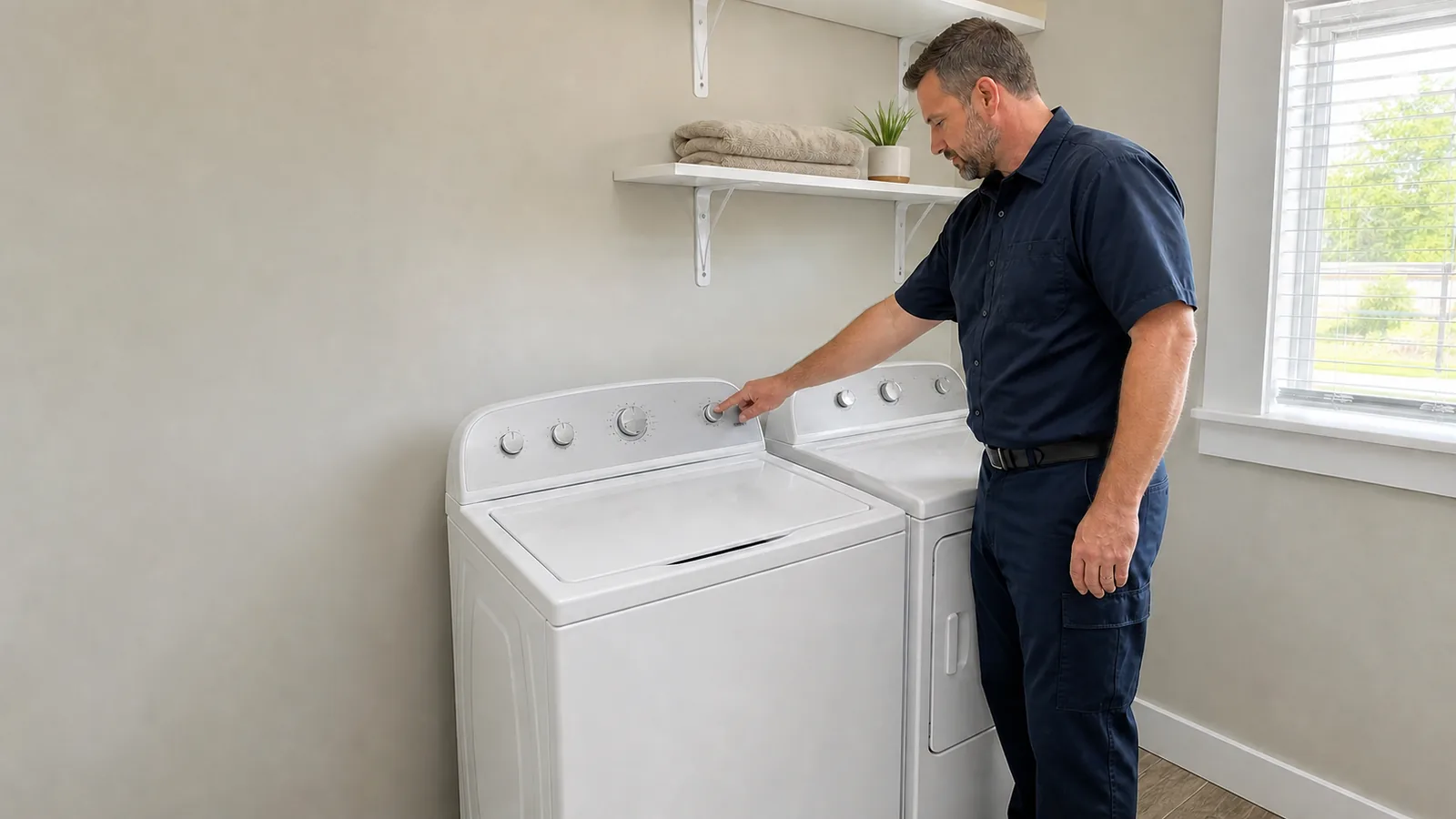
Complete Model and Serial
Photograph the whole rating plate for each washer, dryer, refrigerator, range/oven, microwave, dishwasher, hood, or other affected product.
Where Operation Changes
Identify cycle, option, compartment, burner/zone/cavity, stage, time, code, temperature, sound, leak location, and what still works.
Appliance and Home Context
Include water/drain, vent/duct, electrical/gas, room/HVAC, cabinet/floor/level, sink/disposal, recent work, and safe access.
Safety and Coverage Route
Check warranty, service plan, official recall, prior factory case, and whether independent out-of-coverage service is appropriate.
One brand, many platforms and home systems
Which Whirlpool Appliances Fit This Service Page?
Whirlpool’s current U.S. catalog spans household laundry, refrigeration, cooking, dishwashing, microwave/ventilation, beverage/wine, ice, and compacting products. Exact model, configuration, residential installation, safety/coverage route, condition, documentation, parts support, and access determine service fit.
Top-Load and Front-Load Washers
Model, platform, load, cycle/options, fill-wash-drain-spin stage, lid/door/lock, code, leak/noise, detergent, supply/drain, floor/leveling, and recent move or plumbing work shape diagnosis.
Electric and Gas Dryers
Heat type, cycle, load, run time, drum and heat response, airflow, moisture outcome, lint/vent condition, sound, code, breaker/gas, room, and exterior duct path all matter.
Laundry Pairs and Combo Units
A matching pair still contains two labels and two systems. Stacked or combination configurations need installation, gas/electrical, vent, drain/supply, cabinetry, floor, access, and any recall checkpoint.
Refrigerators, Freezers, Wine, and Ice
Every compartment or product needs its own model/serial, measured temperature evidence, door/drawer, frost/moisture, sound, ice/water/filter, controls, power, ventilation, room, and plumbing context.
Ranges, Wall Ovens, and Cooktops
Gas, electric, and induction configurations need fuel/voltage, burner/zone/cavity/mode, heat and temperature evidence, controls/code, cookware, door/lock/fan, ventilation, cabinet, floor, and safety.
Microwaves and Hoods
Built-in and over-the-range microwaves plus residential hoods need exact model, control/heat/fan/light/door behavior, microwave high-voltage safety, filter/duct/airflow context, cabinet mount, and access.
Dishwashers
Model/serial, recall/coverage check, cycle stage, water/drain, leak, heat/dry, controls/code, filter/spray/rack/door, cabinet, sink/disposal, hose, power, and recent plumbing changes direct testing.
Model-Qualified Compactors and Older Products
Qualifying residential compactors and discontinued Whirlpool families need exact identity, symptom and safety evidence, installation/access, documentation, parts support, condition, and a realistic repair-value review.
Stop and route safety first: gas odor, fire, uncontrolled heat/flame, smoke, arcing, severe overheating, damaged cord/outlet/gas connection, repeated breaker trips, violent appliance movement, active water near electricity, suspected microwave-door/cavity damage, or a possible recall match. Do not keep cycling an appliance to recreate a hazardous symptom.
The point where operation changes narrows the next safe test
Tell Us Where the Whirlpool Appliance Stops Doing Its Job
“Not working” can describe dozens of different sequences. A cycle-stage, compartment, burner, or mode timeline gives the technician useful evidence without pretending to diagnose a component remotely.
Washer: Before Fill, During Wash, or at Drain/Spin?
Save the selected cycle/options and the last completed action. Note water entry, agitation/tumble, pause timing, drain, spin, lid/door lock, load balance, code, sound, leak timing, and whether cancel/drain responds normally.
Dryer: Starts, Heats, Moves Air, and Finishes?
Separate drum movement, heat, airflow, run time, moisture result, shutdown, code, sound, lint screen, visible vent, load type, heat source, and whether a timed cycle differs from sensor drying.
Dishwasher: Fill, Circulate, Drain, or Dry?
Identify the stage where behavior changes. Add standing water depth, first leak location/timing, spray/pump sound, door/latch, heat/dry, code, detergent, filter/spray arms, sink/disposal, and recent plumbing.
Cooking: Which Burner, Zone, Cavity, and Mode?
Name the exact function and compare only safe normal operation. Record ignition/flame or element/induction response, cookware, setpoint, preheat/temperature pattern, fan, door/lock, display/code, and utility event.
Refrigeration: Which Zone and What Temperature Trend?
Record setpoint and measured food-equivalent temperature by compartment, duration/trend, doors/drawers, frost/moisture, sound, controls/alarm, ice/water, loading, room/HVAC, power, and recent work.
Microwave or Hood: Heat, Fan, Light, Door, or Airflow?
For microwaves preserve mode/time/heat result, door/latch, turntable, fan/light, sound/odor/arcing, code, and mount. For hoods preserve speeds, capture, sound/vibration, filters, duct mode, and termination.
The machine and the house meet at utilities, airflow, drains, floors, and cabinets
Separate Appliance Evidence From Home-System Conditions
A symptom can originate inside the appliance, outside it, or from an interaction. This does not make every problem an installation issue; it means the diagnostic plan must verify both sides where relevant.
- Water: hot/cold supply, shutoffs, pressure/flow, inlet screens through owner access, filters, drain hose, standpipe, sink/disposal, and recent plumbing.
- Air: dryer transition and exterior vent, hood duct/termination, refrigerator clearances and room/HVAC conditions.
- Power or gas: breaker/receptacle/hardwire, cord/connection through normal view, gas type/shutoff history, outage/surge, and shared-circuit events.
- Structure: floor level/flex, cabinet opening, counter, door/panel alignment, appliance movement, stacked hardware, and removal clearance.
- Use evidence: load, cycle/options, detergent, cookware, temperatures, filters, cleaning, maintenance, and recent changes.
Examples of useful separation
- A dryer tumbles and heats but dries slowly; appliance heat, lint screen, transition duct, exterior airflow, load, and room conditions are separate observations.
- A washer stops before spin; save drain behavior, standing water, lock response, balance, floor movement, and code before assuming a drive fault.
- A dishwasher retains water after a new disposal; cycle drain behavior, hose routing, sink/disposal setup, and pump evidence all matter.
- A refrigerator warms after cabinet or HVAC work; zone temperatures, door sealing, airflow clearance, room temperature, controls, and physical systems need separation.
- An induction zone behaves differently with one pan; cookware suitability is evidence, not proof that the appliance is normal or failed.
- A gas oven fails after utility work; stop for odor and preserve the exact function and event rather than adjusting gas components.
Older products need exact model-and-serial routing
Two Whirlpool Recall Checkpoints Worth Knowing
These historic examples remain relevant to older homes, but they are not a complete recall list. Use the complete model and serial with Whirlpool’s current support route and CPSC’s Whirlpool index. Brand, age, appearance, or a similar symptom does not establish eligibility.
CPSC 05-123
Selected Plastic Tall-Tub Dishwashers
The 2005 notice includes selected Whirlpool undercounter dishwashers with model prefixes DU1, DUL, GU1, GU2, and GU6 and specified serial ranges beginning with FR. The wash-motor wiring can overheat and may catch fire.
If the complete rating plate may match: stop using the dishwasher, disconnect power as the current official notice directs, and use Whirlpool’s free inspection/repair route. Preserve prior motor or wiring service information; do not open electrical areas or treat a no-start, trip, smell, or drain symptom as proof of recall status.
CPSC 02-192
Selected Compact Thin Twin Washer/Gas Dryer Units
The 2002 notice identifies Whirlpool models LTG5243DZ2, LTG5243DT2, LTG5243DQ2, LTG5243DQ3, and LTG5243DT3 with serial numbers beginning MM, ML, or MK. The gas dryer can overheat and create a fire hazard.
If the complete rating plate may match: stop using and unplug the unit as the official instruction states; do not attempt to shut off the gas supply; follow Whirlpool/CPSC’s free-repair route. Electric-dryer versions were not included in that notice.
Check the full history: CPSC’s Whirlpool manufacturer index contains additional older notices. Recall details, contacts, and remedy status can change. Use the exact model/serial and current official instructions, and preserve any prior recall remedy or case number.
Connected status and physical function are two evidence streams
Does a Whirlpool App Problem Mean the Appliance Failed?
Not automatically. Whirlpool connected appliances can involve the appliance, local controls, app, account, router, Wi-Fi band and security, signal, remote-enable setting, pairing, software update, voice integration, notifications, or server availability. A physical fault can also coexist with a connectivity issue.
Before resets, save the appliance display and code, actual operating result, cycle/mode/temperature, and time. Separately save the app wording, online/offline state, last-update time, user/device, network changes, remote-enable state, and reset/update history. Note whether other connected appliances work and whether normal local controls operate as the manual permits.
A refrigerator marked offline does not explain a measured warm zone; a delayed dryer notification does not explain airflow; and a range app error does not prove the heating hardware failed. Avoid repeated factory resets that erase pairing and timing evidence.
Save these connected details
- Complete model/serial and whether the appliance is registered to the current account
- Exact appliance display code/message and physical function at the same time
- Exact app wording, screenshot, notification time, and online/offline state
- Phone/tablet and app version, user account, permissions, and whether another user/device behaves differently
- Router/network change, 2.4/5 GHz context, password/security, signal, VPN/firewall, and outage
- Remote enable/start state, door/lock state, and any safety restriction shown
- Software/app update, power cycle, reset, re-pair attempt, and what changed afterward
- Whether normal local controls work and whether the physical symptom exists without the app
The complete rating plate connects the symptom to the right manual and route
How to Prepare a Whirlpool Model and Serial Number
Whirlpool’s Owner Center provides a product-category locator and model-based manuals. Photograph the complete label—not only a marketing family or partial number—because suffixes and serials can affect documentation, production range, parts, warranty, and recall routing.
1
Select the Product Category
Use Whirlpool’s model locator for refrigerator, dishwasher, range, microwave, cooktop, wall oven, washer, dryer, combo laundry, disposer, or compactor rather than guessing a location.
2
Use Normal Safe Access
Look around normal door, lid, drawer, food-compartment, or frame areas as directed. Let cooking appliances cool. Do not pull or dismantle an appliance to expose a plate.
3
Capture the Entire Label
Keep model, suffix, serial, electrical/gas data, and other identifiers readable in one sharp frame. Type the values too, and repeat for every appliance in a pair or stack.
4
Attach the Evidence
Add cycle/mode/stage, exact code, temperatures/timing, sound or leak details, installation photos, warranty/plan/recall records, and prior service information.
Protect safety and the home: do not pull a range or refrigerator, tip laundry, remove a microwave or cabinet panel, open an electrical junction, disconnect gas, or reach around a hot appliance just to find a label. Use the official locator and ask for help if the safe location is unclear.
Choose the coverage and safety path before independent work
Warranty, Service Plan, Recall, or Independent Service?
The correct route depends on model/serial, purchase and installation records, registration, current written warranty, plan administrator, safety notice, prior factory case, and requested work. Confirm the route before authorizing an independent repair that could conflict with coverage.
Route 1
Possible Whirlpool Warranty
Use Whirlpool’s current Owner Center/service route with complete model/serial and proof of purchase/installation. Product, seller, time, component, use, and written terms affect coverage.
Route 2
Service Plan or Home Warranty
Contact the plan administrator before booking elsewhere. Confirm authorization, dispatch, deductible, exclusions, approved provider, parts policy, and prior claim requirements.
Route 3
Official Safety Recall
Follow current Whirlpool/CPSC stop-use and free-remedy instructions. Preserve exact identity and prior remedy records; do not substitute independent work for an official recall repair.
Route 4
Independent Out-of-Coverage Review
Max can review a qualifying residential request after product, evidence, installation, access, safety, coverage route, condition, documentation, and parts support are known.
Use the isolated fault and total ownership project—not a single age rule
Is an Older Whirlpool Appliance Worth Repairing?
A practical comparison includes diagnosis, safety and coverage, exact platform, overall condition, parts/documentation support, house-side conditions, capacity and features, prior repairs, and the complete delivered and installed replacement.
Repair deserves consideration when
- Testing isolates a defined, supportable fault rather than several overlapping systems
- No active recall/free remedy or covered service route should be used first
- Correct parts, documentation, and safe access remain available
- The cabinet/tub/drum/cavity/liner/doors, controls, other functions, and installation remain sound
- House-side water, drain, vent, electrical/gas, floor, cabinet, and room conditions can support normal operation
- The appliance still meets capacity and feature needs and repair is reasonable against the full replacement project
Replacement deserves more weight when
- Major-system damage overlaps or diagnosis cannot be supported safely and reliably
- Fire, severe electrical/gas, structural, corrosion, leak, tub/cabinet/cavity, or door damage remains
- Critical parts or model-specific documentation/support are unavailable
- Repeated repairs, heavy wear, rust, noise, leaks, or multiple failing functions reduce confidence
- Capacity, efficiency, venting, installation, or household needs are no longer met
- Repair approaches appliance, delivery/removal, hookup, vent/plumbing/electrical, cabinet/floor, and finish cost
A clear path from product identity to decision
What to Expect From Your Whirlpool Service Visit
Good intake protects time, appliances, laundry/kitchen surfaces, floors, cabinets, utilities, and expectations. Diagnosis comes before a part, price, or completion promise.
Step 1
Model and Route Review
We confirm each appliance, model/serial, configuration, cycle-stage evidence, safety and warranty/plan/recall route, installation, access, and prior work.
Step 2
Model-Matched Diagnosis
The technician reviews controls, reported evidence, utilities, drain/vent/cabinet/floor context, and accessible systems, then tests relevant functions where safe conditions permit.
Step 3
Findings and Options
You receive findings and a proposed next step before repair proceeds. Parts, labor, access, condition, coverage, house-side needs, and replacement context can be compared.
Step 4
Approved Work and Check
Authorized work is completed when feasible and followed by a relevant functional check. Eligible repair parts installed by Max include a limited 90-day parts warranty; coverage depends on the component and repair.
Local routing with product, stage, and installation confirmation
Whirlpool Appliance Repair Across the Tampa Bay Area
Requests are reviewed across Tampa and many nearby Hillsborough, Pinellas, and Pasco County communities. Availability varies by address, exact appliance/configuration, safety and coverage/recall route, laundry or kitchen installation, building access, and parts situation.
All Service AreasTampaClearwaterDunedinSt. Petersburg
Share parking/loading, gate, elevator, stairs, service-hour, floor-protection, property authorization, and vendor-document rules plus drain/standpipe, dryer vent, water/gas/electrical, sink/disposal, cabinets/counters, floor, removal path, and prior-damage details.
Direct answers for Whirlpool owners
Whirlpool Appliance Repair FAQs
Answers about service scope, washers, dryers, refrigeration, cooking, dishwashers, older safety notices, connected appliances, model identification, independent versus covered service, and repair value.
Which Whirlpool appliances do you repair in Tampa?
We evaluate qualifying residential Whirlpool top-load and front-load washers, electric and gas dryers, laundry pairs and model-qualified combination units; refrigerators, freezers, beverage/wine centers and ice makers; gas, electric and induction ranges; cooktops, wall ovens, microwaves and residential hoods; dishwashers; and qualifying compactors. Service fit depends on the complete model and serial, exact appliance/configuration, safety and warranty or recall route, installation, access, condition, and current documentation and parts support. Send a separate rating-plate photo and symptom record for every affected appliance, even when a washer/dryer pair or kitchen suite was purchased together. Small countertop appliances are not part of this residential major-appliance page.
Do you repair Whirlpool top-load and front-load washers?
Qualifying Whirlpool top-load and front-load washers can be reviewed by complete model/serial, capacity and configuration, cycle and option, exact stopping stage, fill/agitation or tumble/drain/spin behavior, lid/door/lock response, displayed code, load and balance, detergent/additive, standing water, first leak location and timing, drain-hose and standpipe context, water supply, power, floor/leveling, and recent move or plumbing work. Stop for smoke, burning odor, arcing, repeated breaker trips, severe cabinet movement, damaged cord, or active water near electricity. Do not repeatedly run a leaking or violently moving washer. A no-spin, no-drain, slow-fill, noise, odor, code, or leak symptom does not remotely prove a pump, lock, control, suspension, bearing, valve, hose, or drive component.
Do you repair Whirlpool electric and gas dryers?
Qualifying Whirlpool electric and gas dryers can be reviewed by exact model/serial, heat type, cycle/options, load and fabric, run time, heat result, airflow at normal exterior access, moisture outcome, drum movement, sound/vibration, code, lint-screen and visible vent condition, breaker or gas history, and recent vent, roof, wall, floor, or laundry-room work. Stop for gas odor, smoke, burning odor, arcing, severe overheating, damaged cord/outlet, repeated trips, or a scorched cabinet or vent connection. Do not run a dryer with suspected airflow restriction or remove a gas line or cabinet panel for intake. No heat, long dry time, shutdown, noise, or a damp load does not by itself identify a heater, igniter, gas valve, sensor, motor, control, roller, belt, or house vent problem.
Can you repair Whirlpool refrigerators, freezers, and ice makers?
Qualifying Whirlpool top-freezer, bottom-freezer, side-by-side, French-door, counter-depth, freezer, beverage/wine, and ice-making products can be reviewed by exact model/serial and configuration. Record every affected zone’s setpoint and measured food-equivalent temperature, duration and trend, frost/moisture location, door/drawer and gasket behavior, fan/compressor sound, control or alarm, ice and water behavior, filter history, power, toe-kick or cabinet ventilation, room/HVAC context, and recent loading, outage, plumbing, cabinet, floor, or move. A warm compartment does not remotely prove a compressor, sealed-system, fan, sensor, control, damper, gasket, valve, or airflow fault. Protect food first when temperature safety is uncertain, and stop for smoke, arcing, damaged wiring, active water near electricity, or severe overheating.
Do you repair Whirlpool ranges, ovens, cooktops, and microwaves?
Qualifying Whirlpool gas, electric, and induction ranges; wall ovens; cooktops; and built-in or over-the-range microwaves can be reviewed after model/serial, fuel/voltage, exact configuration, and safety are known. Record the affected burner/zone/cavity/mode, setpoint, ignition/flame or element/induction response, cookware where relevant, preheat and temperature result, fan/light, door/lock, control/code, and breaker or gas history. Stop for gas odor, uncontrolled heat or flame, smoke, arcing, shattered glass, damaged cavity/door/latch, severe overheating, or repeated trips. Never remove a microwave cover or bypass an interlock; high-voltage components can remain dangerous. A code or no-heat condition is evidence for model-matched testing, not a remote component diagnosis.
Do you repair Whirlpool dishwashers?
Qualifying Whirlpool undercounter and model-qualified compact dishwashers can be reviewed by exact model/serial, safety-recall and coverage status, cycle/options, stopping stage, fill/circulation/drain/dry behavior, standing-water depth, first leak location and timing, pump/spray sound, code, water temperature, detergent/rinse aid, normal-access filter and spray-arm condition, door/latch/rack, cabinet alignment, sink/disposal and drain-hose context, power, and recent plumbing or installation work. Stop for smoke, burning odor, hot/melted electrical areas, repeated trips, or active water near electricity. If an older model may match a Whirlpool/CPSC notice, stop use and follow the current official route. Poor cleaning, no drain, no dry, no start, leak, or odor does not prove one pump, heater, valve, latch, control, wiring, or recalled part.
Is my older Whirlpool dishwasher affected by a recall?
Only Whirlpool’s current exact model/serial check or an official CPSC notice can answer. One important historic example is CPSC 05-123 for selected Whirlpool undercounter plastic tall-tub dishwashers with model prefixes DU1, DUL, GU1, GU2, and GU6 and specified FR serial ranges. The wash-motor wiring could overheat and create a fire risk. Other older Whirlpool dishwasher notices exist, so this example is not a complete list. If the rating plate may match an official notice, stop using the dishwasher, switch off power as the current instructions direct, and use the free official inspection/repair route. Do not infer eligibility from age, color, a no-start condition, smell, heat, trip, or a prior generic repair, and do not substitute independent service for an official recall remedy.
Is my Whirlpool Thin Twin washer and gas dryer affected by a recall?
CPSC 02-192 covers selected Whirlpool Compact Thin Twin combination washer/gas dryer units: LTG5243DZ2, LTG5243DT2, LTG5243DQ2, LTG5243DQ3, and LTG5243DT3 with serial numbers beginning MM, ML, or MK. The gas dryer could overheat and create a fire hazard. The official notice says affected units should not be used and directs consumers to the free repair route; it also says not to attempt to shut off the gas supply. Electric-dryer versions were not included in that notice. If your complete model and serial may match, follow Whirlpool/CPSC’s current instruction rather than arranging ordinary diagnosis. A stacked appearance, gas heat, age, long dry time, or hot cabinet alone does not prove recall eligibility.
Does a Whirlpool app or Wi-Fi problem mean the appliance needs repair?
Not necessarily. A connected-appliance issue can involve the appliance, Whirlpool app, account, router, Wi-Fi band/security, signal, pairing or remote-enable state, software update, voice platform, server availability, or a separate physical condition. Preserve the exact appliance display code and physical result separately from the app wording, online/offline state, notification timing, affected user/device, network change, and reset/update history. Check whether normal local controls work only as the manual allows. Avoid repeated factory resets before saving evidence because they can erase pairing and timing context. An offline appliance does not prove a failed control, and a physically warm refrigerator, stopped washer, or no-heat oven still needs its own safety and function evidence.
Where do I find the Whirlpool model and serial number?
Whirlpool’s Owner Center provides a category-based locator, and its manuals search uses the complete model number. Locations vary by appliance and generation: refrigerators commonly use a label in the food compartment; front-load laundry often uses the door opening; top-load laundry may use the lid opening or cabinet area; dryers commonly use the door opening; dishwashers often use the tub or door frame; ranges and ovens use different door-frame, drawer, or cooktop-area locations; microwaves and hoods vary. Use the current Whirlpool guide and normal safe access. Photograph the entire plate so model suffix, serial, electrical/gas information, and other identifiers remain readable. Do not pull a heavy appliance, remove a panel, lift a cooktop, or reach around a hot range merely to find the label.
Is Max Appliance Repair Tampa authorized by Whirlpool, and what about warranty service?
Max Appliance Repair Tampa is independent and is not Whirlpool factory service and is not authorized by, affiliated with, or endorsed by Whirlpool Corporation. For possible manufacturer warranty, product registration, Whirlpool service plan, third-party/home warranty, safety recall, product claim, or factory-directed work, use the applicable current route before independent service. Have the complete model and serial, proof of purchase and installation, registration, plan documents, prior authorization or case number, and symptom record ready. Independent service may be appropriate for a qualifying out-of-coverage residential request after safety, installation, access, condition, documentation, and parts support are reviewed. Do not assume coverage or authorization from the brand name, appliance age, seller, or an online appointment listing.
Is an older Whirlpool appliance worth repairing?
The decision should follow model-correct diagnosis and safety, coverage, documentation, and parts checks rather than a universal age rule, one code, brand familiarity, or a guessed part. Compare the isolated fault; complete model/serial; condition and prior repairs; washer tub/drive and cabinet, dryer drum and vent, refrigerator cabinet/sealed-system and doors, cooking cavity and controls, or dishwasher tub/racks; current recall/warranty/support route; house-side water/drain/vent/electrical/gas conditions; and the complete installed replacement cost. Repair can make sense when testing isolates a supportable fault and the appliance and installation are sound. Replacement deserves more weight when major systems overlap, safety or structural damage remains, critical support is unavailable, repeated failures accumulate, or repair approaches appliance, delivery/removal, hookup, cabinet/floor, vent/plumbing/electrical, and finish cost.
Sources used for product scope, model/manual routing, connected products, support, and safety: Whirlpool’s official U.S. major-appliance catalog, kitchen categories, cooking categories, laundry categories, Owner Center and model locator, model-based manuals, model/serial guide, and smart-appliance information; plus CPSC’s official Whirlpool recall index, 2005 dishwasher notice, and 2002 Thin Twin notice. Products, models, serial ranges, notices, warranties, plans, apps, documentation, parts, and service routes can change; verify the current exact rating plate and official instruction. Symptoms are evidence for diagnosis, not remote component or recall determinations.
Independent service disclosure: Max Appliance Repair Tampa is independent and is not Whirlpool factory service and is not authorized by, affiliated with, or endorsed by Whirlpool Corporation. Brand, family, and feature names identify appliances discussed or serviced. For warranty, service-plan, safety recall, product claim, authorized verification, or factory-directed service, use Whirlpool’s current official route.
Product scope, manuals/model routing, connected features, safety notices, and service-route information reviewed August 2, 2026. View all appliance brands we repair.
Need Help With a Whirlpool Appliance?
Call with the complete model/serial, appliance and cycle-stage evidence, safe installation photos, warranty or recall information, and Tampa-area ZIP code, or send the details online.