

Schedule Now & Get $25 Off
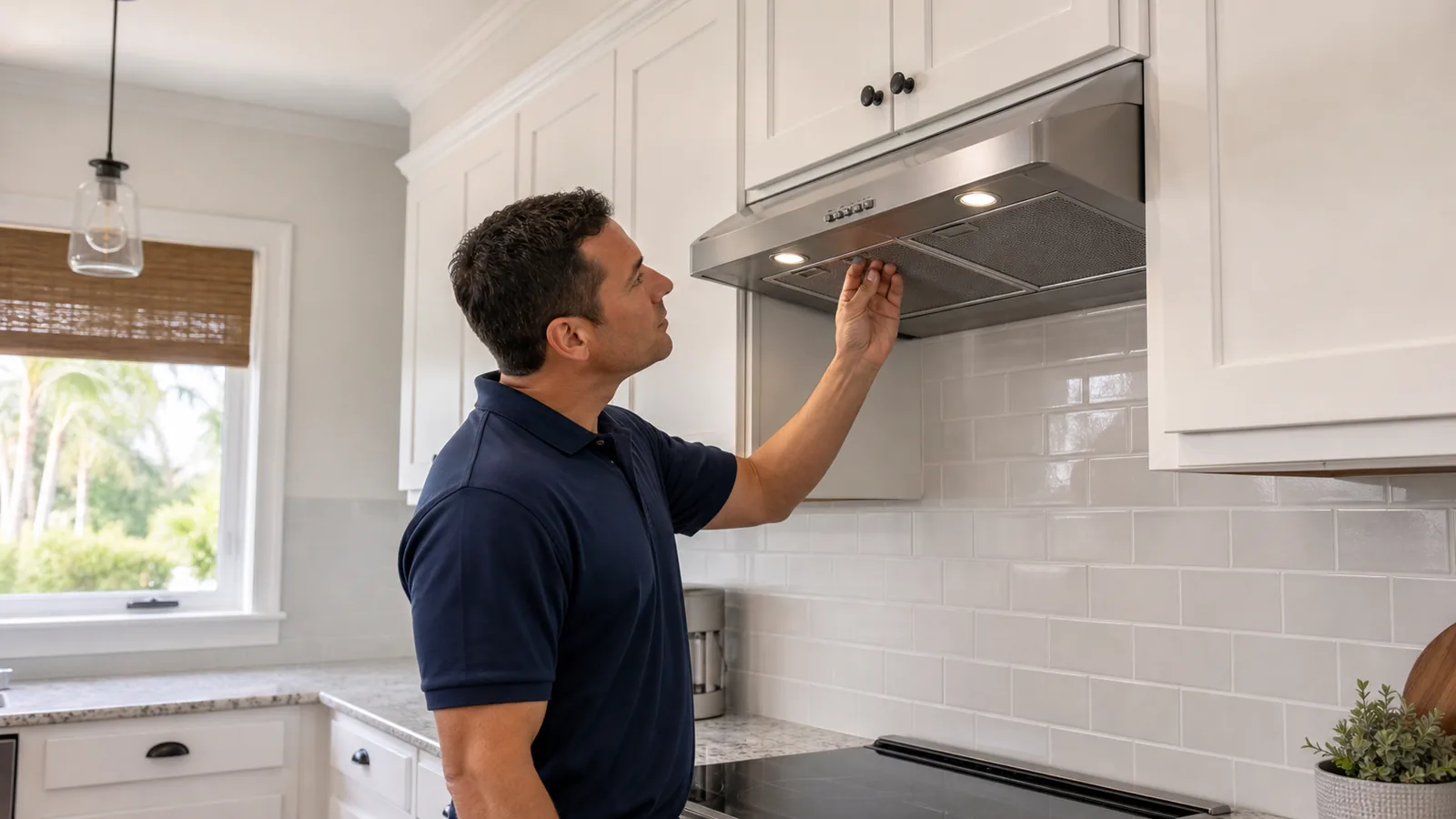
Independent kitchen-ventilation service
Faber Range Hood Repair in Tampa, FL
Max Appliance Repair Tampa evaluates many Faber range hoods and downdraft systems, with model-aware intake that separates a hood failure from an airflow or installation problem.
Tell us whether the fan, speeds, controls, lights, noise, suction, filter indicator, or downdraft movement changed. A clear photo of the white model and FB serial label underneath the filters helps us assess service fit before the visit.
Seven-day scheduling. Same-day options depend on request time, route, hood type, access, blower location, and parts availability.
Hood-Specific Intake
We ask about the exact Faber model, blower, installation, and symptom.
Airflow Is Not Guesswork
Filters, ducting, dampers, and remote blowers are separated from appliance faults.
Estimate Before Approved Work
The finding and proposed repair are explained before you decide.
The useful question is where the problem begins
A Faber Hood Problem Can Live in Three Different Layers
Weak capture, noise, and intermittent operation can feel like one problem at the cooktop. A reliable service decision separates the equipment into layers so an expensive blower is not blamed for a loaded filter, restricted duct, failed control, or inaccessible remote component.
1
Inside the Hood
Switches or touch controls, electronic boards, capacitors, internal blowers, wheels, lighting components, wiring, sensors, and model-specific features belong to the appliance layer.
Clues include a silent fan, missing speeds, a hum without rotation, unresponsive commands, lighting failure, or mechanical contact inside the housing.
2
Filters and Air Passage
Grease filters, baffles, charcoal filters, the hood outlet, damper, and nearby duct connection influence airflow and noise even when the motor and controls operate.
Clues include stronger sound with little capture, a filter alarm, overdue maintenance, or airflow that changed gradually instead of stopping at once.
3
Installation and Building Path
Duct diameter, elbows, long runs, crushed or leaking sections, exterior caps, make-up air, mounting stability, and internal versus remote-blower placement sit beyond a simple part swap.
Clues include normal hood operation with poor capture, duct vibration, a problem that followed remodeling, or a remote blower that cannot be safely accessed.
Describe the behavior before naming a part
What Common Faber Range Hood Symptoms Can Mean
These are diagnostic starting points, not remote diagnoses. Exact controls and blower arrangements vary across older and current Faber families, so the model label and a short description of what still works are essential.
Fan Will Not Start
Power, a switch or touch panel, control board, capacitor, wiring, motor, or a remote-blower connection may require testing.
Only One Speed Works
A speed selector, electronic control, capacitor, motor winding, wiring, or configurable model setting can affect individual speeds.
Weak Capture With Fan Running
Filters, duct restriction, a damper, exterior cap, recirculation setup, blower output, or installation geometry may be involved.
Rattle, Hum, or Grinding
A loose filter or mount, debris, blower-wheel contact, imbalance, motor-bearing wear, duct resonance, or a remote blower can create noise.
Lights or Touch Controls Fail
An LED module, driver, lamp, socket, switch, touch panel, control board, wiring, or supply condition may need evaluation.
Downdraft Will Not Move
Controls, limit sensing, a lift drive, wiring, physical obstruction, or the system’s blower arrangement can change the diagnostic path.
Switch the hood off and arrange evaluation if you notice smoke or arcing from the housing, a burning electrical odor, heat-damaged wiring, a blower wheel striking metal, or severe vibration. Do not reach into a moving blower or remove electrical covers while power is connected.
Three observations make the service note more useful
Before You Call: Fan, Airflow, and Timing
You do not need to diagnose the hood. A few safe observations help identify the right starting point and prevent the booking from treating every suction complaint as a motor failure.
Does the blower run?
Note whether it is silent, hums, starts slowly, or runs normally. Record which speed settings work without repeatedly cycling a struggling motor.
Where does the air go?
Tell us whether the hood vents outdoors or recirculates into the kitchen, and whether there is a remote blower in an attic, exterior wall, or roof location.
When did it change?
A sudden stop, gradual loss of capture, problem after filter service, or issue after remodeling points to different checks. Mention any recent electrical or cabinet work.
Faber is a ventilation brand, but not every hood is built alike
Faber Configurations We Review by Model
Faber’s official U.S./Canada catalog spans visible canopies, concealed inserts, and retractable systems. Identifying the configuration matters because component access, mounting, ducting, filters, and blower placement can be completely different.
Under-Cabinet and Pro Hoods
Mounted below cabinetry in slim or deeper pro-style formats. Examples in Faber’s catalog include Levante, Breva Pro, Solano Pro, and Camino Pro families.
Wall and Chimney Hoods
Visible wall-mounted canopies and chimney sections. Nova Pro, Dama, Classica Plus, and Stilo examples show why width, depth, controls, and duct direction must match the exact model.
Inserts and Built-In Hoods
Blower and controls are concealed inside custom cabinetry or a decorative shell. Inca-family inserts illustrate why the appliance and surrounding cabinet enclosure must be considered separately.
Integrated Hoods
Models such as Cristal or Flexa examples integrate with cabinetry and may use slide-out or concealed designs. Access and switch activation can differ from a fixed canopy.
Island and Ceiling Hoods
Suspended or ceiling-integrated designs require secure mounting and safe overhead access. Building height and service reach should be disclosed before the appointment.
Downdraft Systems
Scirocco-family examples rise beside the cooktop and may use internal or remote blowers. Lift movement, controls, cabinet clearance, and duct routing are all relevant.
Retractable downdraft service
When the Vent Must Rise Before It Can Vent
A downdraft combines movement and ventilation in one installation. If it does not rise, does not remain raised, lowers unexpectedly, or the fan does not follow the panel position, the lift and blower symptoms should be recorded separately.
- Clear drawers, shelves, stored pans, and cleaning products from the cabinet.
- Note whether you hear a motor, click, hum, or obstruction during movement.
- Do not force the panel by hand or keep cycling a stalled mechanism.
- Identify whether a cooktop or oven blocks service access below the counter.
- Send a wide photo showing the cooktop, counter opening, and cabinet interior.
A physical obstruction, lift mechanism, switch or sensor, control, wiring, and blower issue can overlap. The exact model controls the safe service procedure.
Internal versus remote blower
Where Is the Blower Actually Installed?
Some Faber configurations keep the blower inside or near the hood. Select installations can use a remote blower farther along the duct system. The sound may seem to come from the kitchen even when the serviceable motor is elsewhere.
- An internal blower is normally evaluated from the hood or nearby cabinet area.
- A remote blower may be installed in an attic, exterior wall, roof, or another documented location.
- The control signal, power, duct path, and remote motor can fail in different places.
- High-ladder, roof, attic, exterior, or unsafe access is not assumed in a standard appliance visit.
- Duct reconstruction, roof-cap work, and building-circuit repairs may require another trade.
Tell us the blower location at booking. If you are unsure, share the installation manual, original invoice, or photos of the cabinet and visible duct route.
The label is more useful than the hood’s appearance
Find the Faber Model and FB Serial Number
Faber says the white UL label is inside the hood underneath the grease filters. The exact identifiers connect the appliance to specification sheets, installation instructions, spare-parts information, and current or legacy status.
Turn the hood off and let the cooking area cool before removing an owner-removable grease filter. Do not open an electrical compartment or place yourself under an unsupported panel.
Photo 1: complete white UL label. Keep the model, FB serial, service or FUN number, voltage information, and revision characters in frame.
Photo 2: full hood and cooking surface. Show whether it is under-cabinet, wall, island, integrated, insert, ceiling, or downdraft.
Photo 3: filters and controls. Show the installed filter type, control style, and any display or flashing indicator.
Video: sound or movement. A 10–15 second clip can capture a rattle, failing speed, delayed start, or downdraft motion without repeated cycling.
Installation note. Tell us ducted or recirculating, internal or remote blower, ceiling height, and any access restriction.
Do not identify the hood by width alone. Similar stainless-steel models can use different controls, motors, filters, lights, and mounting parts. The complete label prevents the wrong document or part from being matched.
A clear handoff is better than an unclear promise
What the Appliance Visit Evaluates—and What May Need Another Trade
A service appointment can identify whether the reported condition is consistent with the hood, a filter or damper condition, accessible wiring, or an observable installation issue. Some corrections belong to a different licensed or access-qualified contractor.
Typically Evaluated at the Hood
Controls, switches, fan speeds, internal blower or wheel behavior, lighting circuits and modules, accessible wiring, filter fit, alarm behavior, visible damper movement, and downdraft operation can be reviewed according to model and access.
Depends on Installation and Access
Remote blowers, high island or ceiling hoods, custom wood surrounds, built-in inserts, blocked downdraft cabinets, and concealed duct connections require advance photos and safe access confirmation.
May Require Another Contractor
Full duct cleaning or redesign, roof or exterior-cap work, cabinet modification, structural mounting correction, make-up-air design, and house-circuit repair can require the appropriate duct, roofing, carpentry, HVAC, or electrical trade.
Built-in ventilation changes the repair-versus-replace math
Should You Repair or Replace an Older Faber Hood?
A simple under-cabinet hood, a custom Inca-style insert, and a Scirocco downdraft do not have the same replacement work. Compare the diagnosed failure with the condition and complete installed cost—not only with an online hood price.
Decision factor 1
Exact Failure
A switch, light, or isolated blower component differs from heat-damaged controls, corroded wiring, several failed systems, or a damaged lift assembly.
Decision factor 2
Documented Parts
The complete model and serial revision determine whether the correct part and technical document can be identified. A family name is not a part number.
Decision factor 3
Installed Condition
Grease saturation, corrosion, damaged wiring, unstable mounting, cracked panels, and inaccessible custom construction can change the value and safety of repair.
Decision factor 4
Replacement Disruption
Cabinet cutout, chimney height, width, finish, duct size, blower location, countertop opening, and electrical connection can make replacement a multi-trade project.
The technician can explain the observed failure and proposed repair estimate. You decide whether repair fits the hood, installation, budget, and longer-term plan.
A service visit with a defined starting point
How Faber Range Hood Service Works
The process starts before the appointment with the exact identifiers and installation details. That preparation is especially important for concealed inserts, high hoods, downdrafts, and remote blowers.
Step 1
Send the Label
Share the complete model and FB serial photo, hood type, symptom, and Tampa-area address.
Step 2
Confirm the Installation
Identify ducted or recirculating operation, internal or remote blower, access height, and cabinet restrictions.
Step 3
Inspect and Test
The technician evaluates the reported behavior, relevant hood components, filters, access, and observable airflow conditions.
Step 4
Review the Finding
The diagnosis, service boundary, and proposed repair are explained before approved work begins.
Eligible repair parts installed by Max Appliance Repair Tampa include a limited 90-day parts warranty; coverage depends on the component and repair.
Request Faber Range Hood ServiceCheck coverage before independent work
Newer Hood, Active Warranty, or Safety Notice?
Faber/Franke’s official warranty page currently asks for proof of purchase, purchaser and installation information, model and serial number, a defect description, and photos. It also distinguishes product defects from installation corrections, house wiring, filters, lamps, and other excluded conditions.
If coverage may apply, contact the manufacturer or retailer first. Independent service cannot approve a factory warranty claim or recall remedy.
Local route confirmation
Faber Range Hood Repair Across the Tampa Bay Area
Faber kitchen-ventilation requests are reviewed across Tampa and many nearby Hillsborough, Pinellas, and Pasco County communities. Availability varies by date, exact address, hood configuration, access, and parts situation.
All Service AreasTampaClearwaterDunedinSt. Petersburg
Common routes also include Brandon, Riverview, Lutz, Temple Terrace, Carrollwood, Westchase, and nearby communities. Share the full address, ZIP code, parking or gate instructions, condo service hours, and ceiling or roof access conditions.
Direct answers for owners and search systems
Faber Range Hood Repair FAQs
Answers about Faber hood types, model-label location, weak airflow, filter indicators, fan speeds, lights, noise, downdrafts, remote blowers, older models, scheduling, and independent service.
Which Faber range hoods do you repair in Tampa?
We review residential service requests for many Faber under-cabinet and pro hoods, wall or chimney hoods, island and ceiling hoods, built-in inserts, integrated hoods, and downdraft systems. Service fit depends on the complete model and FB serial number, symptom, installation, access, condition, blower location, and current parts support. Send a clear rating-label photo before the visit when possible.
Where is the model and serial number on a Faber range hood?
Faber’s U.S./Canada support material says the white UL label is inside the hood underneath the grease filters. Turn the hood off, let the cooking area cool, and remove only the owner-removable filter as described in the manual. Photograph the entire label so the model, FB serial number, and any service or revision code remain readable.
Why does my Faber hood fan run but barely pull smoke?
A running blower does not prove the hood is moving the expected air. Loaded grease filters, overdue charcoal filters in a recirculating setup, a stuck damper, restricted or reduced ducting, an exterior-cap problem, an incorrect blower setting, installation geometry, or a weak blower can produce similar symptoms. Diagnosis should separate the appliance, filters, and complete airflow path before a motor is ordered.
What does a flashing light on a Faber hood mean?
A flashing indicator may be a filter-maintenance alarm rather than a component failure. Faber advises checking the model’s use and maintenance instructions for the correct interpretation and reset procedure. If the indicator returns immediately, controls do not respond, or the hood also has an operating problem, send the exact model number and a short video of the display.
Can a noisy or vibrating Faber range hood be repaired?
Many noise complaints can be evaluated. Sources may include a loose filter or mounting point, debris, a blower wheel contacting the housing, imbalance, motor-bearing wear, a damper, duct resonance, or a remote blower. Stop using the hood if vibration becomes severe, the wheel strikes metal, or there is a burning smell. The sound location and the speeds that trigger it are useful booking details.
Why does my Faber hood work on only one fan speed?
One working speed can involve a switch or touch control, electronic board, capacitor, motor winding, wiring connection, or a model-specific speed-control design. Current Faber models also vary in features and configurable airflow. Testing and the exact model/serial information are needed; replacing the blower based only on the symptom can waste a usable part.
Can you repair Faber hood lights or touch controls when the fan still works?
Lighting-only and control-only requests can be reviewed. Depending on the model, the cause may involve an LED module, lamp, socket, driver or transformer, touch panel, switch, control board, wiring, or power connection. Do not install a higher-wattage lamp or open an energized control compartment. A photo or video showing which commands respond helps with intake.
Do you repair Faber Scirocco downdraft systems?
Select Faber downdraft requests, including Scirocco-family installations, can be evaluated by model. A downdraft that will not rise, lower, or stay in position may involve controls, limit sensing, a lift mechanism, wiring, obstruction, or blower arrangement. Clear the cabinet area before service and tell us whether the system has an internal or remote blower.
Do you service Faber hoods with remote blowers?
Select remote-blower configurations can be reviewed, but the booking must identify where the blower is installed and whether safe access is available. The hood controls, interconnecting wiring, duct path, and remote blower can create different failure points. Roof, attic, exterior-wall, high-ladder, duct-reconstruction, or building-electrical work may require the appropriate contractor.
Can an older Faber Inca, Levante, Stilo, or Bella hood still be repaired?
Older Faber hoods can often be assessed, but a family name alone is not enough to confirm a part or service fit. The complete model and serial revision, current condition, access, blower design, and documented parts support control the decision. Faber’s specification database includes manuals and spare-parts information for many current and legacy identifiers.
Is same-day Faber range hood repair available in Tampa?
Same-day appointment options are often available, but they depend on request time, route, hood type, ceiling or cabinet access, blower location, and parts availability. Call (813) 906-1062 with the complete model-label photo, symptom, address, and Tampa-area ZIP code so the earliest suitable appointment can be confirmed.
Is Max Appliance Repair Tampa authorized by Faber or Franke?
No. Max Appliance Repair Tampa is an independent appliance repair company and is not authorized by, affiliated with, or endorsed by Faber or Franke. If the hood may be covered by the manufacturer’s warranty, a safety notice, or factory-directed support, contact Faber/Franke before arranging independent service because outside work can affect available remedies.
Official sources used for product scope and owner guidance: Faber kitchen-hood types, model, serial, manuals, and specification lookup, Faber owner FAQs, Faber downdraft collection, and Faber/Franke warranty information. Product examples describe brand scope; they are not promises of parts availability or remote diagnoses.
Independent service disclosure: Max Appliance Repair Tampa is an independent appliance repair company and is not authorized by, affiliated with, or endorsed by Faber or Franke. Brand and product names identify kitchen-ventilation equipment discussed or serviced. For manufacturer warranty, safety-notice, recall, or factory-directed support, contact Faber/Franke or the retailer.
Brand-scope and owner-support information reviewed August 2, 2026. View all appliance brands we repair.
Need Help With a Faber Range Hood?
Call with the full model and FB serial number, symptom, hood type, blower location, access details, and Tampa-area ZIP code, or send the information online.