

Schedule Now & Get $25 Off
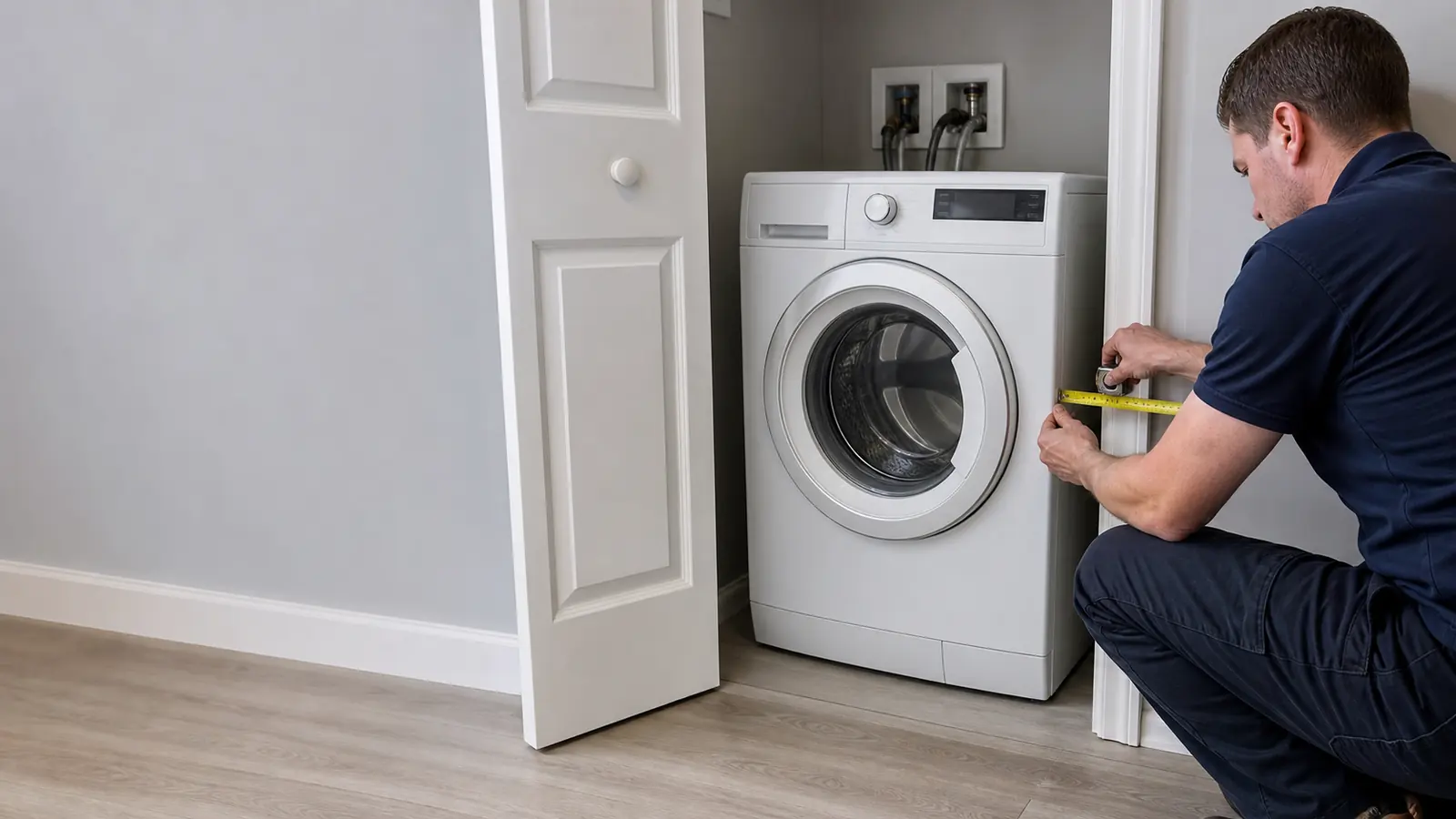
Compact kitchen and laundry service with the installation in view
Haier Appliance Repair in Tampa, FL
Max Appliance Repair Tampa evaluates qualifying Haier refrigerators, dishwashers, cooking appliances, microwaves, washers, dryers, and ventless washer/dryer combos.
Haier is common in compact kitchens, laundry closets, condos, apartments, and rentals. Send the full model label, exact symptom, and a wide photo showing the appliance, cabinetry, utilities, and access around it.
Seven-day scheduling. Same-day options depend on request time, route, model, installation, building access, and parts availability.
Appliance and Configuration
Compact, full-size, portable, undercounter, built-in, or ventless combo.
Full Model Label
Photograph every character only from a safely accessible tag.
Width and Service Path
Show closet doors, cabinets, panels, stairs, elevators, and pull-out space.
Utilities and Cycle Evidence
Record water, drain, power, venting, temperature, stage, sound, and code.
Small-space products still need category-specific diagnosis
Which Haier Appliances Can We Evaluate?
Haier’s US catalog emphasizes appliances suited to city living. Within Max’s major-appliance service menu, that can mean a compact refrigerator under a counter, a dishwasher beside narrow cabinetry, a range in a condo kitchen, a portable washer, or one cabinet that performs both washing and drying. Product type, installation, and model matter more than cabinet size alone.
Refrigeration and Frozen Food
Qualifying top-freezer, French-door, compact, undercounter, dual-drawer, beverage, wine-storage, chest-freezer, and upright-freezer requests may be reviewed. Helpful evidence includes compartment temperatures, frost or moisture location, fan and compressor sounds, door closure, gasket condition, water or ice behavior, display, and surrounding clearance.
Undercounter and built-in-adjacent products need a wide photo. Cabinet panels, countertop edges, toe kicks, flooring, and the safest pull-out route can affect access before internal testing begins.
Dishwashing and Cooking
Qualifying dishwashers, ranges, cooktops, wall ovens, and built-in or over-the-range microwaves can be evaluated for fill, circulation, drain, leak, drying, ignition, element, temperature, fan, convection, door, display, touch-control, power, or code complaints.
The symptom stage and utility type help route the request. A gas range, hardwired cooktop, induction surface, wall oven, and over-the-range microwave are not interchangeable access situations even when installed in the same kitchen.
Dishwasher repair services →Range repair services →Microwave repair services →
Laundry, Portable Washers, and Combos
Qualifying top-load, front-load, compact, and portable washers; dryers; and ventless combination washer/dryers can be reviewed. Note whether the complaint starts during connection, fill, wash, drain, extraction, spin, heat, wash-to-dry transition, condensing dry, or door release.
For portable equipment, show the faucet adapter, inlet, drain placement, outlet, floor, hoses, and storage/movement route. For a combo, confirm that it is one cabinet and one drum rather than a stacked washer and dryer.
Washer repair services →Dryer repair services →Laundry center repair services →
Start with safety: Stop using the appliance and call the appropriate emergency or utility resource for gas odor, smoke, arcing, active flooding, severe overheating, a damaged power connection, or another immediate hazard. Do not remove microwave covers, defeat a door interlock, expose refrigerant or gas components, or move a loaded or built-in appliance to find a label.
The dry cycle can use water without using an exterior dryer vent
How Does a Haier Ventless Washer/Dryer Combo Dry Clothes?
Haier’s owner guidance describes qualifying combos as non-vented condensation dryers. They use one drum, water connections, drainage, and a standard 120-volt outlet, while moisture is condensed and sent to the drain instead of being exhausted through a conventional exterior dryer vent. That changes what can be normal and what evidence is useful.
What can be normal during condensing dry?
- The appliance may take in cold water during the dry stage because that water supports moisture condensation.
- The drain may run during drying as condensed moisture and process water leave the cabinet.
- A combined wash-and-dry cycle may take longer than using two separate full-size machines.
- A load that washed successfully may need to be reduced before drying because dry capacity can be lower than wash capacity.
- The cabinet and clothing may feel different from the result of a conventional high-heat vented dryer.
Normal operation is not a reason to dismiss a complaint. The question is whether the observed sequence, temperature, water behavior, drain behavior, cycle time, and final result match the model and selected program.
Record the program name, load type and size, estimated wetness after spin, when drying begins, whether the water supply remains open, drain sounds, warmth, display or code, elapsed time, and final moisture level. That evidence separates a general “not drying” statement into testable stages.
What deserves evaluation?
- Clothes remain unusually wet because extraction or drain did not complete before drying.
- The drum tumbles but there is no expected warmth or the cycle ends without improvement.
- Water is unavailable, uncontrolled, leaking, or not leaving through the intended drain path.
- A code repeats at the same stage after the exact code and cycle are documented.
- Grinding, scraping, repeated impact, burning odor, abnormal heat, or a damaged connection appears.
- The unit worked in the same installation and the behavior changed without a load or program explanation.
A code identifies a detected condition; it does not prove that one named part failed. The actual branch may involve the load, drainage, cold-water supply, lint path, fan, heat, sensor, control, ambient temperature, floor, clearance, or installation.
Do not repeatedly reset away the evidence. Photograph the full code, note the stage, and stop use for a leak, odor, smoke, arcing, uncontrolled water, or severe heat.
Stage 1
Wash and Drain
Did the load fill, wash, and drain? Standing water or slow drainage can leave the dry stage with too much moisture to remove efficiently.
Stage 2
Spin and Extraction
Was the load balanced and spun to the expected speed? Heavy, tangled, or poorly distributed items can emerge much wetter than a normal dry load.
Stage 3
Condensing Dry
Is cold water available, is the drain path functioning, does the drum tumble, is warmth present, and when does a code or stall appear?
Stage 4
Installation and Load
Show side and rear clearance, doors, floor, ambient space, connections, load size, fabric type, and whether the same program worked before.
The address can be accessible while the appliance is not
What Should Tampa Condo, Apartment, and Rental Customers Confirm?
Compact products often live in the tightest service environments: behind bifold doors, under a counter, beside a wall, inside a galley kitchen, or on an upper floor with reserved elevator hours. Access information belongs in the service request because it affects time, equipment, authorization, and whether the appliance can be safely reached.
Send a wide installation photo before close-ups
A wide photo answers questions a model number cannot: Does a closet door block the appliance? Is there side clearance? Is an undercounter unit trapped by trim, countertop, flooring, or a toe kick? Is a portable washer connected to a faucet? Does a dryer use an exterior vent, or is the product a one-drum ventless combo?
Then add a close photo of the model/serial label, display, code, frost pattern, leak origin, connection, or damaged area. Do not move the appliance solely for a better picture. A useful intake can be built from normal owner-access views.
Parking/loading rulesGate or concierge entryElevator reservationStairs and landingsService hoursFloor protectionUtility shutoffsPull-out pathLandlord approvalOn-site decision maker
If a building requires advance insurance documentation, vendor registration, a loading-dock booking, or a certificate, say so when requesting the appointment. If the resident cannot authorize work, identify the landlord, owner, property manager, or responsible party and how approval will be provided.
Utilities can imitate appliance failures
- A closed valve, weak fill, kinked hose, faucet adapter, or building water interruption can affect a washer or dishwasher.
- A restricted, displaced, or poorly positioned drain can change fill, drain, spin, leak, and dry behavior.
- A tripped breaker, shared circuit, loose receptacle, or damaged cord can create intermittent power symptoms.
- Cabinet or closet clearance can affect airflow, heat, vibration, door travel, and the ability to remove panels safely.
- Floor slope, flex, or an unstable rolling setup can change balance, noise, and movement.
- Building rules may limit when water or power can be isolated or when an appliance can enter a common hallway.
Do not disconnect gas, open electrical panels, alter building plumbing, or bypass property rules to test an appliance. Photograph what is normally visible and describe recent building, utility, installation, or tenant changes.
Rental note: confirm who owns the appliance and who can approve diagnosis, parts, labor, or replacement before the visit.
A symptom narrows the test plan; it does not name the failed part
What Common Haier Appliance Symptoms Can Mean
Use these branches to collect clearer evidence. Different causes can create the same outward symptom, and compact installations add clearance, connection, and access variables that are easy to miss in a short phone description.
Refrigerator or Freezer Is Warm
Record actual compartment temperatures, when the change began, frost location, fan and compressor sounds, door closure, airflow, display, outage history, and surrounding clearance. Temperature evidence matters more than “not cold.” Protect food first.
Moisture, Frost, or Door Trouble
Photograph the exact frost or condensation pattern and door alignment. Loading, gasket contact, hinge position, drainage, airflow, ambient humidity, or a cooling/control issue can lead down different branches.
Dishwasher Will Not Drain or Dry
Note the selected program and stage, water left in the tub, filter condition from normal owner access, drain sound, sink or disposal changes, water temperature, rinse aid, and any code. Drain and dry complaints are not one diagnosis.
Range or Oven Will Not Heat Correctly
Identify gas, electric, induction, or dual-fuel; the affected burner, zone, or oven; selected mode; display; code; sound; and whether the symptom is no heat, slow heat, uneven heat, overshoot, or shutdown.
Washer Will Not Fill, Drain, or Spin
Record the stage, water and drain behavior, load, lock status, balance, sound, code, and whether a portable connection changed. A utility, hose, drain, floor, load, latch, pump, drive, sensor, or control branch may be involved.
Combo Washes but Does Not Dry
Separate extraction from drying. Note remaining wetness after spin, load reduction, tumble, warmth, cold-water availability, draining during dry, cycle time, lint maintenance, clearance, ambient conditions, and code.
Appliance Leaks
Stop active water, protect the area, and photograph the first visible location without removing panels. Note the cycle stage, water level, connection, door, detergent, drain, recent movement, and whether the leak continues while idle.
Noise, Vibration, or Repeating Code
Capture a short recording from a safe distance and note the exact stage. Show the floor, clearance, load, cabinet contact, display, and full code. Do not keep restarting a machine with impact, grinding, burning odor, severe heat, or leakage.
Use normal owner-access openings first
Where Can You Find a Haier Model and Serial Number?
Haier publishes category-specific rating-plate guidance because there is no universal tag location. Photograph the complete label, including prefixes, suffixes, punctuation, model, and serial. Do not rely on a receipt description or a partial number, and do not pull out a heavy, loaded, gas-connected, hardwired, or built-in appliance just to reach a rear tag.
Full-size refrigeration
Top-Freezer and French-Door
Haier says a refrigerator/freezer label is often on the rear. A top-freezer model may have its plate near the rear bottom. A French-door model may place it on the left interior wall of the fresh-food compartment near the crispers.
Check the safe interior location first. If the label appears to be rear-only, send a wide photo and do not move the unit solely for the tag.
Compact and undercounter
Compact, Beverage, and Dual-Drawer
A compact refrigerator or beverage-center label may be on the rear or on the upper-left interior wall above the top shelf. A dual-drawer refrigerator may place the label on the outside of the drawer on the left when open.
Open normal doors or drawers and check without tools. Show cabinetry, trim, and countertop clearance if the unit is enclosed.
Wine and frozen food
Wine Storage and Chest Freezers
Haier says a wine-storage label may be on the upper-left interior wall above the top rack. A chest-freezer plate may be on the rear just below the hinge; other freezer configurations can also use rear locations.
Do not tip, drag, or unload a freezer solely to read a rear tag. Start with a wide installation photo and any safely visible label.
Dishwashing
Dishwasher Tub Wall
Haier’s dishwasher guidance identifies the left tub wall near the lower rack. Open the door, move the lower rack only as normal owner use permits, and photograph the full plate without removing trim or panels.
Also send one wider photo showing the door, adjacent cabinets, floor, sink base, and any panel or handle interference.
Laundry
Door, Lid, Cabinet, or Rear
Laundry label positions vary by product. Check the door opening, door frame, lid opening, and accessible cabinet surfaces before assuming the plate is at the rear. A portable washer or combo can differ from a conventional top-load washer.
Send a full-appliance photo so the exact configuration is clear even if the label is not yet found.
Cooking and microwaves
Normal Door and Drawer Openings
Check the rating-label locations available through normal door or drawer use. Do not remove an oven, cooktop, over-the-range microwave, or built-in appliance from cabinetry, and never remove a microwave cover for identification.
A wide installation photo plus the visible badge helps us guide the next safe identification step.
Decide after identification and diagnosis
Should You Repair or Replace a Haier Appliance?
Age and price matter, but neither answers the question alone. A useful decision considers the diagnosed fault, parts support, cabinet and sealed-system condition, prior repair history, installation labor, water or heat damage, access cost, capacity, and what a replacement would require in the same space.
Repair can make sense when
- The appliance fits a difficult opening or utility arrangement that would be costly to change.
- The diagnosed repair is proportionate to condition, age, and remaining value.
- The cabinet, drum, tub, liner, wiring, connections, and structure are otherwise sound.
- A matching compact, undercounter, portable, or combo replacement is limited or would require cabinetry, plumbing, electrical, venting, or building work.
- The needed part and safe service access are supportable.
Replacement deserves more weight when
- Multiple major systems are deteriorated or damage extends beyond the diagnosed fault.
- Corrosion, water damage, cabinet damage, unsafe connections, or repeated leaks increase risk.
- Parts support is uncertain or the repair approaches the value of a suitable replacement.
- Capacity or configuration no longer fits the household, especially for combo drying loads.
- A replacement is already planned with the landlord, property manager, kitchen, laundry closet, or building project.
For compact and built-in-adjacent products, compare installed replacement cost, not only the appliance price. Delivery path, elevator booking, old-unit removal, trim, countertop, flooring, shutoffs, hoses, adapters, drain, outlet, and building authorization may change the real decision.
Clear evidence before parts assumptions
What to Expect From Your Haier Service Request
The process is designed to protect your time and the appliance: identify the exact product, confirm access and safety, test the reported stage, explain findings, and obtain approval before authorized repair work.
Step 1
Request Review
Share the complete label, exact symptom, code, address, ZIP, wide installation photo, and condo or rental requirements. We confirm whether the request fits our service scope and route.
Step 2
On-Site Diagnosis
The technician reviews reported evidence, configuration, connections, access, and safety, then tests the relevant appliance system and cycle stage where conditions allow.
Step 3
Findings and Options
You receive the findings and proposed next step before repair proceeds. Parts, labor, access, condition, and repair-versus-replace context are discussed for the identified model.
Step 4
Approved Work and Check
Authorized work is completed when feasible, followed by a relevant functional check. Eligible repair parts installed by Max include a limited 90-day parts warranty; coverage depends on the component and repair.
Local route and building-access confirmation
Haier Appliance Repair Across the Tampa Bay Area
Requests are reviewed across Tampa and many nearby Hillsborough, Pinellas, and Pasco County communities. Availability varies by address, route, product, model, installation, safe access, building requirements, and parts situation.
All Service AreasTampaClearwaterDunedinSt. Petersburg
Share the service address and ZIP plus parking, gate, concierge, elevator, stairs, service-hour, floor-protection, authorization, utility, and appliance-access details. A compact appliance can still require a precise route through a building and a clear workspace around the installation.
Direct answers for Haier kitchen and laundry owners
Haier Appliance Repair FAQs
Answers about supported appliances, compact refrigeration, ventless combos, condensing dry behavior, portable washers, cooking, model labels, appointment evidence, condo and rental access, scheduling, and independent service.
Which Haier appliances do you repair in Tampa?
We evaluate qualifying Haier refrigerators, compact refrigerators, undercounter and dual-drawer refrigerators, beverage and wine storage products, household freezers, dishwashers, ranges, wall ovens, cooktops, built-in and over-the-range microwaves, washers, dryers, portable washers, and ventless washer/dryer combos. Service fit depends on the complete model and serial number, appliance type, installation, symptom, condition, safe access, and parts support.
Do you repair compact Haier refrigerators and beverage centers?
Qualifying compact refrigerators, beverage centers, wine storage products, and undercounter or dual-drawer units can be reviewed by exact model. Tell us whether the cabinet is freestanding, undercounter, built into cabinetry, or panel-adjacent. Include the temperature trend, frost or moisture location, fan and compressor sounds, door condition, surrounding clearance, and a wide installation photo. A rear rating plate should not be a reason to pull out a heavy or built-in unit yourself.
Can you repair a Haier ventless washer/dryer combo?
Qualifying Haier combination washer/dryers can be evaluated for fill, drain, tumble, spin, heat, drying, door-lock, code, leak, noise, and cycle-transition complaints. These machines wash and dry in one drum and use non-vented condensation drying, so the load, water supply, drain path, ambient temperature, clearance, lint path, cycle stage, and installation all matter. Send the full model label and say whether the problem begins during washing, extraction, the wash-to-dry transition, or drying.
Why does my Haier combo fill or drain during the dry cycle?
Haier explains that qualifying non-vented combination washer/dryers use cold water during drying to condense moisture, so some filling and draining during the dry stage can be normal. Record the cycle, elapsed time, water pattern, drain behavior, heat, airflow, load size, display, and final result before assuming a valve or drain part failed. Continuous water, an overflow, a leak, no draining, an error code, burning odor, or abnormal heat still deserves prompt evaluation.
Why is my Haier washer/dryer combo not drying properly?
A combo dry complaint can start with a load that is appropriate for washing but too large for drying. Haier notes that drying capacity may be lower than wash capacity. Other branches include incomplete extraction, restricted drainage or lint path, unavailable cold water for condensation, low or no heat, fan or sensor issues, controls, cycle selection, ambient conditions, or insufficient clearance. Do not name a part from one symptom; preserve the cycle and installation evidence first.
Do you service Haier portable and compact washers?
Qualifying Haier portable, compact, and top-load washer requests can be reviewed. Send the model label plus photos of the faucet adapter or water connections, drain placement, outlet, floor, hoses, clearance, and route used to move or roll the appliance. Explain whether the problem occurs during connection, fill, wash, drain, spin, balance, or release. A household faucet, standpipe, hose, power, floor, or installation condition can resemble an internal washer fault.
Do you repair Haier dishwashers, ranges, ovens, and microwaves?
Many qualifying Haier dishwashers, ranges, cooktops, wall ovens, and built-in or over-the-range microwaves can be evaluated by exact model. Common requests include fill, wash, drain, leak, drying, ignition, element, temperature, convection, fan, door, display, touch-control, power, and code complaints. Gas, hardwired, induction, and microwave high-voltage conditions require appropriate safety precautions; do not remove panels or test internal microwave components yourself.
Where is the Haier model and serial number?
Tag locations vary. Haier says refrigerator and freezer labels are often on the rear, while French-door labels may be on the left fresh-food wall near the crispers. Compact refrigerator and beverage-center labels may be on the rear or upper-left interior wall. Dual-drawer labels may be outside the drawer on the left when open; wine-storage labels may be upper-left inside; dishwasher labels may be on the left tub wall near the lower rack. Photograph the complete label only when it is safely accessible.
What should I send before a Haier service appointment?
Send one wide photo of the appliance and installation, one clear photo of the entire model/serial label, the exact code or display, and a short description of the cycle or stage where the symptom begins. For cooling products include temperatures and frost location. For laundry include load, water, drain, spin, heat, and whether the unit is ventless. For a condo or rental include gate, elevator, service-hour, parking, floor-protection, and authorization details that affect access.
Can you work in a Tampa condo, apartment, or rental property?
Many qualifying requests can be scheduled for condos, apartments, and rental properties after access is confirmed. Tell us about parking or loading rules, gate entry, elevator reservations, stairs, service hours, floor protection, building certificates, landlord or property-manager authorization, utility shutoffs, appliance pull-out space, and who can approve work. Those details help avoid an appointment where the appliance is present but cannot be safely accessed or authorized.
Is same-day Haier appliance repair available?
Same-day appointment options are often available, but they depend on request time, technician route, Tampa-area address, exact Haier model, appliance and installation, building access, fault type, and parts availability. Call (813) 906-1062 with the complete model label, symptom, service address, ZIP code, and any condo or rental requirements so the earliest suitable opening can be confirmed rather than promised without the details.
Is Max Appliance Repair Tampa authorized by Haier?
No. Max Appliance Repair Tampa is an independent appliance repair company and is not Haier factory service and is not authorized by, affiliated with, or endorsed by Haier. If the appliance may have active manufacturer or retailer warranty coverage, a recall, a safety notice, or a factory-directed service requirement, contact Haier or the retailer before arranging independent service. Brand and product names on this page identify appliances discussed or serviced.
Sources used for product scope and owner guidance: Haier’s official US appliance catalog and city-living overview, support library, refrigerator and freezer rating-plate locations, dishwasher rating-plate locations, non-vented condensing combo explanation, combo drying information, fill and drain behavior during drying, combo error codes, combo location and clearance requirements, and Haier’s factory-service and warranty path. Symptom descriptions are diagnostic starting points, not remote diagnoses.
Independent service disclosure: Max Appliance Repair Tampa is an independent appliance repair company and is not Haier factory service and is not authorized by, affiliated with, or endorsed by Haier. Brand and product names identify appliances discussed or serviced. For manufacturer warranty, recall, safety notice, or factory-directed support, contact Haier or the retailer.
Brand-scope and owner-support information reviewed August 1, 2026. View all appliance brands we repair.
Need Help With a Haier Appliance?
Call with the complete model label, appliance configuration, exact symptom or cycle stage, installation photo, access details, and Tampa-area ZIP code, or send the information online.