

Schedule Now & Get $25 Off
One Kenmore badge can lead to different appliance platforms
Kenmore Appliance Repair in Tampa, FL
Max Appliance Repair Tampa evaluates qualifying Kenmore refrigerators, dishwashers, ranges, ovens, cooktops, microwaves, washers, and dryers after the complete model and source prefix identify the correct platform.
Send the whole model/serial label, exact symptom, wide installation photo, and Tampa-area ZIP code. Do not rely on appearance, a partial model, or a generic Kenmore manual.
Seven-day scheduling. Same-day options depend on request time, route, complete model/platform, appliance, access, safety, and parts availability.
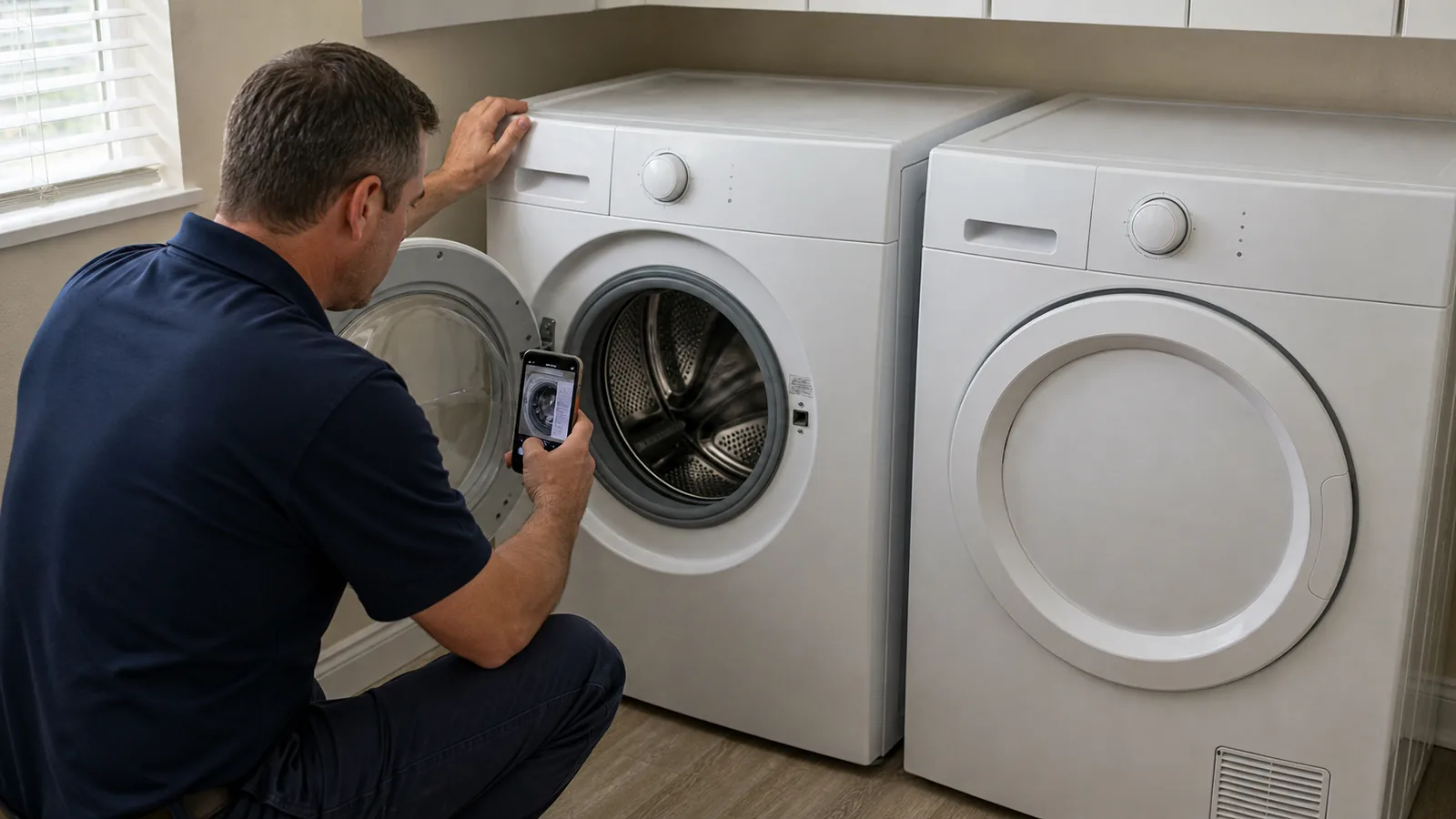
Complete Rating Plate
Photograph model, serial, prefix, suffix, revision, series/stock, and product data.
Source Prefix and Platform
Use the first three digits to choose the route; use the full model for the actual documentation.
Observed Symptom Evidence
Record cycle/mode, stage, water, temperature, heat, airflow, sound, code, and result.
Installation and Access
Show cabinets, floor, doors, utilities, hoses, drain, vent, gas, outlet, and movement path.
Relevant Kenmore kitchen and laundry categories
Which Kenmore Major Appliances Can We Evaluate?
Kenmore’s official U.S. navigation and manual finder cover kitchen and laundry products as well as many unrelated consumer categories. This page stays useful by focusing only on qualifying in-home major appliances within Max’s established service scope, then routing each request through its complete model and platform.
Refrigerators and Freezers
Qualifying French-door, side-by-side, top-freezer, bottom-freezer, compact, beverage, freezer, and ice-maker configurations may be reviewed for temperature, frost, moisture, ice, water, door, gasket, noise, display, or power concerns. Record temperatures and food-safety action first.
Built-In Dishwashers
Qualifying dishwashers may be reviewed for fill, wash, drain, leak, drying, cleaning, rack, spray, door, noise, control, or code concerns. Record the selected cycle, exact stage, standing water, first leak location, sink/disposal changes, water temperature, and door alignment.
Ranges, Ovens, and Cooktops
Qualifying gas, electric, and induction cooking appliances may be reviewed for ignition, burner/zone response, oven heat, temperature, convection, door, fan, display, control, or code concerns. Identify fuel/heat type, affected zone/oven, mode, setpoint, and utility history.
Microwaves
Qualifying built-in and over-the-range microwave requests may be reviewed by complete model for heat, fan, light, turntable, control, display, door, mounting, or code concerns. Never remove the outer cover or defeat an interlock; high-voltage components can remain dangerous after unplugging.
Top-Load and Front-Load Washers
Qualifying washers may be reviewed for fill, agitate/tumble, drain, spin, balance, leak, lock, dispenser, sound, control, or code concerns. Send the label, cycle/stage, load, water level, first leak location, hose/drain context, and installation view.
Electric and Gas Dryers
Qualifying dryers may be reviewed for no-start, no-tumble, no-heat, long dry time, overheating, noise, odor, control, or code concerns. Identify gas/electric, cycle/load, lint-screen state, exterior airflow, vent route, breaker behavior, and exact model.
Immediate hazards come first: stop use and contact the appropriate emergency or utility resource for gas odor, smoke, arcing, severe overheating, active flooding, shattered cooking glass, damaged connections, or another urgent condition. Do not tip, pull, unfasten, open a microwave, disconnect gas, alter hardwiring, or remove panels merely to find a label.
The prefix chooses a technical route; the full model chooses the appliance
Why Do the First Three Digits of a Kenmore Model Matter?
Kenmore appliances have been built on multiple manufacturing platforms. Sears PartsDirect’s current guidance says many Kenmore model numbers start with a three-digit source prefix that helps identify the manufacturer family. That explains why two Kenmore products can need different manuals, parts, error-code definitions, and serial-date formats—even when their badges or controls look similar.
Step 1 – Brand identity
Start with the Kenmore rating plate
Capture Kenmore, Kenmore Elite, or Kenmore PRO exactly as shown plus appliance type, complete model, serial, source prefix, suffix, revision, series/stock number, and electrical or gas data.
A product nickname, badge line, control photo, receipt shorthand, or partial model cannot establish the technical platform.
Step 2 – Source route
Use the prefix without overreading it
Examples such as 106, 253, 596, 665, 795, and 110 appear in current Sears PartsDirect material, but a short chart is not exhaustive and can be misapplied across products. The prefix narrows a family; it does not select a specific part.
Preserve every remaining model character and the serial number before looking up documentation.
Step 3 – Exact technical match
Match manual, code, diagram, and part to the full model
Use the exact model to find the official manual, product diagram, code definition, compatible part list, and production context. Verify revision and serial information where the platform uses it.
If the label is incomplete or inaccessible, describe the request as unidentified rather than filling gaps from appearance or a forum post.
Do not assume a matching badge means matching engineering
Can Two Kenmore Appliances in the Same Home Have Different Manufacturers?
Yes. A Kenmore refrigerator, dishwasher, range, washer, and dryer can come from different source families or generations. Even a laundry pair can stop matching if one unit was replaced later. That matters because platform-specific differences can affect controls, pumps, motors, valves, gaskets, ice makers, heating systems, wiring, error codes, parts numbering, and serial-date interpretation.
- Photograph the label on every appliance separately.
- Keep the three-digit prefix attached to the complete model.
- Do not use the refrigerator’s source family to identify the dishwasher.
- Do not assume Kenmore Elite or PRO identifies the original manufacturer.
- Do not order by appearance, color, capacity, or a partial online match.
- Do not transfer a code definition between similar-looking products.
The most useful pre-visit package is one wide installation photo, one full rating-plate photo, one symptom/code photo or video when safe, and a short timeline of what changed.
Manual search versus service intake
Kenmore’s official manual finder asks for a model number of at least 11 characters and says not to include special characters in its search field. That is a search-format instruction—not permission to discard punctuation or other characters from the physical rating plate.
Photograph first, type second
Brand line3-digit prefixFull modelSerialSuffixRevisionSeries/stockAppliance photo
A clear photo prevents transposed digits, missing suffixes, and punctuation loss. Add purchase date, receipt, prior claim or service-plan record when coverage or age matters.
No label through normal access?
Send a wide photo and the available documents. Do not tip laundry equipment, pull a refrigerator or range, remove cabinetry, open controls, expose microwave high voltage, disconnect gas, or alter hardwiring for identification.
Observe the behavior, then use the correct platform
What Common Kenmore Appliance Symptoms Can Mean
These cards show what evidence separates diagnostic branches. They do not name a failed part remotely. The same symptom—or even the same-looking code—can require different interpretation after the complete model and source family are known.
Refrigerator Is Warm
Record actual temperatures, affected compartment, food-safety action, frost/moisture, fans, compressor sound, door/gasket, ice/water, display, power history, and ventilation. Then match guidance to the full model/prefix.
Ice Maker or Dispenser Changes
Separate no ice, slow ice, hollow cubes, no water, leak, jam, and display behavior. Note supply, filter history, temperature, door use, first water location, sound, code, and complete label.
Dishwasher Stops or Stays Wet
Note cycle/stage, fill/wash/drain/dry, standing-water depth, pump sound, first leak location, water temperature, detergent/rinse aid, filter through normal access, sink/disposal changes, and door alignment.
Washer Will Not Drain or Spin
Identify top/front load, cycle and stage, water level, drain sound, spin attempt, load balance, door/lid lock, leak origin, hose/drain changes, code, and whether a reset changed the result.
Dryer Runs but Clothes Stay Damp
Record gas/electric, cycle, load, heat, drum action, lint-screen condition, exterior-termination airflow, vent length/restriction, room heat, sound, odor, code, and elapsed time. Airflow and heat are separate branches.
Range or Oven Heats Incorrectly
Identify gas/electric/induction, affected burner/zone/oven, mode and setpoint, ignition/element response, observed temperature pattern, door seal, fan, display/code, breaker/gas history, and recent power or cabinet work.
Microwave Does Not Heat or Vent
Separate heat, fan, light, turntable, control, display, door, and airflow behavior. Photograph the code and installation. Stop for arcing, smoke, burning odor, door damage, or severe heat; never remove the cover.
Code, Noise, Leak, or Reset
Photograph the full code and label. Record mode/cycle, stage, temperature, water, heat, airflow, sound, first leak location, power-event history, frequency, and final result. Use only exact-model documentation.
Use common locations as clues, then confirm with the exact manual
Where Should You Look for a Kenmore Model and Serial Label?
- Refrigerator/freezer: inside a compartment on a side wall or ceiling, behind crisper drawers, along a door frame/liner, or another model-specific location.
- Dishwasher: door edge, tub frame, or door-jamb area visible when the door is open.
- Front-load washer/dryer: around the door opening or jamb.
- Top-load washer: under the lid or along the tub/opening rim.
- Range/oven/cooktop: door or drawer frame, oven opening, cabinet/control area, or the exact manual’s normal-access location.
- Microwave: door frame, interior edge, cabinet/frame, or another model-specific location.
Label placement changes across source families and generations. Stop if access would require pulling, tipping, unfastening, disconnecting, or reaching near live, hot, gas, moving, or high-voltage components.
Photograph the whole plate: model and serial together, with a second close-up only when glare hides a character.
Age decoding also starts with the prefix
Kenmore does not use one universal serial-date code. Sears PartsDirect explains that decoding depends on the model prefix/manufacturer family and that some year codes repeat across decades.
Cross-check any decoded date against the exact model’s documented era, features, purchase records, manuals, and prior service history. Do not make a repair/replace decision from a generic decoder alone.
Keep the installation visible
Along with the plate, show cabinet clearances, floor transitions, doors, stairs, gas/electric connections, washer hoses and drain, dryer vent route, refrigerator water line, dishwasher sink-base context, and safe movement path.
Codes need the exact manual
Photograph the full display and record mode/cycle, stage, sounds, water, heat, airflow, door/lock, power-event history, and final result before a reset erases evidence.
Check product-specific terms before independent service
Could the Kenmore Appliance Still Have Warranty or Recall Coverage?
Kenmore’s official U.S. warranty page contains different statements by appliance, Kenmore/Kenmore Elite/Kenmore PRO line, component, purchase date, proof of sale, household versus other use, labor responsibility, and authorized verification. This page should never reduce those differences to a universal warranty promise.
Start with the official route when
- The original sale/delivery date may fall within the exact written term.
- You have the full model, serial, proof of sale, and product-line information.
- A component-specific, parts-only, rust-through, extended-plan, or prior-claim term may apply.
- The issue may involve a recall, safety notice, product claim, or manufacturer-directed action.
- The warranty requires an authorized representative to verify the defect.
Keep claim numbers, receipts, documents, photos, and written decisions together. Understand whether independent work could affect another claim before scheduling overlapping service.
The warrantor decides coverage. Max cannot authorize Kenmore or Transformco warranty work.
Independent service may be considered when
- Official coverage is expired, unavailable, declined, or not applicable.
- The full model/platform and appliance fit Max’s major-appliance scope.
- Installation, utilities, access, safety, and parts support allow evaluation.
- You understand Max is not Kenmore, Sears, Transformco, or source-manufacturer factory service.
- The repair/replace comparison can use diagnosis and total installed replacement cost.
Ask what finding is known, what evidence supports it, what platform-specific information applies, and what access or parts condition remains uncertain.
Verify current documents: warranty terms, contacts, products, and support routes can change.
Use diagnosis, platform, condition, and installed cost
Is It Worth Repairing an Older Kenmore Appliance?
Age matters, but it is not the whole decision. Consider the diagnosed fault, exact model/platform, parts support, overall condition, prior history, utilities and venting, cabinet or laundry-space fit, safety, active coverage, and the complete installed cost of a suitable replacement.
Repair can make sense when
- The complete model is identified and the diagnosed fault is reasonably isolated.
- Platform-correct parts and safe service access are viable.
- The cabinet, tub, drum, liner, structure, wiring, gas/electric supply, hoses, drain, and vent are otherwise sound.
- The appliance still fits the household, opening, laundry pair, capacity, and utility setup.
- Repair is proportionate to age, condition, history, and remaining value.
Replacement deserves more weight when
- Multiple major systems are deteriorated or damage extends beyond the diagnosed fault.
- Corrosion, repeated leaks, unsafe wiring/gas/venting, or structural damage increases risk.
- Critical parts are unavailable or repair approaches full installed replacement value.
- The appliance no longer meets capacity, efficiency, accessibility, or space needs.
- A renovation or laundry redesign already requires cabinet, floor, utility, drain, or vent changes.
Installed replacement can include delivery, removal, stacking/pedestal or pair decisions, cabinet/counter changes, floor protection, anti-tip hardware, gas, outlet/hardwiring, hoses, drain, venting, water line, permits, and building access.
Identify the platform before interpreting the symptom
What to Expect From Your Kenmore Service Request
Useful pre-visit evidence helps match the appointment to the exact appliance while avoiding wrong-manual and wrong-part assumptions.
Step 1
Label and Safety Review
Send the full model/serial plate, source prefix, appliance, symptom evidence, installation, address, and ZIP. Check possible official coverage, recall, or safety routes.
Step 2
Platform-Matched Diagnosis
The technician reviews the exact product information, installation, utilities, reported behavior, and safety, then tests relevant systems where access permits.
Step 3
Findings and Options
You receive the findings and proposed next step before repair proceeds. Parts, labor, platform support, access, condition, and replacement context can be compared.
Step 4
Approved Work and Check
Authorized work is completed when feasible and followed by a relevant functional check. Eligible repair parts installed by Max include a limited 90-day parts warranty; coverage depends on the component and repair.
Local routing with exact-model confirmation
Kenmore Appliance Repair Across the Tampa Bay Area
Requests are reviewed across Tampa and many nearby Hillsborough, Pinellas, and Pasco County communities. Availability varies by address, route, model/platform, appliance, installation/access, building requirements, safety, and parts situation.
All Service AreasTampaClearwaterDunedinSt. Petersburg
Share parking/loading, gate, elevator, stairs, service-hour, floor-protection, authorization, and vendor-document rules plus tight cabinet gaps, stairs, laundry closets, stacking, pedestals, gas, hardwiring, hoses, drain, dryer vent, water line, and prior damage.
Direct answers for Kenmore kitchen and laundry owners
Kenmore Appliance Repair FAQs
Answers about supported appliances, source manufacturers, three-digit prefixes, full model/serial identification, label locations, refrigeration, laundry, error codes, age, warranty routing, scheduling, and independent service.
Which Kenmore appliances do you repair in Tampa?
We evaluate qualifying Kenmore major kitchen and laundry appliances: refrigerators and freezers, built-in dishwashers, gas/electric/induction ranges and cooking appliances, ovens and cooktops, qualifying microwaves, top-load and front-load washers, electric and gas dryers, and laundry configurations within Max’s established service scope. Service fit depends on the complete model and serial, three-digit source prefix, appliance, installation, condition, symptom, safety, and parts support. Kenmore also uses its name on products outside this major-appliance scope, so the badge alone is not enough to confirm a service request.
Who manufactured my Kenmore appliance?
Kenmore appliances have been sourced from multiple manufacturers. The first three digits of many Kenmore model numbers act as a source prefix that helps route the appliance to a manufacturer family, but the prefix is only the beginning. Photograph the complete rating plate and use every model digit, letter, suffix, revision, series/stock number, and serial character to find the correct manual and parts list. Do not infer the maker from appearance, Kenmore Elite or PRO styling, age estimate, control layout, or an online list that may be incomplete.
What do the first three digits of a Kenmore model number mean?
Sears PartsDirect’s current Kenmore guidance says the three-digit prefix commonly identifies the manufacturing source or platform family. Examples in its current material include families such as 106, 253, 596, 665, 795, and 110, but that is not an exhaustive chart and a prefix does not identify the exact appliance or part. The remaining model characters distinguish designs, features, revisions, and configurations. Keep the full label photo; use the prefix to choose the route and the complete model to choose the actual documentation.
Why do you need the complete Kenmore model and serial number?
Two Kenmore appliances can look alike while using different controls, pumps, motors, valves, gaskets, ice makers, heating systems, wiring, service procedures, error-code definitions, and serial/date formats. The complete model ties the unit to the correct manual, diagrams, and parts list. The serial can identify a production run or date context. A missing suffix or transposed digit can lead to the wrong information. Send a readable whole-label photo instead of typing from memory, plus the appliance and installation photo.
Where can I find the Kenmore model and serial label?
Location depends on appliance and platform. Common owner-access areas include a refrigerator compartment wall, ceiling, door frame, or crisper area; a dishwasher door edge or tub frame; a front-load washer or dryer door jamb; under a top-load washer lid or along its opening; and a range, oven, cooktop, or microwave door/frame area identified by its exact manual. Never tip, pull, unfasten, disconnect gas or hardwiring, remove a microwave cover, or reach behind unsafe components just to find a label. Send a wide installation photo if normal access does not reveal it.
Can you repair a Kenmore refrigerator that is warm or not making ice?
Qualifying Kenmore refrigerators and freezers can be reviewed after the complete model/prefix identifies the platform. Record actual compartment temperatures, food-safety action, affected zone, frost or moisture location, fan and compressor sounds, door and gasket contact, ice and water behavior, display/code, filter or supply context, power history, and ventilation. Similar-looking 106-, 253-, 596-, or 795-family refrigerators, for example, may need different documentation and parts; those examples are routes, not a remote diagnosis.
Do you repair Kenmore washers and dryers?
Qualifying top-load and front-load washers plus electric and gas dryers can be reviewed by complete model and installed configuration. For a washer, report cycle/stage, fill, agitate/tumble, drain, spin, balance, leak origin, lock, sound, and code. For a dryer, report gas/electric, start, tumble, heat, cycle time, load, lint-screen state, exterior airflow, vent route, sound, odor, and code. Stop use for smoke, burning odor, gas odor, arcing, severe overheating, active flooding, or repeated breaker trips.
What does a Kenmore error code mean?
A Kenmore code must be interpreted with documentation for the complete model and platform; the same-looking code can mean something different on another source family. Photograph the whole display and rating plate, then note the cycle or mode, stage, temperature, water, heat, airflow, sound, door/lock state, power-event history, frequency, and final result. A code identifies a detected condition, not a proven failed part. Do not repeatedly reset an appliance with gas odor, arcing, smoke, overheating, active leaking, or breaker trips.
How old is my Kenmore appliance?
Kenmore does not use one universal serial-date format. Current Sears PartsDirect guidance says the decoding method depends on the model prefix/manufacturer family, and some year codes repeat across decades. Photograph the full model and serial, identify the correct platform, then cross-check the decoded date against the model’s documented era and features. Do not choose a repair-versus-replace path from a generic decoder alone. Purchase records, manuals, prior service documents, and the exact appliance condition provide useful context.
Should I use Kenmore warranty service or independent repair?
Check the full model/serial, proof and date of original sale, Kenmore/Kenmore Elite/Kenmore PRO line, exact written warranty, household or other use, component-specific terms, prior claim or service plan, recall, and safety notice first. Kenmore’s current warranty page contains different terms and verification requirements by appliance, product line, component, and purchase date, so there is no safe universal promise. Potentially covered or manufacturer-directed requests should use the current official route before independent work. Max cannot approve Kenmore coverage.
Is same-day Kenmore appliance repair available in Tampa?
Same-day appointment options are often available, but they depend on request time, technician route, Tampa-area address, complete model/prefix, appliance and platform, installation/access, safety, fault type, and parts availability. Call (813) 906-1062 with the whole rating-plate photo, symptom evidence, wide installation view, service address, and ZIP code so the earliest suitable opening can be confirmed. An appointment time is not a promise that every diagnosis or repair can be completed that day.
Is Max Appliance Repair Tampa authorized by Kenmore or Sears?
No. Max Appliance Repair Tampa is an independent appliance repair company and is not Kenmore, Sears, Transformco, or a source manufacturer’s factory service, and is not authorized by, affiliated with, or endorsed by those companies. Brand names and model-prefix examples identify appliances and technical routes. For manufacturer warranty, recall, safety notice, product claim, authorized verification, or factory-directed service, use the current official Kenmore path before arranging independent service.
Sources used for product scope and owner guidance: Kenmore U.S. product navigation, manual finder, customer care, contact and repair routes, warranty statements, cooking categories, laundry categories, and refrigeration categories; Sears PartsDirect model-prefix source information and serial-number age lookup. Products, terms, contacts, and routes can change; verify the current exact model. Symptoms and codes are diagnostic starting points, not remote diagnoses.
Independent service disclosure: Max Appliance Repair Tampa is independent and is not Kenmore, Sears, Transformco, or source-manufacturer factory service and is not authorized by, affiliated with, or endorsed by those companies. Brand names and prefix examples identify appliances and technical routes. For warranty, recall, safety notice, product claim, authorized verification, or factory-directed service, use the current official Kenmore path.
Brand scope, model-prefix, owner-support, and warranty-path information reviewed August 1, 2026. View all appliance brands we repair.
Need Help With a Kenmore Major Appliance?
Call with the whole model/serial label, three-digit source prefix, exact symptom, installation photos, and Tampa-area ZIP code, or send the information online.