

Schedule Now & Get $25 Off
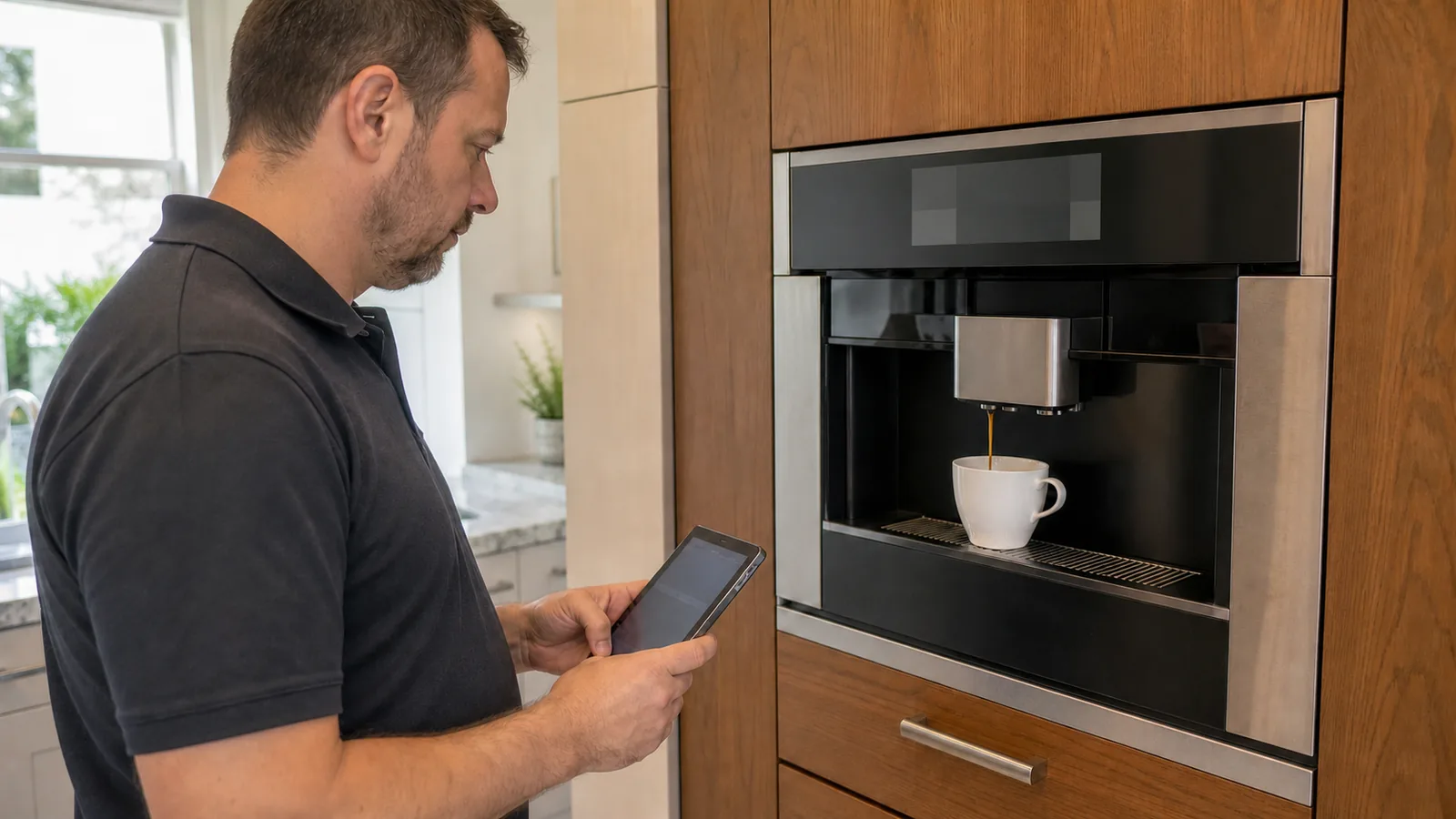
Built-in CVA and countertop CM systems
Miele Coffee Machine Repair in Tampa, FL
Model-aware screening for Miele built-in and countertop bean-to-cup machines with brew-unit, grinder, water, heat, milk, leak, cleaning-program or display faults.
- CVA versus CM and DirectWater versus reservoir kept distinct
- Exact fault, cycle stage, maintenance history and installation recorded
- Independent service with warranty-first guidance
No Miele authorization or guaranteed same-day/result claim is implied.
Exact IdentityCVA/CM, model, serial, generation and features guide the correct path.
Cycle EvidenceThe last successful stage is more useful than “not working.”
Care Programs SeparatedRinse, milk clean, degrease and descale are not interchangeable.
90-Day Parts CoverageEligible repair parts installed by us include limited parts coverage.
The first SEO answer is the correct machine
Built-In CVA and Countertop CM Coffee Machines Need Different Intake
Miele coffee systems share bean-to-cup functions, but cabinet installation, water source, owner access, cleaning components and legacy design vary. Send the complete plate rather than a front-panel photo alone.
CVA Built-In
Installed in cabinetry with a front service door, removable internal containers and model-specific ventilation, electrical and access requirements. Current and older CVA families differ in display, bean storage, milk path and brew-unit sequence.
Send: plate, full cabinet, door behavior, display, water setup and safe clearance.
DirectWater CVA
A plumbed built-in adds household shutoff, inlet, line pressure/flow, treatment and connection history to the machine’s pump, valve, sensor and flow paths. Reservoir assumptions can produce the wrong diagnosis.
Send: water source, shutoff, treatment, leak/fill timing and exact model.
CM Countertop
Self-contained CM systems use a removable water container and model-specific bean, milk, rinse-valve and central-spout components. Counter clearance and safe upright access/transport differ from built-in service.
Send: all sides, label, containers, milk setup, display and counter access.
Legacy Generations
Older CVA 4xxx/5xxx/6xxx, earlier CM systems and capsule-based built-ins can have different owner steps and parts support. A familiar model name does not prove the internal version or repair path.
Send: complete serial prefixes, prior repair and all accessories still present.
This page is only for Miele coffee systems. For a Miele dishwasher, oven, range, cooktop, refrigerator, laundry appliance or wine unit, use our separate Miele appliance repair page so the request reaches the right service category.
Describe the last successful stage
How a Miele Automatic Coffee Cycle Moves Through the Machine
The display may show one message after a problem began elsewhere. Mapping the sequence helps separate a bean/recipe issue from a water, brew-unit, milk, drain or control fault.
1
Wake and Recognize
Power, main switch, door/tray/container detection, settings, timer/network state and display initialize.
2
Water and Heat
Reservoir or DirectWater supply is recognized, filled, pumped, heated and rinsed through selected paths.
3
Beans and Grinder
Beans feed, the grinder runs, grounds travel through the chute and the machine evaluates the dose delivered.
4
Brew Unit
The drive positions the unit, coffee is compressed, hot water extracts the puck and pressure is released.
5
Spout and Milk
Coffee exits the central spout; selected milk components draw, heat or froth through model-specific pipework.
6
Drain and Reset
Residual water reaches the tray, the puck moves to the grounds container and counters/positions reset.
Symptoms are clues, not remote diagnoses
Common Miele Coffee Machine Problems We Can Evaluate
Report the exact message, beverage selected, last successful step, sounds and where water, coffee or milk went. Do not repeatedly force a failed cycle.
Water but No Coffee
Ground-coffee mode, beans, feed/chute, grinder, brew unit/drive, pump/valve, flow or central-spout restriction may matter.
F73 or Check Brew Unit
Home position, ejector/handle state, residue, overload, guides/shaft, brew unit, drive, sensor or control may stop motion.
Weak, Fast or Slow Coffee
Beans, grind, dose, recipe, brew unit, seals, screen, pump, valve, temperature, scale and spout condition can alter extraction.
Milk Sputters or Stays Flat
Milk condition, Cappuccinatore/spout, pipework, rinse valve, plug, flask parts, air leak, heat, valve or control can matter.
No Fill, Heat or Rinse
Container/DirectWater, pump/prime, inlet, flow meter, valve, heater, temperature device, scale, power or control may interrupt.
Tray, Grounds or Cabinet Leak
Normal rinse water must be separated from overflow, seal/connection, container, hose, valve, drain or internal leak timing.
Stop and isolate the machine safely for smoke, burning odor, sparks, repeated breaker trips, uncontrolled heat or fill, hot water escaping the case/cabinet, or a significant leak. Close the DirectWater supply when safe. Do not open energized internal panels.
Evidence that changes the next step
Miele Coffee Faults, Useful Checks, and What Not to Force
| Report | Useful safe evidence | Avoid |
|---|---|---|
| F73 / Check brew unit | Full model, exact wording, whether the unit removes easily, ejector/handle position by the manual, grounds/residue and prior interruption. | Forcing the handle/unit, reaching into the drive or copying another generation’s reset. |
| Fill bean container / water only | Bean type/oil, grinder sound, ground-coffee selection, grounds in chute/unit/container and whether too little coffee reaches the brew unit. | Changing grind while stopped, adding wet/flavored material or vacuuming damp debris. |
| Milk sprays or will not draw | Milk temperature/type, hot-water function, clean/assembled spout, hose, valve/plug and flask connectors; model-specific clean history. | Needles in silicone parts, reversing hoses by guess or treating rinse as milk cleaning. |
| Empty tray/grounds message | Whether containers were emptied while powered on, contacts/position, counter reset timing and liquid/grounds amount. | Bypassing detection, jamming the tray or repeatedly cycling a leak. |
| Cleaning program stalled | Exact program, screen instruction, product/amount, removal/reinstall order, water level and interruption point. | Power-cycling mid-program, mixing agents or improvising sequence/quantities. |
A hygiene path and a functional path
Milk Rinsing, Cleaning, Assembly, and Steam Are Separate
Milk can fail even when coffee works because the machine must draw air and milk through small model-specific components, heat or steam correctly and deliver through an assembled central spout. Dried milk proteins and fats can restrict the path and create a hygiene risk.
Record and clean by model
- CM/CVA model and milk flask, siphon or hose arrangement
- Exact central-spout/Cappuccinatore and rinse-valve assembly
- Last milk-pipe program, product and water amount
- Whether hot water, coffee and milk heat fail together or separately
- When sputter begins and whether air is visibly entering
Protect small components
- Rinse does not replace milk-system cleaning
- Do not use a needle on silicone plugs or precision openings
- Do not move/remove model-specific valve balls by guess
- Do not assume every CM double hose assembles the same way
- Stop if steam or hot water cannot be controlled
See Miele’s model-specific milk-path example; use the exact manual for the machine in front of you.
Four different jobs
Rinse, Milk Clean, Degrease, and Descale Are Not Interchangeable
Follow the display and exact manual. Program order, owner-removable parts, product and water quantity vary by model; interrupting a cycle can create a second problem.
| Care action | What it targets | Important distinction |
|---|---|---|
| Automatic/manual rinse | Loose coffee or milk residue and preheating of applicable paths. | A rinse does not remove established milk fats/proteins or coffee oils and is not descaling. |
| Clean milk pipework | Milk residue in hoses, spout, rinse valve/flask parts and the model’s milk path. | Use the specified cleaner, amount and sequence. Miele documents repeat prompts when some CM solutions are over-diluted. |
| Degrease brew unit | Coffee oils that can restrict the brew unit and affect movement/extraction. | Tablet/program placement differs from rinsing a removable brew unit; cleaning agent on the wrong part can damage it. |
| Descale | Mineral deposits in the water/heating path. | Water-hardness setting and model program matter. AutoDescale exists only on applicable machines and still requires correct cartridge/care. |
Filters, softening and descaling are related but not equivalent. Record source water, treatment, hardness setting, filter/cartridge type and last change. Use the exact installation and care guidance; do not copy a DirectWater treatment setup from another model or city.
Preserve the evidence first
What to Observe Before Resetting a Miele Coffee Machine
A power cycle can clear the screen without correcting the cause, and repeated start attempts can move water, grounds or the brew unit into a different state. Capture the sequence before changing settings or starting another maintenance program.
Read the Whole Display
Photograph the complete code and instruction, not only the F-number. Note whether it appears at wake-up, rinse, grind, brew, milk, shutdown or cleaning. A timer/network event and a drink fault are different reports.
Listen and Locate
Record whether the grinder, brew drive or pump runs and for how long. Identify whether water reaches the spout, tray, grounds container, cabinet or counter. A short safe video can preserve timing better than a later description.
Compare One Function
Without repeating a dangerous/leaking cycle, report whether hot water, coffee and milk failed together or separately. For multi-bean models, note the selected container/recipe. Do not keep dispensing solely to test a suspected dry pump.
Preserve Recent Changes
Write down new beans, grind adjustment, water/filter work, moved containers, cleaned parts, product/amount, interrupted program, outage or prior repair. Do not discard a damaged seal or component before it can be identified.
Build a useful intake
What to Send Before a Miele Coffee Service Visit
Photograph the complete data plate, machine front, display message, bean/water/milk components and cabinet or counter context. A model family or cropped serial is not enough to confirm generation, DirectWater or cleaning features.
Describe the beverage chosen and last completed stage. Note grinder/pump/drive sounds, water destination, grounds condition, recent bean/water/product changes, prior cleaning interruption and leak timing.
Machine Identity
Complete CVA/CM model, serial/material data, whole-bean or legacy capsule, DirectWater/reservoir and AutoClean/AutoDescale features.
Cycle Timeline
Exact code/message, beverage, last successful step, noises, where water/grounds went and whether every drink is affected.
Care History
Rinse, milk-clean, brew-unit degrease and descale dates; products, amounts, interruption, filter/cartridge and hardness setting.
Site and Access
Built-in cabinet/door/clearance, DirectWater shutoff/treatment, outlet/breaker, counter space, parking/gate and safe access.
Do not dismantle for intake photos. Do not reach into a moving brew drive, force a container/door/spout or expose energized, hot or pressurized parts.
A built-in replacement is not a simple countertop swap
Repair-or-Replace Decisions Need Machine and Cabinet Facts
Age alone does not settle the decision. Compare the diagnosed system with the condition of the brew unit, grinder, water/milk paths, controls and installation, plus exact parts support and the household’s preferred drinks.
Confirmed Failure
An isolated seal, sensor, valve or positioning problem differs from liquid-damaged controls, corrosion, severe scale or several failing systems.
Overall Condition
Review leak history, brew unit and drive, grinder noise, spout/milk condition, tray/door parts, cleaning compliance and prior repairs.
Built-In Fit
Cabinet niche, water connection, ventilation, finish, adjacent appliances, removal access and installation work affect replacement cost and disruption.
Parts and Priorities
Confirm exact-generation parts and lead time, then weigh used beverages/features, daily demand, downtime and a realistic alternative machine.
What to expect
How Miele Coffee Machine Service Screening Works
The visit starts with exact identification and the failed cycle stage. The technician evaluates relevant owner-accessible and machine systems, explains the finding and discusses the repair path before approved work.
1. Send Identification
Model/serial, built-in or countertop, water/milk/cleaning features, address and warranty status.
2. Map the Sequence
Exact message, drink, last completed stage, sounds, water/grounds location and care history.
3. Evaluate Safely
Relevant containers, supply, brew, grinder, heat, spout, milk, drain, sensors and controls are tested by model.
4. Review the Finding
Diagnosis, limits, installation/care corrections, parts and repair-versus-replace factors are discussed.
Eligible repair parts installed by Max Appliance Repair Tampa include a limited 90-day parts warranty; coverage depends on the component and repair.
Request Miele Coffee Machine ServiceLocal route confirmation
Miele Coffee Machine Repair Across Tampa Bay
Residential Miele CVA and CM requests are reviewed across Tampa and many nearby Hillsborough, Pinellas and Pasco County communities. Availability depends on model, route, safe access, symptom, warranty and parts support.
All Service AreasTampaClearwaterDunedinSt. Petersburg
Also share parking/gate/building instructions, counter or cabinet clearance, the DirectWater shutoff location, whether the machine can remain cool and unused, and any cabinetry work required for access.
Direct answers before booking
Miele Coffee Machine Repair FAQs
Answers about CVA/CM scope, water-only cycles, F73, milk, leaks, fill/heat, DirectWater, maintenance programs, removable brew units, repair economics and independent service.
Which Miele coffee machines do you repair in Tampa?
We screen residential requests for Miele CVA built-in automatic coffee systems and CM countertop bean-to-cup machines, including current and legacy generations when identification, condition and parts support allow. Some older CVA systems use capsules rather than whole beans, and DirectWater, reservoir, AutoClean, AutoDescale, milk and connected features vary. Send the complete model and serial/data plate; service fit depends on the machine, installation, symptom, warranty, safe access and parts path.
What is the difference between a Miele CVA and CM coffee machine?
CVA identifies built-in coffee systems installed in cabinetry. They may be reservoir-fed or DirectWater/plumbed and require cabinet, door, power, water and access details. CM identifies countertop automatic coffee machines with a self-contained water container, bean system, drip tray and model-specific milk arrangement. The brew unit, spout, cleaning sequence and fault guidance also vary by generation, so a CM appointment should not be planned like a built-in CVA visit.
Why does my Miele coffee machine dispense water but no coffee?
A ground-coffee selection without grounds, jammed or unsuitable beans, blocked grinder channel, insufficient coffee reaching the brew unit, a blocked or mispositioned brew unit, drive fault, water restriction, valve/pump/flow problem or blocked central spout can interrupt coffee. Miele notes that a low-bean message is inferred when too little coffee reaches the brew unit; it is not necessarily a direct hopper-level reading. Report grinder sound, grounds location, display message and where water exits.
What do F73 and Check brew unit mean on a Miele coffee machine?
Miele associates F73 or Check brew unit with a brew unit that cannot reach its home position or is too soiled to press the coffee. Owner instructions differ across CVA and CM generations and may require a precise ejector/home-position and restart sequence. Do not force the unit, change its handle position after removal or reach into the drive. Send the full model and exact message; if the owner-manual sequence does not clear it, stop repeated cycling.
Why is milk sputtering or not frothing on my Miele coffee machine?
Milk temperature and type matter, but clogged or misassembled central-spout/Cappuccinatore parts, milk pipework, rinse valve, silicone plug, milk-flask siphon or connectors can draw air or restrict flow. A failed seal, valve, steam/heating component or control can also matter. Rinsing does not remove all milk fats and proteins. Clean only owner-removable parts by the exact manual, never use a needle in silicone parts, and report whether hot water and coffee still work.
Why is there water in the drip tray, grounds container or cabinet?
Some rinse and pressure-relief water is normal, including residual cleaning water in the grounds area on applicable models. An overfilled/misread tray, displaced or damaged sealing ring, brew-unit connection, drain path, hose, valve, pump, water container, DirectWater inlet or internal leak can also be involved. Dry the accessible area and record whether water appears during fill, rinse, brew, milk, cleaning, idle time or after shutdown. Stop use for a significant or uncontrolled leak.
Why will my Miele coffee machine not fill, heat or rinse?
An empty or poorly seated reservoir, DirectWater shutoff or restriction, low supply flow, pump/prime issue, inlet or internal valve, sensor, flow meter, scale, heater, temperature device, power supply or control can affect fill, heat or rinse. Compare hot water, coffee and milk/steam functions and record the last successful stage. Do not run a pump dry, bypass a container sensor, repeatedly reset a breaker or open an energized built-in machine.
Does a Miele DirectWater coffee machine need different service information?
Yes. In addition to model and serial, send the household shutoff, inlet connection, water treatment, pressure/flow symptoms, cabinet access and whether the machine also has a reservoir mode. DirectWater/plumbed and reservoir models have different supply paths. Follow the exact installation specification; for example, legacy CVA 6805 material contains a model-specific warning against an RO connection. Do not generalize one model’s plumbing rule to every CVA.
Are rinsing, milk cleaning, brew-unit degreasing and descaling the same?
No. Rinsing moves water through residue-prone paths; milk cleaning targets milk fats and proteins; brew-unit degreasing targets coffee oils; descaling addresses mineral deposits. Each has a model-specific display program, product, amount, order and safety sequence. AutoClean or AutoDescale is not present on every model and does not eliminate cleaning removable parts. Using the wrong product or interrupting a program can create additional faults.
Can I remove and wash the Miele brew unit myself?
Many CVA and CM whole-bean models have an owner-removable brew unit, but location and sequence differ, and some legacy systems are different. Use the exact manual, disconnect power when directed, never change the handle/ejector position after removal unless the model instructions say to, and rinse with water without cleaning agent where Miele specifies. If it will not move or lock easily, do not force it; the drive may not be in home position or the guides/shaft may need qualified attention.
Is an older Miele built-in coffee machine worth repairing?
Often it can be, because replacement may involve a high-value appliance and cabinetry fit, but age alone is not the answer. Compare the confirmed fault, leak/scale/corrosion condition, brew-unit and grinder health, milk and control systems, water/cleaning history, prior repairs, exact-generation parts, cabinet removal/access and the household’s desired features. A targeted seal, sensor or valve problem is a different decision from liquid-damaged controls or several worn systems.
Is Max Appliance Repair Tampa authorized by Miele?
No. Max Appliance Repair Tampa is an independent appliance repair company and is not authorized by, affiliated with or endorsed by Miele. If the coffee machine may be under a manufacturer warranty, has an active recall or needs Miele-directed technical support, contact Miele before independent work. Manufacturer documentation also limits certain internal repairs to authorized service, so scope and warranty implications are screened before scheduling.
Official sources used: coffee support hub, display messages, CVA 7845 DirectWater, CM 6360, CVA 6800/6805 manual, CM 6×50 manual, Miele fault F73 information, Check brew unit, no-drink troubleshooting, brew-unit access, grounds-container water and water-only cycles. Symptoms are diagnostic starting points, not remote diagnoses.
Independent service disclosure: Max Appliance Repair Tampa is independent and is not authorized by, affiliated with or endorsed by Miele. Use Miele for warranty, recall or manufacturer-directed support.
Information reviewed August 2, 2026. All brands · Coffee machine repair
Need Help With a Miele Coffee Machine?
Call with the CVA/CM model and serial, display code, last successful cycle stage, water/milk setup, care history and Tampa-area ZIP code.