

Schedule Now & Get $25 Off
Model-first service for a legacy appliance brand
Tappan Appliance Repair in Tampa, FL
Max Appliance Repair Tampa evaluates qualifying older Tappan ranges, ovens, cooktops, microwaves, refrigerators, dishwashers, washers, dryers, and laundry combinations.
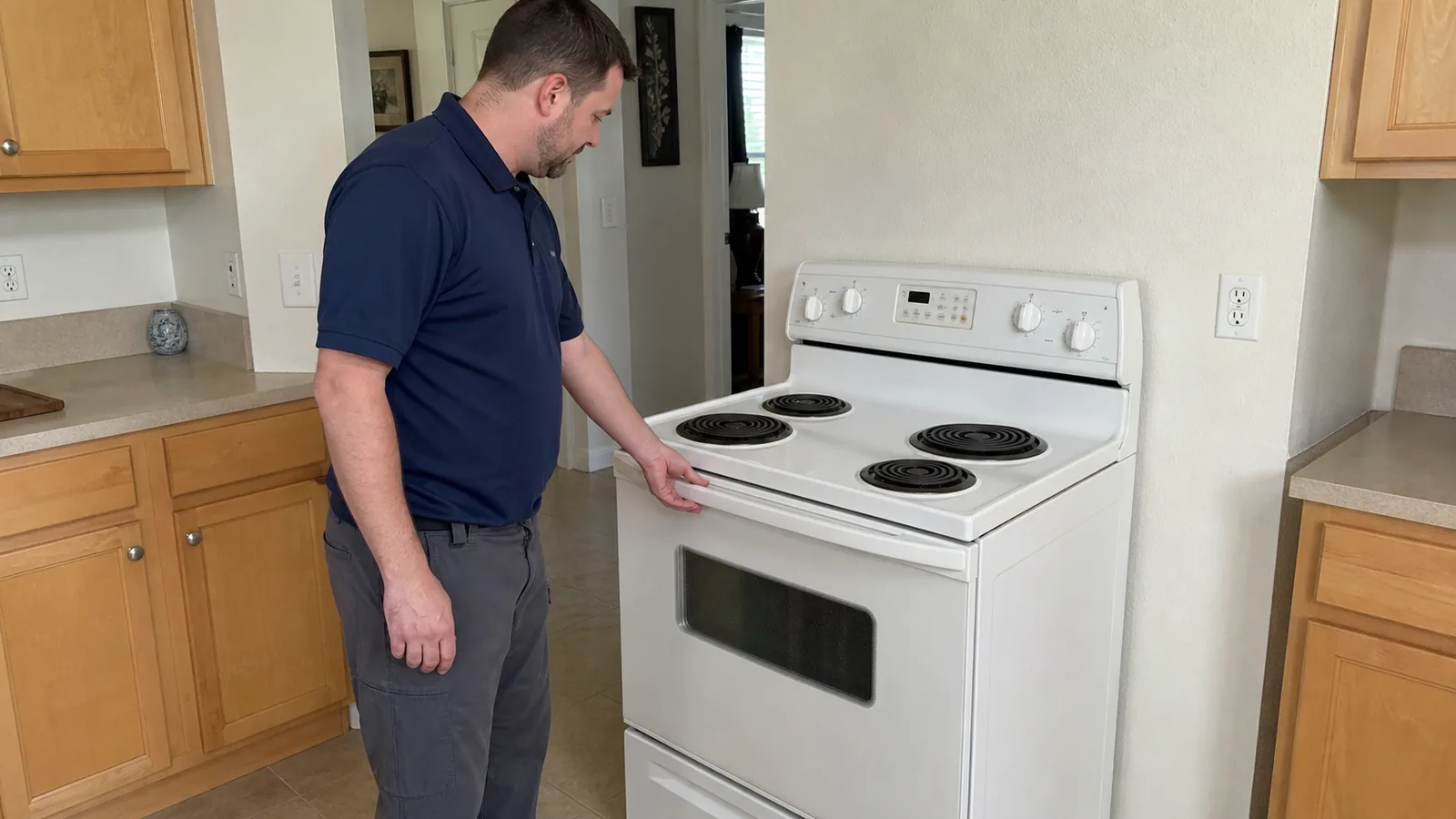
Send the complete model/serial label, product and fuel/electrical configuration, exact symptom evidence, wide installation photos, and Tampa-area ZIP code. Because Tappan is a legacy brand, current documentation, parts support, safety, condition, and repair economics must be confirmed before a part or completion is promised.
Seven-day scheduling. Same-day options depend on request time, route, exact model/configuration, safe access, documentation, and current parts support.
Full Legacy Label
Photograph every character, hyphen, suffix, and serial. A prefix or Tappan badge alone cannot verify the platform.
Exact Configuration
Range, wall oven, cooktop, microwave, refrigerator, dishwasher, washer, dryer, or laundry combination; gas/electric and installation.
Preserved Evidence
Save mode, cycle stage, temperature or heat, control/code, sound, odor, leak, vent, power, and recent work before resets or dismantling.
Support and Economics
Verify manual, parts diagram, supersession, current availability, safe fit, condition, access, and installed replacement context.
Useful history is the history that improves today’s decision
Tappan Is a Legacy Brand—That Changes the Repair Workflow
Electrolux Group identified Tappan as one of its North American major-appliance brands in 2000. Current Group communication centers other active brands. For an appliance still in a Tampa home, the practical questions are therefore the exact model, platform, documentation, configuration, condition, safe access, and which parts remain correctly supported now.
Do not stop at the logo
Identify the Product and Generation
Two Tappan appliances can differ by decades, factory/platform, control design, fuel or voltage, installation, safety systems, and part numbering. Photograph the complete rating plate and overall appliance before searching by appearance.
A catalog record is evidence, not a promise
Verify Documentation and Part Status
Model-indexed records may show current, on-order, special-order, superseded, suggested-replacement, or no-longer-available items. Compatibility still requires the complete model/serial, specifications, mounting/connectors, and safety function.
Diagnosis before economics
Compare the Whole Appliance
A low-cost listed part does not prove that part failed; an unavailable cosmetic piece does not automatically condemn the operating system. Test the actual symptom, then compare support, condition, safety, labor/access, and complete replacement.
Cooking leads, but the legacy catalog is broader
Which Tappan Major Appliances Can Be Reviewed?
Cooking products are the strongest Tappan association, while model-indexed records also document refrigeration, dishwashing, laundry, drying, combinations, and microwaves. Each request is qualified by exact model and current support rather than a blanket brand-wide claim.
Gas and Electric Ranges
Qualifying freestanding or built-in ranges may be reviewed by exact model, gas/electric configuration, coil or smooth top, controls, affected surface zone or oven mode, anti-tip/leveling, door, cabinet, floor, and utility access.
Wall Ovens and Cooktops
Qualifying wall ovens and gas/electric cooktops need separate model labels, cutout/counter/cabinet context, hardwire or gas supply, controls, door/lock, heat pattern, ventilation, and safe service access.
Installed and Older Microwaves
Qualifying countertop, built-in/trimmed, or ventilating microwave requests require exact model, installation, door/latch/cavity condition, control and heat evidence, power, and current support. The outer cover stays closed.
Refrigerators and Freezers
Qualifying older Tappan refrigeration may be reviewed for measured temperature, frost/moisture, door/gasket, fan/compressor sound, ice/water where present, power, ventilation, and food-safety action.
Built-In Dishwashers
Qualifying Tappan dishwashers may be reviewed for cycle-stage, fill, circulation, drain, leak, clean, dry, door/rack/spray, sink/disposal, water temperature, installation, and current model support.
Top-Load Washers
Qualifying Tappan washers may be reviewed for fill, agitate, spin, drain, leak, sound, balance, lid/control, hoses/shutoffs, standpipe, floor, load, and model-specific parts/documentation.
Electric and Gas Dryers
Qualifying Tappan dryers may be reviewed for start/tumble, heat, cycle, sound, shutdown, airflow, lint path, full vent route, electric/gas supply, clearance, and current support after the exact model is known.
Stacked or Combination Laundry
Qualifying Tappan laundry centers or washer/dryer combinations need the product’s own label, both affected functions, shared utilities and controls, closet/stack access, drain/vent route, floor, and replacement clearance.
Stop-use conditions: gas odor, uncontrolled heat or flame, smoke, arcing/sparking, shattered glass, damaged wiring/cord/connection, repeated breaker trips, active water near electricity, severe overheating, burning odor, scorched lint/fabric, or a damaged microwave cavity/door/latch. Shut water or power only when safe. Never remove a microwave outer cover, bypass an interlock/safety device, or improvise a gas or electrical conversion.
Preserve every character before searching
Where to Find a Tappan Model and Serial Number
Label positions vary by product and generation. Frigidaire/Electrolux-family guidance places many range labels on the oven-opening side trim or storage-drawer frame; wall-oven and microwave labels at the door opening; cooktop labels underneath; refrigerator labels inside the fresh-food compartment; dishwasher labels on the door edge or tub; top-load washer labels under the lid; dryer labels at the door opening; and laundry-center labels near the dryer door.
Photograph the entire rating plate squarely in good light, then type the model and serial exactly. Do not remove punctuation, spaces, hyphens, suffixes, or revision digits. A casting number on a knob, burner, pump, motor, timer, or panel is not necessarily the appliance model.
If the label would require pulling a gas range, lifting a cooktop, removing a hardwired wall oven, opening a microwave cover, or dismantling refrigeration, stop. Use the manual, receipt, registration, prior invoice, cabinet paperwork, or an existing photo until safe access is available.
Send one complete legacy-intake packet
- Full label photo plus model/serial typed exactly
- Overall front and side/installation photos
- Product type, gas/electric/voltage, and built-in/freestanding/stacked configuration
- Exact symptom, affected function, mode/cycle, stage, timeline, and repeat pattern
- Display/code, temperature or heat evidence, sound, odor, leak, frost, vibration, or shutdown
- Recent cleaning, power outage, move, flooring, cabinet, counter, plumbing, vent, or utility work
- Original manual, wiring/parts sheet through normal access, or previous repair invoice if available
- Any quoted part number and whether it came from the appliance label, diagram, or installed component
Record behavior before guessing an obsolete part
What Common Tappan Symptoms Mean for the Next Step
These observations organize a safe diagnostic plan. They do not prove a thermostat, igniter, control, element, pump, belt, motor, valve, seal, or other component from a symptom alone.
Burner, Element, or Oven Heat Changed
Identify gas/electric, exact zone or oven mode, setting, ignition/flame or element response, heating pattern, display/code, door/lock, breaker/gas history, cookware where relevant, and recent cleaning or power work.
Range or Oven Will Not Start
Record model, fuel/voltage, control/clock response, mode, door/lock, surface versus oven behavior, breaker/outlet or gas context, power interruption, and any smoke, odor, heat, or error before resetting.
Refrigerator Is Warm or Frosting
Protect food first. Record compartment temperatures, duration/trend, door/gasket, frost/moisture, fan/compressor sound, control setting, power, room conditions, ventilation, loading, and recent move or cleaning.
Dishwasher Leaves Water or Leaks
Record cycle and stage, standing-water depth, fill/circulation/drain sounds, first leak location/timing, sink/disposal changes, hose routing, filter or trap through normal access, door/tub alignment, and water temperature.
Washer Will Not Drain, Spin, or Stay Balanced
Record full cycle and stopping point, water level, load size/type, agitation/spin/drain sounds, tub movement, leak, lid/control, floor level, hoses/standpipe, recent move, and whether the condition repeats with an empty test allowed by the manual.
Dryer Tumbles but Heat or Drying Changed
Record electric/gas, cycle, drum, heat timing, load, airflow at the exterior termination where safely observable, lint-screen condition, full vent route, room air, sound/odor, shutdown, and recent vent or utility work.
Microwave Runs but Does Not Heat
Record model/install type, mode/time/power, model-correct test load, actual result, control, fan/light/tray, door/latch, sound, odor, arcing, and breaker/outlet history. Do not remove the cover or bypass an interlock.
A Knob, Display, or Mechanical Part Is Broken
Photograph the complete label and part in place, record every marking through safe normal access, function and safety effect, mounting/shaft/connector context, color/finish if cosmetic, and any prior replacement. Do not order by appearance alone.
Older controls still require modern safety discipline
Gas, Electric, and Microwave Concerns Need Different Routing
A Tappan cooking appliance may use standing or electronic ignition, coil or smooth-top elements, analog or electronic oven controls, a separate wall/cooktop installation, or a much older microwave platform. Preserve the configuration before testing.
- Gas: stop for gas odor, flame outside the intended burner, delayed ignition with accumulated gas, soot, uncontrolled heat, damaged supply, or a missing/unsafe conversion history.
- Electric: stop for arcing, melted connection, smoke, shattered top/door glass, uncontrolled heating, exposed conductor, damaged cord/receptacle, or repeated breaker trips.
- Microwave: stop for arcing, smoke, burning odor, damaged cavity/door/latch, or repeated trips. Never remove the outer cover or bypass interlocks.
- Installed products: document cutout, anti-tip/leveling, cabinet/counter, ventilation, flooring, hardwire/gas access, and removal path without dismantling.
Do not convert a symptom into a parts order
An oven that will not heat can involve supply, control state, mode, door/lock, temperature sensing, wiring, an element/ignition path, installation, or several interactions. A surface zone with intermittent heat can involve cookware, a connection, switch/control, receptacle, element/burner, gas flow/ignition, or power. A microwave that runs without heating still requires safe separation of controls, interlocks, power, high-voltage systems, cavity condition, and load/mode.
For every cooking request, identify the exact affected function and record what remains normal. “The stove is broken” is not enough; “front-left coil cycles on high while the oven bakes normally after a power outage” creates a safer and more efficient test plan.
Do not attempt a gas conversion, anti-tip modification, hardwire change, microwave-cover removal, safety-device bypass, or improvised universal part to keep an older appliance operating.
Part numbers can survive longer than complete assemblies
How a Tappan Documentation and Parts Check Works
Legacy support is rarely a single yes/no search. The goal is to connect the exact appliance, correct diagram or manual, diagnosed function, original part, valid supersession, physical/electrical fit, safety role, and current availability.
1
Match the Appliance
Use the full model/serial and product configuration, not the logo, a partial prefix, a marketplace title, a component casting, or a photo of a similar white range or laundry machine.
2
Match the Diagram Position
Confirm that the number belongs to the diagnosed function and exact model revision. A knob, timer, switch, valve, trim, harness, or panel can have similar appearance but different shafts, connectors, ratings, logic, or mounting.
3
Verify Supersession and Status
Determine whether the original number is active, superseded, on order, special order, suggested as a replacement, used only, or no longer available—and whether the replacement instructions apply to this serial range.
4
Check Safety and Economics
Compare specifications, modifications, return limits, condition of surrounding systems, labor/access, and installed replacement cost. Availability alone does not make a repair safe or sensible.
Cross-brand caution: a listing that uses an Electrolux Home Products or Frigidaire-era number can be valid for a specific Tappan model. That relationship does not authorize substituting any similar Frigidaire/Electrolux part. Verify model, serial, original/superseding number, rating, fit, safety function, and instructions.
Older appliances often remain in long-held condos and rentals
Plan Property Access Without Making Unsupported Promises
A Tappan appliance in a Tampa condo, rental, duplex, or managed building may have been installed before current ownership. The service request therefore benefits from the appliance label, lease/owner authorization, prior invoices, building access rules, utility shutoff locations, floor/cabinet condition, and a clear decision-maker.
Share parking/loading, gate, elevator, stairs, service hours, floor protection, tenant/owner or property-manager contact, pet/access rules, and whether approval is needed before diagnostic work or a quoted repair. Max can document findings for the requester; billing, authorization, and communication arrangements must be confirmed for the specific appointment rather than promised generally on the page.
Property details that prevent a failed visit
- Who owns the appliance and who can authorize diagnosis or repair
- Who will provide entry and remain reachable during the appointment
- Full appliance label and whether the unit came with the property
- Known prior repairs, replacement parts, conversions, or modifications
- Gas shutoff, breaker/receptacle, water shutoffs, drain/standpipe, and dryer vent route
- Cabinet, counter, floor, closet, stack, or removal restrictions
- Parking, loading, elevator, gate, service-hour, insurance/vendor, and floor-protection rules
- Any active leak, gas/electrical safety issue, water damage, mold, pest, or structural concern needing another trade
Legacy does not automatically mean repair—or replacement
Is an Older Tappan Appliance Worth Repairing?
Make the decision after diagnosis and a current support check. Age and nostalgia matter less than safety, isolated fault, condition, correct part availability, access, household fit, and the complete installed alternative.
Repair deserves consideration when
- Testing isolates a specific, supportable fault rather than several overlapping problems
- Correct documentation and a verified compatible part or repair path exist
- Gas/electrical, cabinet, cavity/tub/drum, door, wiring, plumbing, venting, glass, and controls are otherwise sound
- There is no unresolved leak, overheating, corrosion, structural, conversion, or safety issue
- The appliance fits the kitchen or laundry space and household needs well
- Authorized repair cost is reasonable compared with a safe installed replacement
Replacement deserves more weight when
- Safety, structural, wiring, gas, water, vent, cavity/tub/drum, or severe corrosion problems remain
- Several major systems are compromised or prior repairs have created uncertainty
- Critical documentation, compatible parts, or safe supersession instructions are unavailable
- A specialty restoration would be needed instead of a defined residential repair
- Household needs, capacity, efficiency, or installation have changed materially
- Repair approaches the full appliance, delivery, removal, cabinet/counter/floor, utility, and installation cost
A model-first path for a legacy appliance
What to Expect From Your Tappan Service Visit
The process separates identification, diagnosis, current support, and economics before a repair is authorized.
Step 1
Legacy Intake
We review the complete label, configuration, fuel/electrical supply, symptom evidence, safety, installation, access, prior work, documentation, and property requirements.
Step 2
Model-Matched Diagnosis
The technician tests relevant functions where safe access and appliance condition permit, separating supply, controls, installation, operating behavior, and the reported symptom without guessing a part.
Step 3
Support and Options
If a repair path is identified, model/part support, supersession, safety, labor/access, condition, return limits, and replacement context are reviewed before work proceeds.
Step 4
Approved Work and Check
Authorized work is completed when feasible and followed by a relevant functional check. Eligible repair parts installed by Max include a limited 90-day parts warranty; coverage depends on the component and repair.
Local routing with legacy support confirmation
Tappan Appliance Repair Across the Tampa Bay Area
Requests are reviewed across Tampa and many nearby Hillsborough, Pinellas, and Pasco County communities. Availability varies by address, route, exact model/configuration, appliance condition, utilities, safe access, documentation, current parts situation, and property rules.
All Service AreasTampaClearwaterDunedinSt. Petersburg
Share parking/loading, gate, elevator, stairs, service-hour, floor-protection, authorization, and vendor-document rules plus gas/electrical, water/drain, vent, cabinet/counter/closet/stack, floor, shutoff, access, and prior-damage details.
Direct answers for owners of older Tappan appliances
Tappan Appliance Repair FAQs
Answers about correct product scope, legacy status, cooking products, refrigeration/dishwashing/laundry, microwaves, model labels, cross-brand parts, support checks, restoration, independent status, scheduling, and repair value.
Which Tappan appliances do you repair in Tampa?
We evaluate qualifying Tappan residential major appliances within Max’s established scope: gas and electric ranges, wall ovens, cooktops, and qualifying installed microwaves; refrigerators and freezers; built-in dishwashers; top-load washers; electric or gas dryers; and qualifying stacked or combination laundry products. Tappan is a legacy brand, so acceptance depends on the complete model/serial, product configuration, fuel or electrical supply, installation, safety, condition, documentation, current parts support, access, and repair economics. A Tappan badge alone is not enough to promise that a particular vintage or specialty product can be serviced.
Is Tappan still making new appliances?
Tappan should be treated as a legacy North American appliance brand rather than a current broad retail product line. Electrolux Group’s official 2000 announcement named Tappan among its North American major-appliance brands, while current Group communication highlights Electrolux, AEG, and Frigidaire. Existing Tappan products can still have manuals, model-indexed parts records, shared-era service information, or replacement parts, but those resources vary by exact model and component. The legacy status makes the complete label and current support check more important—not a reason to assume every older appliance is unrepairable.
Do you repair older Tappan gas and electric ranges or ovens?
Qualifying freestanding or built-in Tappan gas/electric ranges, coil or smooth-top products, wall ovens, and cooktops can be reviewed after the full model, serial, fuel/voltage, control type, installation, and safety condition are known. Record which burner, element, or oven mode is affected; ignition/flame or element response; setpoint and observed heating pattern; display/code; door, lock, light, and broil/bake behavior; breaker or gas history; and recent cleaning, power, flooring, counter, or cabinet work. Stop for gas odor, uncontrolled heat, smoke, arcing, shattered glass, damaged wiring/connection, or repeated breaker trips.
Can you repair a Tappan refrigerator, dishwasher, washer, or dryer?
Many Tappan model records exist across refrigeration, dishwashing, laundry, and drying, so a qualifying request can be reviewed by exact label and configuration. For refrigeration, preserve measured temperatures and food-safety action. For a dishwasher, record cycle stage, fill/circulation/drain/dry, standing water, and first leak location. For a washer, record fill/agitate/spin/drain, load, balance, and water connections. For a dryer, record electric/gas type, drum, heat, airflow, cycle, vent, and shutdown behavior. Age, category, and a parts-catalog result do not guarantee safe repair or part availability.
Do you repair old Tappan microwaves?
A qualifying Tappan microwave request can be reviewed only after the complete model, installation type, cavity/door/latch condition, power arrangement, and current support are confirmed. Record whether it is countertop, built-in/trimmed, or installed with ventilation; the selected mode/time/power; display and control response; door/latch, fan, light, tray or stirrer behavior; heating result; sound, odor, arcing, smoke, and breaker history. Never remove the outer cover or bypass an interlock. Stop use for arcing, smoke, burning odor, damaged cavity/door/latch, severe overheating, or repeated breaker trips because high-voltage components can remain dangerous.
Where is the model and serial number on a Tappan appliance?
Location varies by product and generation. Current Frigidaire/Electrolux-family guidance places many range labels on the oven frame, side trim, or storage-drawer frame; wall-oven/microwave labels along door-opening trim; cooktop labels underneath; refrigerator labels inside the fresh-food compartment; dishwasher labels on the door edge or tub; top-load washer labels under the lid near the tub opening; dryer labels at the door opening; and laundry-center labels near the dryer door. Photograph the complete label without pulling a gas appliance, lifting a cooktop, or removing a microwave cover or non-owner panel. Preserve every hyphen, suffix, and revision character.
Can a Frigidaire or Electrolux part be used in a Tappan appliance?
Sometimes a Tappan model record cross-references an Electrolux Home Products or Frigidaire-era part number, but the brand relationship does not make visually similar parts interchangeable. Compatibility must be verified against the complete Tappan model and serial, original and superseding part numbers, electrical/fuel specifications, dimensions, connector or mounting details, safety function, and current documentation. A search result may also be in stock, on order, special order, superseded, suggested as a replacement, or no longer available. No part should be promised or installed from appearance, prefix, or cross-brand name alone.
What information helps with an older Tappan parts check?
Send a clear full-label photo, product type, model/serial typed exactly, wide installation view, symptom and timeline, control or component photos through normal owner access, prior repair invoices, original manual or parts diagram if available, and any part number already quoted. Do not remove a gas valve, energized component, microwave cover, cooktop, hardwired appliance, or refrigeration panel to find a number. A useful check separates the appliance model from a component casting number and then verifies part status, supersession, fit, safety, return limitations, and repair economics before ordering.
Is a vintage Tappan stove restoration the same as appliance repair?
No. A residential repair request aims to diagnose a specific operating concern on a qualifying major appliance and restore safe function where practical. Full cosmetic restoration, historical conservation, porcelain or chrome refinishing, cabinet fabrication, custom gas conversion, rewiring to a modern standard, reproduction controls/trim, or rebuilding an antique appliance can require specialty restoration trades and a different scope. Send the complete label, overall photos, exact desired outcome, fuel/electrical configuration, modifications, missing pieces, and safety condition so the request can be classified before an appointment is promised.
Is Max Appliance Repair Tampa authorized by Tappan or Electrolux?
No. Max Appliance Repair Tampa is an independent appliance repair company and is not Tappan, Electrolux, or Frigidaire factory service and is not authorized by, affiliated with, or endorsed by Electrolux Home Products, Inc. or Electrolux Group. Brand and model names identify appliances discussed or serviced. For any surviving manufacturer warranty, extended plan, safety notice, recall, product claim, or factory-directed requirement, use the current official support route and exact model/serial before independent work. Most Tappan products are older, but coverage should never be assumed from age alone.
Is same-day Tappan appliance repair available in Tampa?
Same-day appointment options are often available, but they depend on request time, route, Tampa-area address, complete model/serial, appliance and configuration, fuel/electrical supply, symptom evidence, installation and safe access, parts/documentation status, and any property requirements. Call (813) 906-1062 with the full label, wide photos, exact behavior, address, and ZIP code so the earliest suitable opening can be confirmed. An appointment is not a promise that a legacy part is stocked, that the appliance is safely serviceable, or that the repair will be completed the same day.
Is an older Tappan appliance worth repairing?
The decision should follow model-correct diagnosis and a current support check, not nostalgia, age, a brand-history story, or one guessed component. Compare the isolated fault; exact model/serial; gas/electrical and installation safety; documentation; part availability, supersession, price, and return limitations; condition of the cabinet, cavity, tub, drum, door, wiring, plumbing, venting, insulation, glass, controls, and surrounding installation; prior repairs; household fit; and complete replacement cost. Repair can make sense when testing isolates a supportable fault and the remaining appliance is sound. Replacement deserves more weight when safety or structural problems remain, several systems overlap, critical support is unavailable, or repair approaches the installed cost of a suitable replacement.
Sources used for brand status, product categories, labels, support, and parts-context guidance: Electrolux Group official 2000 North American brand announcement and 2025 Annual Report announcement/current leading brands; Frigidaire official Owner Center, model/serial location guide, and support libraries for ranges, refrigerators, dishwashers, and washers; plus model-indexed Tappan parts catalogs for cooking, refrigeration, dishwashing, washers, and dryers. Brand/support emphasis, documents, parts, supersessions, prices, contacts, and availability can change; verify the current exact model and source. Catalog examples establish product/model records, not a remote diagnosis or parts promise.
Independent service disclosure: Max Appliance Repair Tampa is independent and is not Tappan, Electrolux, or Frigidaire factory service and is not authorized by, affiliated with, or endorsed by Electrolux Home Products, Inc. or Electrolux Group. Brand and model names identify appliances discussed or serviced. For any surviving warranty, extended plan, safety notice, recall, product claim, authorized verification, or factory-directed service, use the current official route.
Brand status, product categories, label locations, support, and parts-context information reviewed August 2, 2026. View all appliance brands we repair.
Need Help With an Older Tappan Appliance?
Call with the complete model/serial, product and fuel/electrical configuration, exact symptom evidence, installation photos, prior documentation, and Tampa-area ZIP code, or send the details online.