

Schedule Now & Get $25 Off
Model-aware Wolf cooking service with recall and Factory Certified route clarity
Wolf Appliance Repair in Tampa, FL
Max Appliance Repair Tampa evaluates qualifying residential Wolf ranges, ovens, rangetops, cooktops, microwaves, warming drawers, ventilation, and selected legacy cooking products.
Send the complete model and serial for every affected product, exact surface/cavity/mode evidence, wide installation and ventilation photos, warranty or recall information, and Tampa-area ZIP code. Check the current Wolf dual-fuel range recall before ordinary service when the rating plate may match.
Seven-day scheduling. Same-day options depend on request time, address, exact model/configuration, safety/recall route, installation and access, diagnostic scope, and parts situation.
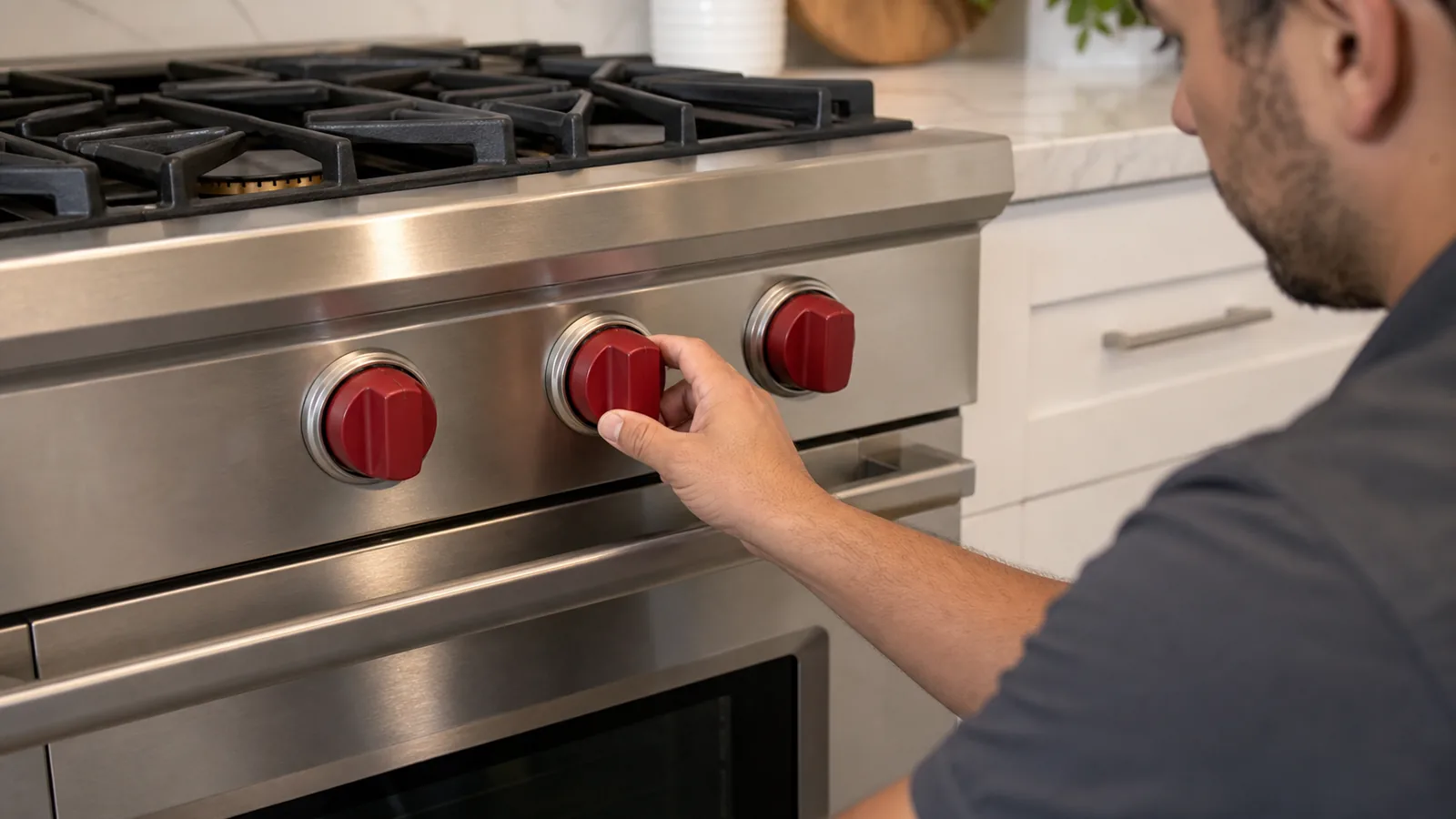
Every Model and Serial
Photograph the full rating plate for each range, oven product/cavity stack, rangetop/cooktop, microwave, drawer, hood/downdraft, or legacy coffee system.
Exact Surface and Cavity
Name burner, zone, griddle/charbroiler, cavity, mode, drawer, fan/blower, control, setpoint, timing, code, and what still works.
Installation and Ventilation
Include width, fuel/voltage, counter/cabinet/floor, hood/downdraft, blower and duct, steam/water, trim, power/gas, and safe removal access.
Recall and Coverage Route
Check the dual-fuel griddle recall, older gas-range notice, manufacturer warranty, service plan, prior factory case, and Factory Certified requirements.
Wolf is a cooking and ventilation brand with distinct product generations
Which Wolf Appliances Fit This Service Page?
Exact model/serial, product generation, fuel/voltage, surface/cavity configuration, current safety or Factory Certified route, integrated installation, condition, documentation and parts support, and safe access determine service fit—not premium positioning or red controls alone.
Gas, Dual-Fuel, and Induction Ranges
Exact model/serial, generation, width, fuel/voltage, surface arrangement, cavities, controls, current griddle-recall check, ventilation, floor, anti-tip/leveling, utilities, and removal access determine the plan.
Rangetops and Cooktops
Sealed-burner rangetops and gas/electric/induction cooktops need model identity, burner/zone/module, controls, cookware, fuel/power, counter/cutout, ventilation pairing, access below, and spill/cleaning history.
M, E, and Legacy Wall Ovens
Single/double and legacy configurations need every rating plate, exact cavity/mode, preheat/temperature evidence, controls/code, fans, doors/locks, cabinet stack, power, trim, ventilation, and removal path.
Convection Steam and Speed Ovens
Steam and speed systems add water, drain/tray, steam generation, microwave high-voltage safety, modes, door/latch, cabinet integration, controls, and model-specific documentation to the intake.
Microwave Configurations
Built-in, drawer, convection, and standard microwaves need exact model, mode/time/heat result, fan/light, turntable/tray, door/latch/cavity, sound/odor/arcing, code, dedicated power, trim, cabinet support, and safe access.
Warming Drawers
Qualifying drawers need model/serial, mode/temperature, heat result, controls, drawer alignment, moisture settings, load, cabinet stack/panel, power, ventilation, and service/removal clearance.
Hoods, Liners, and Downdrafts
Ventilation requires system identity, fan speeds, capture, sound/vibration, lights/controls, filters, ducted/recirculating setup, blower location, duct/termination, make-up air, cooking pairing, and safe access.
Model-Qualified Legacy Coffee Systems
Older built-in Wolf coffee requests require exact model/serial, display/stage evidence, grinder/brew/water/milk/steam/drain behavior, cleaning/descale history, cabinet access, condition, and current model support.
Stop and route safety first: gas odor, fire, uncontrolled or unexpected heat/flame, griddle activation without a command, smoke, arcing, severe overheating, damaged gas/electrical connection, shattered glass, water near electricity, repeated breaker trips, or a possible recall match. Do not keep testing a hazardous function or remove panels/knobs to investigate.
CPSC 25-034 — announced November 7, 2024
Certain Dual-Fuel Ranges With Infrared Griddles
The notice covers exact 36-, 48-, and 60-inch Wolf dual-fuel range models with infrared griddles within serial ranges 18517201–18868311 and 10006001–10006009. The model list includes specified DF36450G, DF48450DG/CG, DF48650G, and DF60650DG/CG configurations and suffixes.
Liquids from a boil-over or spill can contribute to a short circuit and turn the griddle on unexpectedly, creating burn and fire hazards. CPSC says consumers should immediately stop using affected ranges and contact Wolf to schedule the free in-home repair.
What to do: photograph the full rating plate underneath the top of the oven as the current official guide directs; stop use if the model/serial matches or may match; preserve prior recall communication; and use Wolf’s recall route. Do not test the griddle, spill liquid, or arrange independent work as the recall remedy.
What does not prove recall eligibility?
- The appliance has red controls or looks like a professional range
- The range has a griddle but the exact model suffix or serial is unknown
- A spill, control code, breaker event, no-heat complaint, or intermittent display occurred
- The range was installed, purchased, or remodeled between 2020 and 2024
- A technician or seller informally said the family is included
- The griddle works normally today or has never activated unexpectedly
- A prior repair changed a control, harness, griddle, knob, or power component
- The owner found a similar-looking recalled unit online
Eligibility and remedy follow the complete model/serial and Wolf’s current official determination. Ordinary diagnosis should not interfere with a free safety remedy.
Older residential gas ranges have a separate safety history
Check the 2001 Delayed-Ignition Notice by Serial
CPSC 02-022 covers selected older Wolf and Wolf Gourmet residential gas ranges in 30-, 36-, 48-, and 60-inch widths. The notice lists serial ranges including 60-10000000 through 60-1099999 and 11000957 through 11006106. Delayed ignition in the ovens and broilers can create burn and fire hazards.
The official instruction tells owners of matching units to stop using the oven and broiler and arrange the free in-home repair. It also distinguishes contacts based on whether the product was purchased before or after January 1, 2000 because Wolf Appliance acquired the residential product line.
Use the complete rating plate and current Wolf/CPSC direction. Do not recreate delayed ignition, lean toward an oven during a test, remove burner pans/panels, or assume a gas odor, clicking, slow preheat, or no-heat complaint establishes recall status.
Preserve this history before service
- Complete model and serial plate, including all punctuation and prefixes
- Approximate purchase/installation date and any proof or prior-owner record
- Whether a recall inspection or remedy was previously completed
- Exact cavity and mode where delayed ignition or another symptom appeared
- Gas type, utility work, outage or shutoff history, and ventilation context
- Control position, ignition sounds, odor, delay, event timing, and safe observed result
- Prior igniter, burner, valve, control, gas conversion, or oven service
- Current Wolf case number, instructions, and Factory Certified provider if assigned
Surface, cavity, ventilation, and installation interact
Map the Wolf Cooking System Before Diagnosing a Part
A premium cooking symptom can involve one burner or zone, a griddle/charbroiler, one oven cavity or mode, steam/speed functions, controls, fuel/electrical supply, cookware, ventilation, cabinetry, floor/leveling, or recent work. Good evidence separates them without guessing.
- Product identity: full model/serial, generation, width, fuel/voltage, surface arrangement, cavity count, controls, and connected capability.
- Exact function: one burner/zone, griddle/charbroiler, one cavity/mode, steam/water, microwave, drawer, fan/light, hood, or downdraft.
- Observed result: code, setpoint, timing, ignition/flame, induction/cookware, temperature pattern, sound, odor, door/lock, or airflow.
- Installation: counters/cabinets/trim, floor, gas/electrical, water for steam, hood/downdraft, blower/duct, clearances, and removal path.
- Safety route: current recall, legacy notice, manufacturer warranty, Factory Certified requirements, and prior factory case.
Why this prevents bad conclusions
- One surface burner can behave differently while the other burners and oven remain normal.
- An induction zone can reject one pan while another compatible pan supplies useful comparison evidence.
- An oven temperature complaint can vary by cavity, mode, rack position, preheat definition, load, door seal, fan, and measurement method.
- A steam-oven complaint adds water, reservoir/plumbing, drain/tray, cleaning/descale, and cabinet context.
- A microwave or speed-oven fault adds high-voltage and door-interlock safety that is not a DIY test path.
- Weak capture can involve filters, fan/blower, controls, duct/termination, room pressure, make-up air, and cooking output.
- A spill plus unexpected griddle behavior can trigger recall routing rather than ordinary control diagnosis.
- A matched suite can contain separate models, circuits, trim, and service paths.
Useful observations narrow a safe model-matched test plan
What Common Wolf Cooking Symptoms Mean for the Next Step
These records help route diagnosis. They do not remotely prove an igniter, burner, valve, element, induction generator, control, sensor, fan, door component, steam system, microwave component, blower, switch, or duct fault.
A Burner Clicks or Does Not Light
Identify the exact burner and neighboring response, control position, visible normal-access cleanliness/dryness, flame/ignition behavior, spill or cleaning timing, gas event, and model/serial. Stop for odor or uncontrolled flame.
A Griddle Activates Unexpectedly
Stop using the range. Preserve complete model/serial, what occurred, liquid/spill context, control position and time, and check the current Wolf/CPSC dual-fuel griddle recall. Do not recreate the event.
An Oven Is Slow, Uneven, or Off Temperature
Record exact cavity and mode, setpoint, preheat indication/time, food or independent measurement method, rack position, door/lock, fans, control/code, power/gas history, and recent cleaning or utility work.
Induction Does Not Recognize Cookware
Record exact zone, cookware material/base diameter and placement, whether another compatible pan or zone behaves differently, controls/code, heat result, spill/cleaning, breaker event, and ventilation/heat context.
Steam or Speed Oven Stops Mid-Mode
Identify product, mode, stage, setpoint/time, heat/steam/water result, tray, fan/light, door/latch/lock, code, sound/odor/arcing, breaker, and recent cleaning, descale, power, software, cabinet, or water change.
Hood or Downdraft Is Weak or Noisy
Record speeds, capture pattern, sound/vibration, lights/controls, filters, ducted/recirculating setup, blower location, duct/termination, cooktop operation, room pressure/HVAC, and recent roof/duct/cabinet work.
A Display, Knob, or Touch Control Is Intermittent
Save exact message/code, affected function, physical response, time/frequency, heat or spill context, recent power/cleaning event, app state where relevant, and what still works before repeated resets.
Door, Drawer, Trim, or Panel Is Misaligned
Show the whole stack or cutout, gaps, hinge/handle side, rubbing/closing force, adjacent cabinets/products, counter/floor changes, alarms or heat effect, and prior panel/installation work without disassembly.
The rating plate connects the appliance to the correct documentation and route
Use Wolf’s Product-Specific Serial Tag Guide
Wolf’s official guide covers ovens, ranges, rangetops, cooktops, microwaves, warming/vacuum drawers, ventilation, grills, older coffee systems, and connected products. The tag shows model, serial, total amps, and sometimes manufacture date. In a double oven, the tag may be in the lower cavity; ventilation warranty identity follows the ventilation system serial, while blower motors do not carry separate serials.
Use the exact product guide and normal safe access. Let appliances cool. Photograph the entire plate and type the values. Do not pull a heavy range or wall oven, lift a cooktop, remove trim/panels, disconnect gas/electricity, or climb to a roof/attic blower just to find a label.
If connected, the Sub-Zero Group Owner’s App may show the serial, but the serial is not the pairing credential. Save appliance display/PIN and physical result separately from app/account/network evidence before resets.
Send one packet per product
- Complete model/serial plate and typed values
- Whole product and full suite/stack/cutout with doors/drawers closed
- Exact surface/cavity/module/drawer/ventilation function affected
- Mode, setpoint, timing, code/message, physical response, and what still works
- Fuel/voltage, gas/electrical event, cookware, steam water/drain, or microwave context
- Hood/downdraft, blower location, filter, duct/termination, and room/HVAC context
- Spill/cleaning, self-clean/descale, power/software/network, remodel, floor/cabinet, or utility change
- Warranty, registration, Factory Certified service, recall, prior case, parts, and repair history
A hood shell, controls, blower, duct, and building can be separate service zones
Plan Wolf Ventilation Service by Blower Location
Capture performance depends on the ventilation product and its installation. Wolf’s official guidance says inaccessible in-line or remote blowers may need coordination with Factory Certified service, an installer, or an HVAC provider when the blower is on a roof, exterior wall, attic, or crawlspace.
Zone 1
Hood or Downdraft
Identify model/serial, controls, lights, speeds, filters, capture pattern, sound/vibration, raise/lower action, and visible condition through normal access.
Zone 2
Blower
State internal, in-line, or remote location; accessibility; sound and airflow response by speed; prior motor/service work; warranty identity; and who can safely reach it.
Zone 3
Duct and Termination
Record ducted/recirculating setup, duct route/size if documented, exterior cap/damper through safe view, grease/debris service, roof/wall work, and any airflow change.
Zone 4
Room and Cooking Load
Include range/cooktop pairing, active burners/griddle, hood height, room size, HVAC/exhaust fans, make-up air, open windows/doors, and when capture changes.
Verify Factory Certified status instead of assuming it
Recall, Warranty, Factory Certified, or Independent Service?
Wolf publishes a ZIP-code locator for Factory Certified service. The correct route depends on complete model/serial, registration and proof, current written warranty, recall or safety notice, prior factory case, coverage/parts terms, requested work, and whether the provider must be Factory Certified.
Route 1
Current or Legacy Recall
Follow Wolf/CPSC stop-use and free-repair instructions. Preserve exact rating plate and prior remedy information; do not substitute independent work for the official safety remedy.
Route 2
Manufacturer Warranty or Factory Case
Use Wolf Customer Care and Factory Certified service with registration, proof, installation record, model/serial, and case number when warranty or factory-directed work may apply.
Route 3
Parts or Service Coverage
Confirm the exact written terms and required provider. Wolf’s parts and Factory Certified programs have specific eligibility, registration, distributor, labor, and exception conditions.
Route 4
Independent Out-of-Coverage Review
Max can review a qualifying residential request after safety/coverage route, exact product, evidence, installation, access, condition, documentation, and support are known. Max is not Factory Certified.
Wide ranges and built-in stacks make access part of the decision
Why Wolf Installation Details Change the Visit
A 36-, 48-, or 60-inch range, double oven, steam/speed stack, cooktop or rangetop cutout, warming drawer, built-in microwave, hood liner, downdraft, or remote blower can require counter, cabinet, floor, trim, gas/electrical, water, duct, and removal planning beyond the symptom.
Send straight-on and angled wide photos with doors/drawers closed, then safe normal-use views. Include adjacent products/cabinets, counter/backsplash, trim, floor transition, hood/downdraft, toe kick, accessible gas/electrical/water, duct/blower documentation, and the entry/removal route. Do not remove panels, trim, doors, grates, filters, or the appliance solely for intake.
Share recent spills, self-clean/descale, cabinet/counter/floor work, appliance movement, gas/electrical/plumbing/duct/HVAC work, power/software/network event, or another contractor visit. These facts do not prove an installation fault; they determine what must be separated, protected, and coordinated.
Access details to confirm
- Exact width, model generation, gas/dual-fuel/induction/electric configuration, and surface/cavity layout
- Cabinet cutout, counters/backsplash, trim, handles, adjacent products, floor, level, anti-tip, and prior damage
- Gas type/shutoff and conversion history; breaker/receptacle/hardwire, circuit, and safe isolation access
- Steam water/reservoir/drain context and coffee water/milk/drain where relevant
- Hood/downdraft model, blower location, filters, duct route/termination, make-up air, and cooking pairing
- Island clearance, removal path, doorways, stairs/elevator, floor protection, and lifting/access limitations
- Recall, registration, warranty/coverage, Factory Certified provider, installer/remodeler, prior case, and service history
- Parking/loading, gate, service hours, property authorization, and vendor-document requirements
Compare the diagnosis with the complete installed replacement project
Is an Older Wolf Appliance Worth Repairing?
A fair decision includes exact product generation, recall and coverage route, diagnosis, support, other surface/cavity functions, installation, ventilation, suite fit, and the complete alternative—not original purchase price or brand reputation alone.
Repair deserves consideration when
- Model-matched testing isolates a defined, supportable fault rather than several overlapping systems
- No active recall/free remedy or covered Factory Certified route should be used first
- Correct parts, documentation, and safe diagnostic/removal access remain available
- Other burners/zones/cavities/modes, controls, doors/trim, gas/electrical, steam/water, ventilation, cabinet, and floor remain sound
- The current configuration still meets household cooking, capacity, ventilation, and integration needs
- Repair cost is reasonable compared with the complete installed replacement and restoration project
Replacement deserves more weight when
- Major-system damage overlaps or diagnosis cannot be supported safely and reliably
- Fire/gas/electrical, structural, severe corrosion, cavity/door, counter/cabinet/floor, or ventilation issues remain
- Critical parts, controls, trim, documentation, or model-specific support are unavailable
- Several functions, suite products, or prior repairs create near-term risk and poor compatibility
- The product no longer fits household, fuel, ventilation, capacity, or installation needs
- Repair approaches appliance, delivery/removal, counter/cabinet/floor, gas/electrical/water, duct/blower, trim, and finish cost
A clear path from model identity to informed decision
What to Expect From Your Wolf Service Visit
Accurate intake protects time, appliance surfaces, controls, trim, counters, cabinets, floors, utilities, ventilation, and expectations. Diagnosis comes before a part or completion promise.
Step 1
Product and Route Review
We confirm every model/serial, configuration, exact function evidence, recall/warranty/Factory Certified route, installation, access, safety, and prior work.
Step 2
Model-Matched Diagnosis
The technician reviews controls, evidence, fuel/power/water, cabinet/counter/floor, trim, ventilation/blower, and accessible systems, then tests relevant functions where safe.
Step 3
Findings and Options
You receive findings and a proposed next step before repair. Parts, labor, access, condition, coverage, coordination, and complete replacement context can be compared.
Step 4
Approved Work and Check
Authorized work is completed when feasible and followed by a relevant functional check. Eligible repair parts installed by Max include a limited 90-day parts warranty; coverage depends on the component and repair.
Local routing with model, recall, installation, and ventilation confirmation
Wolf Appliance Repair Across the Tampa Bay Area
Requests are reviewed across Tampa and many nearby Hillsborough, Pinellas, and Pasco County communities. Availability varies by address, exact product/configuration, safety and coverage/recall route, integrated installation, blower access, building access, and parts situation.
All Service AreasTampaClearwaterDunedinSt. Petersburg
Share parking/loading, gate, elevator, stairs, service-hour, floor-protection, property authorization, and vendor-document rules plus cabinets/counters/trim, gas/electrical, steam/coffee water, hood/downdraft/blower/duct, floor, removal path, and prior-damage details.
Direct answers for Wolf owners
Wolf Appliance Repair FAQs
Answers about product scope, ranges, current and legacy recall routing, wall/steam/speed/microwave ovens, cooktops/rangetops, ventilation, warming/coffee systems, serial tags, connected evidence, Factory Certified service, and repair value.
Which Wolf appliances do you repair in Tampa?
We evaluate qualifying residential Wolf gas, dual-fuel, and induction ranges; sealed-burner rangetops; gas, electric, and induction cooktops and model-qualified modules; M, E, and selected legacy wall ovens; convection steam and speed ovens; built-in, drawer, convection, and standard microwave configurations; warming drawers; residential hoods, liners, downdrafts, and qualifying blower arrangements; and model-qualified older built-in coffee systems. Service fit depends on complete model and serial information, product generation and configuration, warranty or recall route, installation, safety, access, condition, and current documentation and parts support. This page focuses on Wolf cooking and ventilation products; matching kitchen styling does not make Sub-Zero refrigeration or Cove dishwashers Wolf appliances, so each brand/product needs its own rating plate and service route.
Do you repair Wolf gas, dual-fuel, and induction ranges?
Qualifying Wolf ranges can be reviewed by exact model/serial, width, generation, fuel/voltage, burner/zone and griddle/charbroiler arrangement, oven cavities, controls, installation, ventilation, and safety. Record the exact surface function or cavity/mode, ignition/flame or induction response, cookware where relevant, setpoint, preheat and temperature pattern, fan, door/lock, display/code, breaker or gas history, and recent spill, cleaning, power, floor, cabinet, counter, ventilation, or utility work. Stop for gas odor, uncontrolled or unexpected heat, an unexpectedly operating griddle, smoke, arcing, severe overheating, shattered glass, damaged connection, or repeated trips. If a model/serial may match Wolf’s current dual-fuel range recall, stop using the range and follow Wolf’s official free-repair route before ordinary service.
Is my Wolf dual-fuel range affected by the infrared-griddle recall?
Only the complete model and serial can answer. CPSC 25-034 covers specified 36-, 48-, and 60-inch Wolf dual-fuel ranges with infrared griddles, within serial ranges 18517201 through 18868311 and 10006001 through 10006009 and the notice’s exact model list. Liquids can contribute to a short circuit that turns the griddle on unexpectedly, creating burn and fire risk. The official instruction is to stop using affected ranges and contact Wolf for a free in-home repair. Preserve the entire rating plate and any prior Wolf recall communication. Do not test the griddle, intentionally spill liquid, remove knobs/panels, or treat independent diagnosis as a recall remedy. A red-knob range, griddle symptom, spill, code, or purchase date alone does not establish eligibility.
Is my older Wolf gas range affected by the delayed-ignition recall?
CPSC 02-022 covers selected older 30-, 36-, 48-, and 60-inch Wolf and Wolf Gourmet residential gas ranges with the serial ranges stated in the 2001 notice. Delayed ignition in the ovens and broilers can present burn and fire hazards. The official instruction tells owners of matching units to stop using the oven and broiler and arrange the free repair. Exact serial identity and current official routing matter because the product line changed ownership around 2000 and the notice used different contacts based on purchase timing. Do not recreate delayed ignition, open burner areas, or assume a slow-preheat, clicking, gas odor, or no-heat complaint proves recall eligibility. If the plate may match, preserve it and follow Wolf/CPSC’s current instructions before independent service.
Do you repair Wolf wall, steam, speed, and microwave ovens?
Qualifying Wolf single/double M or E Series and model-qualified legacy ovens, convection steam ovens, speed ovens, and built-in/drawer/convection/standard microwave configurations can be reviewed after every model/serial and the complete cabinet stack are identified. Record the affected product or cavity, mode, setpoint, preheat/heat result, steam/water behavior, fan/light, door/lock/latch, turntable or tray, controls/code, breaker history, and recent cleaning, power, software, cabinet, or plumbing change. Stop for smoke, arcing, burning odor, uncontrolled heat, shattered glass, water near electricity, damaged cavity/door/latch, or repeated trips. Never remove a microwave/speed-oven cover or bypass an interlock; high-voltage components can remain dangerous. A code or no-heat symptom does not remotely prove one element, sensor, control, fan, steam, or microwave component.
Do you repair Wolf cooktops, rangetops, and modules?
Qualifying Wolf sealed-burner rangetops plus gas, electric, and induction cooktops and model-qualified specialty modules can be reviewed by exact model/serial, generation, width, surface layout, fuel/voltage, control type, counter/cutout, ventilation pairing, and access below. Record the affected burner/zone/module, ignition/flame or induction response, cookware and pan placement where relevant, control behavior, exact code, spill/cleaning history, breaker/gas event, and recent counter, cabinet, electrical/gas, or ventilation work. Stop for gas odor, uncontrolled heat/flame, arcing, shattered glass, severe overheating, damaged connection, or repeated trips. Do not lift a cooktop or remove a rangetop panel for intake. A clicking burner, uneven flame, nonresponsive induction zone, or code is evidence for model-matched testing, not a remote component diagnosis.
Do you repair Wolf hoods, liners, and downdrafts?
Qualifying residential Wolf hoods, liners, and downdrafts can be reviewed by exact ventilation-system model/serial, control/light/fan behavior, filter condition, ducted or recirculating setup where applicable, internal/in-line/remote blower location, duct route and exterior termination, cooktop or range pairing, make-up-air and room-pressure context, and recent filter, roof, wall, HVAC, cabinet, or duct work. Wolf’s official guidance notes that inaccessible remote or in-line blowers may require a Factory Certified installer or HVAC provider when service access is on a roof, exterior wall, attic, or crawlspace. Max does not promise unsafe or inaccessible blower work. Weak capture does not automatically prove a motor, control, switch, filter, duct, or room-air fault. Stop for smoke, burning odor, arcing, a loose fan wheel, or severe vibration.
Do you repair Wolf warming drawers and older built-in coffee systems?
Qualifying Wolf warming drawers and model-supported older built-in coffee systems can be reviewed by exact model/serial, controls, installation, condition, and access. For a warming drawer, record mode/temperature, heat result, control response, drawer alignment and closing, moisture setting where present, load, cabinet stack, breaker, and recent panel/cabinet work. For a legacy built-in coffee system, record beverage, exact stage, display/code, grinding, brewing, water, milk/steam, drain/drip tray, cleaning or descale program, leak location/timing, power, and cabinet access. Stop for smoke, burning odor, severe overheating, active water near electricity, or repeated trips. Model and support must be confirmed before promising a visit; do not remove drawer/coffee trim or outer panels for intake.
Where do I find the Wolf model and serial number?
Wolf’s official serial-tag guide gives product-specific locations for ranges, rangetops, cooktops, wall/convection-steam/speed ovens, microwaves, warming drawers, ventilation, outdoor products, vacuum drawers, and older coffee systems. The plate includes model, serial, and electrical information and sometimes manufacture date. Locations vary by family and generation; double ovens may place the tag in the lower cavity, and ventilation warranty identity follows the ventilation-system serial rather than a separate blower serial. Use normal safe access and the exact guide. Let cooking appliances cool first. Do not pull a heavy range or oven, lift a cooktop, remove cabinet trim, open an electrical area, or climb to an inaccessible blower merely to find a label. Photograph the entire plate and type the values.
Does a Sub-Zero Group Owner's App message mean my Wolf appliance needs repair?
Not necessarily. Connected behavior can involve the appliance, local controls, Owner’s App, account, Wi-Fi/router, pairing PIN, remote-enable state, software update, notification timing, or server availability, and a physical cooking problem can coexist with a connection issue. Preserve the exact appliance display/code and physical result separately from the app wording, online/offline state, PIN/pairing step, network change, and reset/update history. Note whether normal local controls work as the manual permits. Wolf’s serial-tag guide says the serial number may be visible in the app but is not the pairing credential; a PIN appears on the appliance during pairing. Avoid repeated factory resets before saving evidence. An offline range does not prove a control failure, and an unexpected heat or safety symptom still requires immediate physical routing.
Is Max Appliance Repair Tampa Factory Certified by Wolf, and what about warranty service?
Max Appliance Repair Tampa is independent and is not a Sub-Zero, Wolf, and Cove Factory Certified Service company and is not authorized by, affiliated with, or endorsed by Wolf Appliance, Inc. Wolf provides an official ZIP-code locator to verify Factory Certified companies. For manufacturer warranty, Factory Certified parts/service coverage, the dual-fuel griddle recall, another safety notice, product claim, or factory-directed work, use Wolf’s current official route before independent service. Preserve model/serial, product registration, proof of purchase and installation, prior case/recall information, and coverage documents. Independent service may be considered for a qualifying out-of-coverage request after route, safety, configuration, installation, access, condition, documentation, and parts support are reviewed.
Is an older Wolf cooking appliance worth repairing?
The decision should follow model-correct diagnosis plus recall, warranty, documentation, and parts checks rather than original price, red knobs, age, one code, or a guessed failed part. Compare the isolated fault; exact model/serial and generation; burner/zone/cavity/control condition; current recall or Factory Certified route; parts and technical support; prior repairs; cabinet, counter, floor, gas/electrical, steam/water, ventilation/blower/duct, trim, and removal access; and the complete installed replacement project. Repair can make sense when testing isolates a supportable fault and the appliance and installation remain sound. Replacement deserves more weight when major systems overlap, safety or structural issues remain, critical support is unavailable, or repair approaches appliance, delivery/removal, cabinet/counter/floor, gas/electrical, duct/blower, trim, and finish-restoration cost.
Sources used for product scope, serial identification, specifications, connected evidence, ventilation, service route, and safety: Sub-Zero, Wolf, and Cove official Wolf ranges, current and legacy product specifications/manuals, serial tag locations, Factory Certified program, Factory Certified company verification, and remote/in-line blower routing; plus CPSC’s official 2024 dual-fuel griddle recall and 2001 delayed-ignition notice. Products, models, serial ranges, notices, warranties, apps, contacts, documentation, parts, and service routes can change; verify the current exact rating plate and official instruction. Symptoms are evidence for diagnosis, not remote component or recall determinations.
Independent service disclosure: Max Appliance Repair Tampa is independent and is not a Sub-Zero, Wolf, and Cove Factory Certified Service company and is not authorized by, affiliated with, or endorsed by Wolf Appliance, Inc. Brand, family, and feature names identify appliances discussed or serviced. For warranty, Factory Certified parts/service, safety recall, product claim, authorized verification, or factory-directed work, use Wolf’s current official route.
Product scope, serial routing, connected/ventilation guidance, Factory Certified information, and safety notices reviewed August 2, 2026. View all appliance brands we repair.
Need Help With a Wolf Cooking Appliance?
Call with every model/serial rating plate, exact surface/cavity/mode evidence, installation and ventilation photos, warranty or recall information, and Tampa-area ZIP code, or send the details online.